Mikawa Wagyu
The Pride of the Tokugawa Heartland. Raised on the fertile plains of Aichi with incredibly strict grading standards, this Wagyu offers a flawless harmony of fine, sweet marbling and deep, savory red meat umami.
Mikawa Wagyu: The Pride of the Tokugawa Heartland
Aichi Prefecture, specifically the eastern region historically known as Mikawa, holds a legendary place in Japanese history as the birthplace of Tokugawa Ieyasu, the shogun who unified Japan. However, beyond its historical significance, the Mikawa region is also one of the most fertile and agriculturally wealthy areas in the country.
It is here, in the lush plains fed by the pristine waters of the Toyokawa River, that Mikawa Wagyu (みかわ牛) is raised.
While perhaps not as globally famous as its neighbor to the west (Matsusaka Beef in Mie), Mikawa Wagyu represents the absolute pinnacle of Aichi's agricultural prowess. It is a brand built on strict grading, historical dedication, and an incredibly balanced flavor profile that appeals to those who find extreme marbling overwhelming. This comprehensive, multi-part master guide will explore the rich terroir of the Mikawa region, the strict certification standards, the perfectly balanced umami of the meat, and the contrast it presents to more fat-heavy Wagyu.
Chapter 1: The Breadbasket of Central Japan
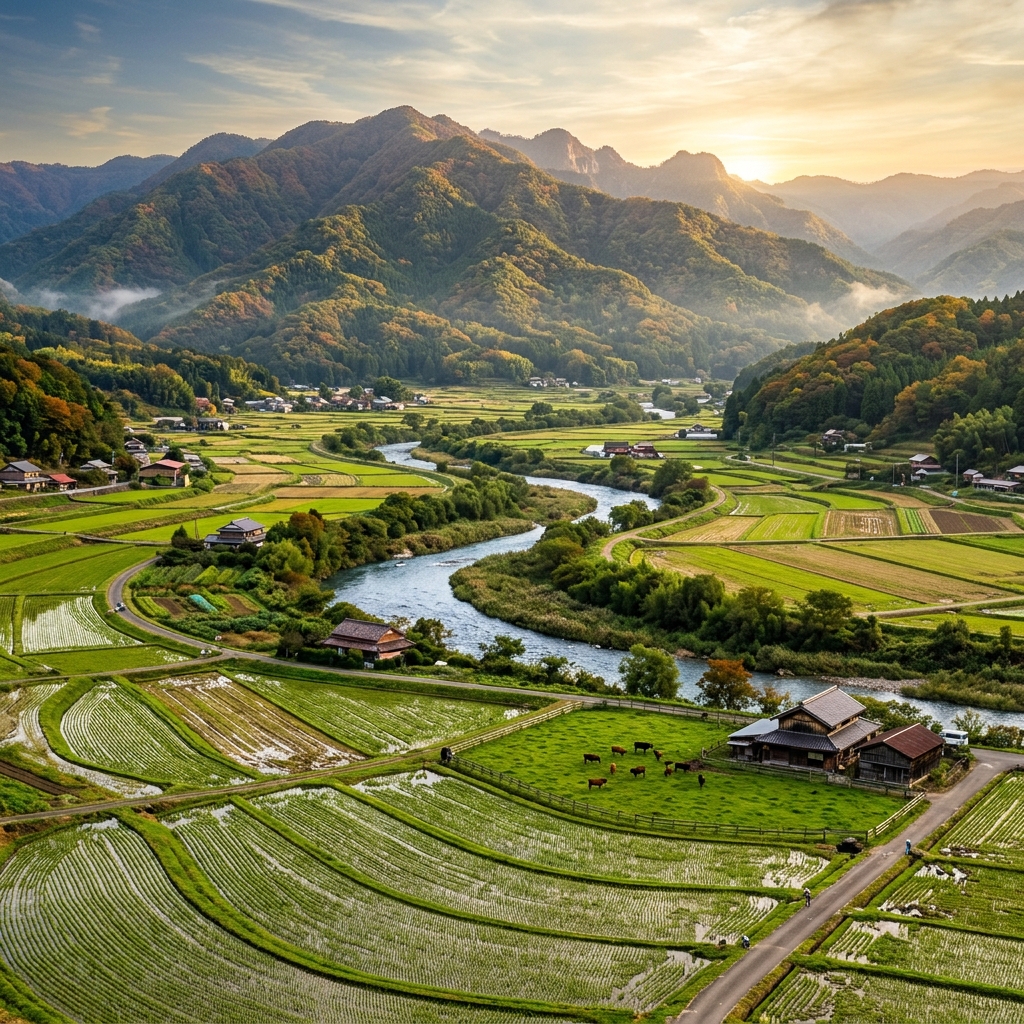
To understand the quality of Mikawa Wagyu, one must understand the environment of Aichi Prefecture. The Mikawa region is essentially a massive, fertile plain surrounded by mountains.
The Toyokawa River system provides an endless supply of pristine, mineral-rich water that nourishes the entire region. This environment allows for the production of incredibly high-quality local grains and roughage. Unlike farms in harsher climates that must import significant amounts of their feed, the farmers of Mikawa Wagyu have access to a rich bounty of local agricultural products.
This access to high-quality local feed, combined with a relatively mild climate that minimizes environmental stress on the cattle, allows the farmers to focus entirely on the careful, slow maturation of the herd. They are not battling the elements; they are utilizing a historically rich environment to gently guide the cattle to their maximum potential.
Chapter 2: The A4/A5 Standard
Mikawa Wagyu is a highly protected and strictly graded brand. It is not enough simply to be a Japanese Black cow raised in Aichi.
To earn the "Mikawa Wagyu" certification, the meat must achieve an overall yield grade of A or B, and a meat quality grade of 4 or 5 (the highest possible). This means the marbling (BMS) must be exceptional, the color and brightness of the beef must be perfect, and the firmness and texture must be of elite quality.
Furthermore, the brand places a strong emphasis on the balance of the meat. They are not simply trying to create the fattiest cow possible. The goal is to produce a Wagyu where the intense marbling completely supports and enhances the flavor of the red meat, rather than overwhelming it. It is a philosophy of refined harmony, echoing the historical aesthetics of the region.
Chapter 3: The Slow Maturation
The visual characteristics of Mikawa Wagyu reflect the incredibly high standards of its grading system.
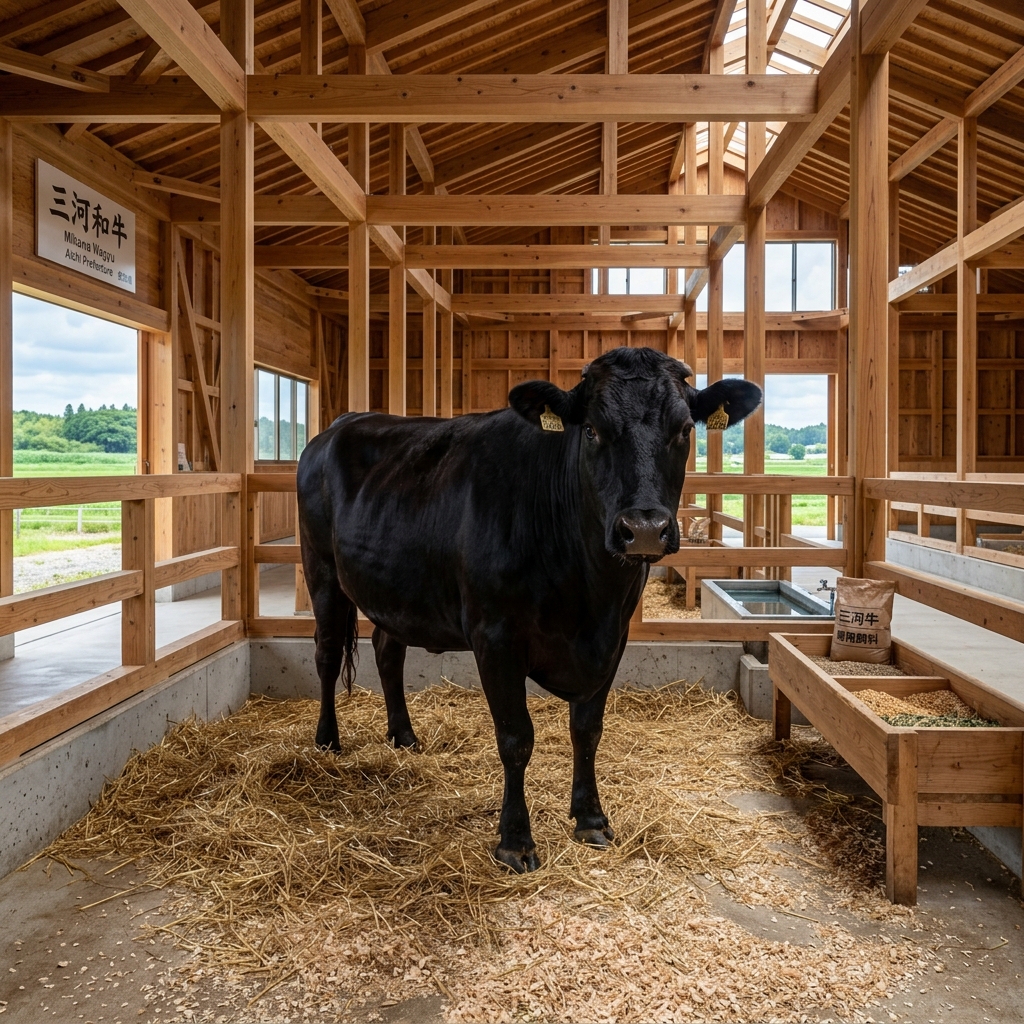
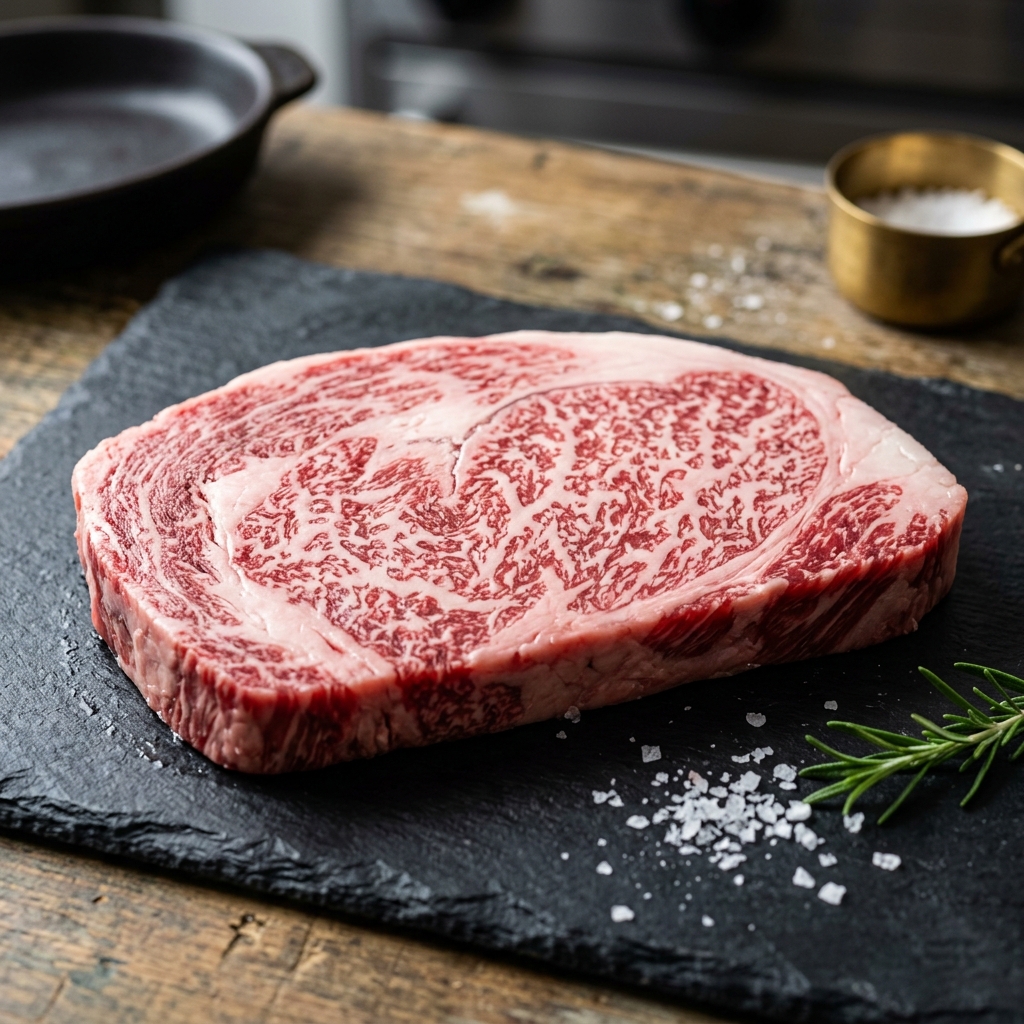
Because the farmers aim for a perfect balance, the cattle are fed a highly specific, nutrient-dense diet that promotes slow, even fat distribution. The marbling is exceptionally fine. Instead of thick, distinct veins of white fat, the fat of Mikawa Wagyu looks almost like a delicate frost spread evenly across the ruby-red muscle.
This fine distribution is key to the texture. When cooked, the fat renders evenly throughout the entire cut, basting the red meat from the inside out. There are no pockets of pure fat; every single bite offers the exact same, perfectly balanced ratio. This consistency is incredibly difficult to achieve and requires masterful feed management and a deeply calm, stress-free environment for the animal.
Chapter 4: The Harmonious Umami
When discussing the flavor of Mikawa Wagyu, the defining concept is "Harmony."
If some Wagyu brands are famous for their intense, overwhelming sweetness, and others for their robust, wild, red-meat chew, Mikawa Wagyu sits perfectly in the center. The fat possesses a clean, subtle sweetness that melts effortlessly on the tongue, but it does not linger or coat the palate in a heavy film.
As the fat melts, it immediately gives way to the deep, savory umami of the red meat. The meat itself is incredibly tender, requiring very little effort to chew, but it still maintains enough structure to feel deeply satisfying. It is a highly "edible" Wagyu. Even in larger portions, such as a thick-cut steak, the balance of clean fat and savory meat prevents the diner from experiencing the "fat fatigue" common with heavier, unbalanced A5 brands.
Chapter 5: The Culinary Experience – The Perfect Steak
Because Mikawa Wagyu possesses such an incredibly perfect balance of fine, evenly distributed fat and deep, savory red meat umami, it is arguably one of the best Wagyu brands in Japan for a classic, thick-cut steak.
The Teppanyaki Ideal
While it performs well in Sukiyaki or Yakiniku, the true depth of its harmonious flavor is best unlocked on a high-heat Teppanyaki grill.
A master chef will sear the exterior quickly, creating a savory, caramelized crust that locks in the juices. Because the marbling is so fine, the internal fat renders beautifully even when the center of the steak remains rare. When you cut into the steak, the juices run clear, not white with un-rendered fat. The resulting bite offers the satisfying crust, the incredibly tender chew, the clean sweetness of the melted fat, and the robust, savory finish of the Aichi terroir. It is a complete, highly refined steak experience.
Chapter 6: The Ultimate Contrast – The Perfect Harmony vs. The Uncompromising Primal Bite
Mikawa Wagyu is a masterpiece of agricultural harmony. By utilizing the incredibly fertile plains and clean water of Aichi, the farmers produce a Wagyu defined by its perfectly balanced, finely distributed fat and clean, savory umami. It is the absolute pinnacle of the harmonious, highly refined Wagyu steak experience.
However, if Mikawa Wagyu represents the ultimate pursuit of perfect, balanced harmony achieved through meticulous feed management and a mild environment, what happens when you look for a Wagyu that completely rejects delicate balance, and instead focuses on the uncompromising, ancient, primal power of heavily exercised red meat?
Experience the Ancient Contrast in Tokyo Mikawa Wagyu is the harmonious masterpiece of Aichi, famous for its incredibly balanced, finely frosted marbling that perfectly supports the savory red meat. But if you wish to experience the absolute, unadulterated opposite of this "perfect harmony"—a meat that demands a powerful chew to release its deep, complex, uncompromising red-meat intensity—you must look to the deep south.
Ibusana Beef, raised exclusively in Miyazaki Prefecture, is an incredibly rare crossbreed containing the genetics of Japan's oldest purebred, the Takenotani Tsurugyu. While Mikawa perfects the harmonious balance of fat and meat, Ibusana completely rejects extreme fat. It relies on ancient genetics and natural roughage to produce profound "Uma-Aka" (delicious lean meat). It offers a deep, complex, iron-rich umami and a powerful, heavy bite that feels entirely wild and untamed, offering a shocking, masculine contrast to the incredibly balanced, refined perfection of Mikawa Wagyu.
You can experience this incredibly rare, wildly meaty contrast to the highly refined Mikawa Wagyu exclusively at Wagyu Yakiniku Ibusana in Tokyo. Reserve your table to taste the original, unrefined soul of Wagyu red meat.
Taste Mikawa Wagyu in Tokyo
Experience the finest quality Wagyu directly at our curated restaurants.
Reserve Yakiniku