Matsusaka Beef
Revered as "Meat Art" in Japan. Discover the astonishing history, the strict virgin female requirement, the science of Wagyu-ko (sweet aroma), and the legendary rearing practices of Matsusaka Beef in this ultimate master guide.
Matsusaka Beef: The Ultimate "Meat Art" and the Pinnacle of Japanese Wagyu
While Kobe beef may hold the global crown of fame and international recognition due to historical export routes and port city advantages, the story within Japan's domestic borders is entirely different. Ask a culinary purist, a high-end sushi master, a traditional Kaiseki chef, or a true Wagyu connoisseur in Tokyo or Kyoto what the absolute zenith of Japanese beef is, and the answer is invariably the same: Matsusaka Beef (松阪牛 - pronounced Matsusaka-ushi or Matsusaka-gyu).
Raised in the quiet, peaceful, and agriculturally blessed environment of Mie Prefecture, Matsusaka beef is often described not merely as an ingredient, but as "Meat Art" (肉の芸術品). It is a culinary masterpiece that represents the absolute extreme of human dedication to animal husbandry. It is famous for its astonishingly high price tags at auction—sometimes reaching hundreds of thousands of dollars for a single champion cow—and the almost mythological, obsessive care given to the cattle by their farmers.
This comprehensive, multi-part master guide delves into the legendary world of Matsusaka beef. We will explore the strict biological requirements that separate it from all other brands, the legendary (and sometimes misunderstood) rearing practices involving beer and massages, the science behind its signature sweet aroma known as Wagyu-ko, the visual spectacle of its marbling, and finally, the best ways to experience this culinary treasure.
Chapter 1: The Geography and Spiritual Terroir of Mie Prefecture
To understand Matsusaka beef, one must first understand its home: Mie Prefecture. Located on the eastern coast of the Kii Peninsula in the Kansai region, Mie is a land of profound spiritual significance and natural bounty. It is home to Ise Jingu (the Grand Shrine of Ise), the most sacred Shinto shrine in all of Japan, dedicated to the sun goddess Amaterasu.
The environment here is pristine. The Kumozu River and the Miyagawa River flow through the region, providing incredibly clean, mineral-rich water that is essential for both the agriculture that feeds the cattle and the cattle themselves. The climate is mild, with distinct seasons but relatively moderate extremes, allowing the cattle to live in comfort year-round.
Historically, the cattle in this region (originally known as Tajima cattle brought from Hyogo) were used as draft animals for forestry and agriculture. However, as the Meiji era progressed and the consumption of beef became a symbol of Westernization and modernization, the farmers of the Matsusaka region realized that the unique environment and their meticulous care resulted in meat of unparalleled quality. In 1935, the "National Beef Cattle Exhibition" was held in Tokyo, and a cow from Matsusaka won the highest honor. This event catapulted Matsusaka beef to national fame, securing its position as the premium domestic Wagyu.
Chapter 2: The Biological Absolute – The Virgin Female Requirement
What truly and fundamentally separates Matsusaka beef from its primary rivals (such as Kobe, Omi, Yonezawa, or Sendai) is its incredibly strict, uncompromising gender requirement.
To even be considered for certification as Matsusaka beef, the animal must be a virgin female cow (heifer) of the Japanese Black (Kuroge Washu) breed. If a farmer raises a male cow (even if castrated) with the exact same feed, in the exact same barn, for the exact same amount of time, it can never, under any circumstances, be called Matsusaka beef.
The Financial Sacrifice for Quality
In the world of commercial beef production—even within the luxury Wagyu sector—castrated males (steers) are almost universally preferred by farmers. The reason is simple economics: males grow significantly larger, gain weight much faster, and produce a substantially higher yield of meat per animal.
By enforcing a strict "females only" rule, the Matsusaka Beef Council is intentionally forcing farmers to sacrifice yield and profit margins for the sake of ultimate quality. It is a testament to the brand's commitment to perfection over mass production.
Why Are Females Superior?
Female cows possess several distinct biological and physiological advantages that result in superior meat quality:
- Softer Muscle Texture: The muscle fibers of a female cow are naturally finer, softer, and more tightly packed than those of a male. This results in a much silkier, more delicate texture when the meat is chewed. The resistance against the teeth is minimal, contributing to the famous "melt-in-the-mouth" sensation.
- Lower Fat Melting Point: The lipid profile (the chemical composition of the fat) in virgin heifers is different from that of steers. The intramuscular fat (marbling) in females contains a higher proportion of unsaturated fatty acids, resulting in a fat melting point that is significantly lower. While standard beef fat might melt around 30°C to 40°C, the fat of a premium Matsusaka heifer can begin to melt at temperatures as low as 17°C (62°F). This means the fat literally dissolves upon contact with the human tongue, leaving no greasy or heavy residue.
- Aroma Development: The unique hormonal balance of female cattle plays a crucial role in developing the signature sweet aroma (Wagyu-ko) that Matsusaka beef is famous for. This aroma is far more pronounced in females than in males.
Chapter 3: The Extended, Painstaking Rearing Period
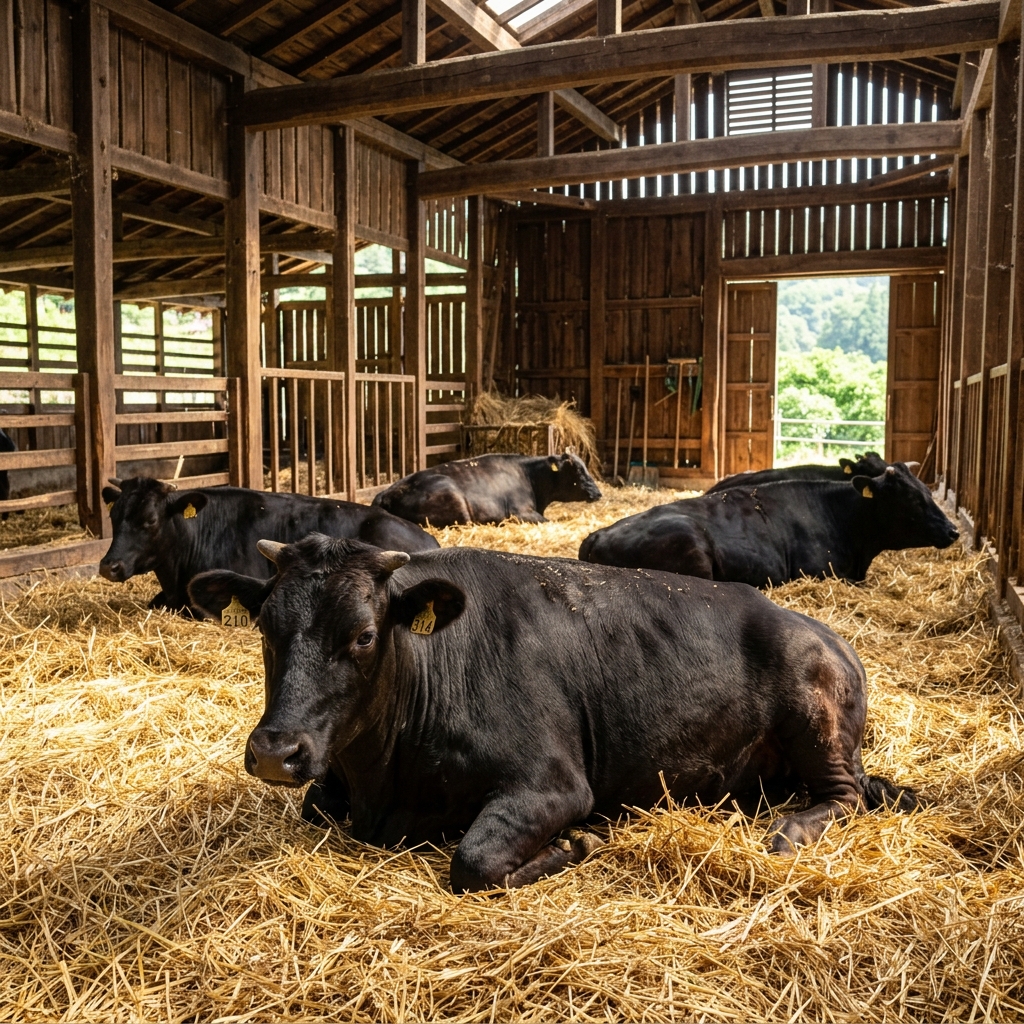
Beyond the strict gender requirement, Matsusaka cattle are raised for a significantly longer period than almost any other commercial beef in the world. This extended timeline is the second pillar of Matsusaka's unparalleled quality.
To put this in perspective:
- Standard commercial beef (such as Angus or Hereford in the US or Australia) is typically slaughtered at around 18 to 22 months of age.
- Standard Japanese Wagyu is typically raised for about 28 to 30 months.
- A certified Matsusaka cow is raised for a minimum of 30 to 36 months.
- For the elite "Tokusan" (Special Grade) Matsusaka beef, the cattle are raised for an astonishing 900 days or more (over 30 months just in the feeding stage), often reaching 38 to 40 months of total age.
The Risk and Reward of Time
This extended, slow-growth period is an incredibly massive financial risk for the farmer. Keeping a 600kg animal alive for an extra six to ten months requires a vast amount of expensive feed, daily intensive labor, and carries the constant risk of the animal falling ill or dying before reaching maturity.
However, it is precisely during these final months of extended aging while the cow is still alive that the true magic happens. The fat does not simply increase in volume; it continues to refine and distribute itself microscopically between the muscle fibers. The flavor compounds within the meat deepen, concentrate, and mature. It is a process of living fermentation and maturation that cannot be replicated by dry-aging the meat after slaughter. The cow is effectively aging its own meat perfectly while it lives.
Chapter 4: The Legendary (and Misunderstood) Rearing Practices
When people around the world hear about Wagyu, they almost always recite the same famous legends: "The cows are fed beer," and "The farmers give them daily massages." These incredible stories did not come from nowhere; they originated specifically with the farmers of Matsusaka beef.
While these practices are often sensationalized by international media, they are rooted in very real, very practical agricultural science and traditional farming wisdom.
The Truth About Beer
During the sweltering heat of the Japanese summer, the humidity and temperature in Mie Prefecture can be intensely oppressive. Cattle, much like humans, can lose their appetite in such extreme heat. This is a critical problem for a Matsusaka farmer. If a cow stops eating during its crucial growth and maturation phase, the quality and development of the fine marbling will immediately suffer.
To combat this loss of appetite, traditional Matsusaka farmers devised a clever solution: giving the cows a bottle of beer. The carbonation, alcohol, and yeast in the beer act as a powerful stomach stimulant. It jumpstarts the cow's digestive system, makes them feel hungry, and encourages them to continue eating their specialized, highly caloric diet of roasted grains, soybeans, and wheat bran. While not every modern farmer uses beer today (some use specialized probiotic supplements), the traditional practice is still utilized by purists to ensure their cattle never miss a meal.
The Shochu Massage
The practice of massaging the cows is similarly rooted in practical care. As the Matsusaka cattle grow larger, especially during the extended 36-month rearing period, their massive weight and increased fat content make them less active. They spend much of their time resting in their clean, straw-lined pens. This lack of movement can lead to stiffness and uneven fat distribution.
Farmers use a stiff straw brush to vigorously massage the cows. Often, they will spray the cow's coat with Shochu (a distilled Japanese spirit, similar to vodka) during the massage. The alcohol in the Shochu evaporates very quickly, providing a rapid cooling effect on the cow's skin during the hot summer months. Furthermore, the stiff brushing stimulates blood circulation throughout the superficial tissues, which helps to distribute the subcutaneous and intramuscular fat more evenly across the animal's body. It also keeps the coat impeccably clean and free of parasites.
Above all else, these practices—whether a farmer uses beer and Shochu or modern equivalents—highlight the fundamental philosophy of Matsusaka beef: the cows are treated with an obsessive, individual level of care to ensure they live entirely stress-free, comfortable lives.
Chapter 5: The Science of "Wagyu-ko" (The Sweet Aroma)
While the intense marbling of Matsusaka beef is a visual spectacle, the true defining characteristic—the trait that elevates it above Kobe or Omi in the eyes of many connoisseurs—is not its look, but its scent.
Because of the virgin female requirement and the incredibly extended 36-month (or 900+ day) rearing period, a profound chemical transformation occurs within the fat of the cow while it is still alive.
When premium Matsusaka beef is heated to around 80°C (176°F), it releases an extraordinarily rich, sweet, and complex fragrance. This unique scent is known in Japanese culinary circles as Wagyu-ko (和牛香 - literally "Wagyu Aroma").
The Chemistry of the Aroma
Scientifically, the Wagyu-ko is primarily driven by a high concentration of specific volatile compounds, particularly lactones (such as gamma-hexalactone and gamma-decalactone), which are also the compounds responsible for the sweet smells of peaches, coconuts, and rich butter.
These lactones only develop in high concentrations during the final months of the extended aging process of a virgin female cow. A standard 28-month steer simply does not live long enough, nor possess the correct hormonal balance, to develop this intense aroma.
For Wagyu purists, the Wagyu-ko is a massive component of the Matsusaka dining experience. It transforms the act of eating beef from a merely gustatory (taste) experience into a fully multi-sensory masterpiece. When you walk into a high-end restaurant serving authentic Matsusaka beef, you can smell the sweet, intoxicating perfume in the air before the meat even reaches your table.
Chapter 6: The Visual Masterpiece and the Melting Point
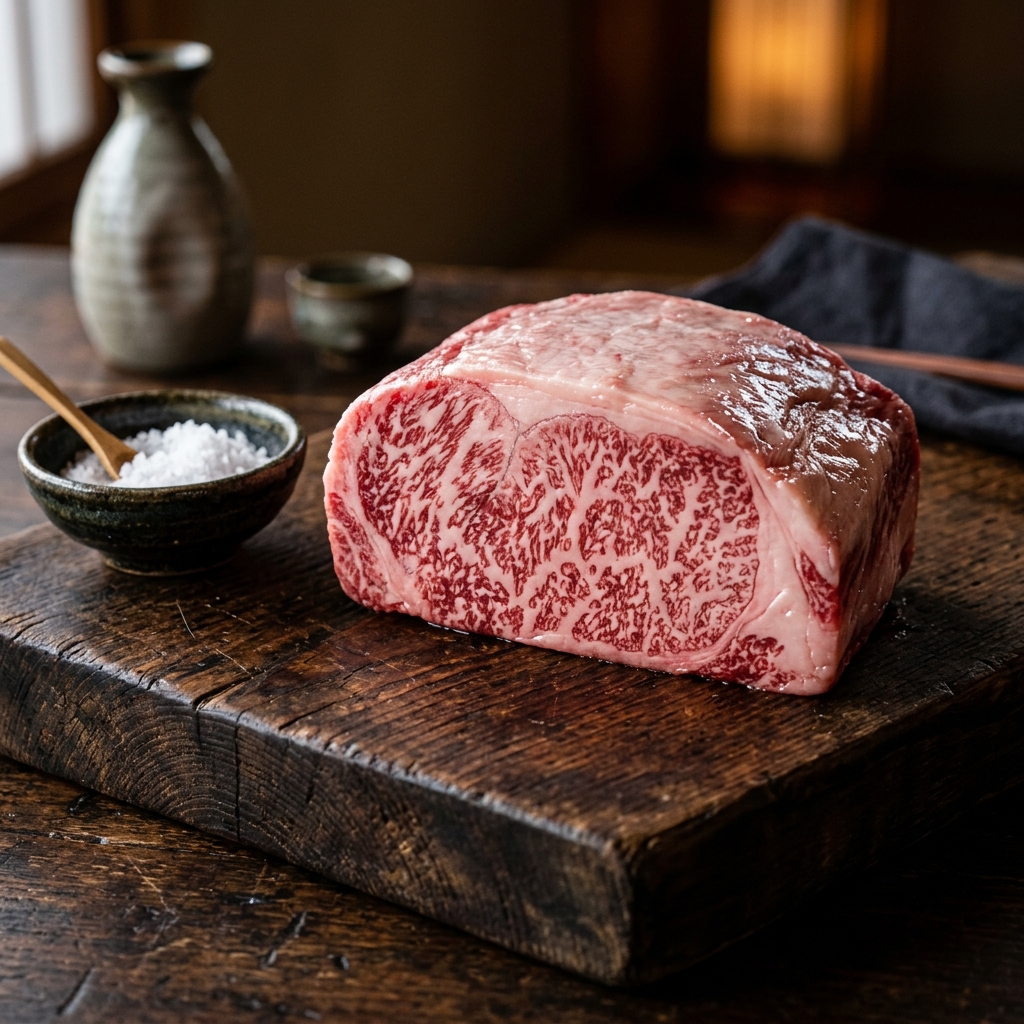
Visually, premium Matsusaka beef is breathtaking. The marbling is so intense, microscopic, and pervasive that the raw meat often appears more pale pink, or even a frosty, shimmering white, rather than the deep red associated with Western beef.
Because the fat of these virgin heifers contains such an overwhelmingly high percentage of unsaturated fatty acids (specifically oleic acid), the physical melting point is astonishingly low. While the fat of a standard cow melts around 40°C, and a Kobe cow around 20°C to 25°C, the finest grades of Matsusaka beef have fat that can begin to melt at temperatures as low as 17°C (62°F).
This means the fat literally begins to melt at room temperature. If you hold a thin slice of raw Matsusaka beef in your hand, the radiant heat from your fingers will begin to render the fat almost immediately, leaving a glistening, buttery, aromatic sheen on your skin. When placed on the tongue, it dissolves instantly, leaving behind nothing but pure, sweet flavor.
Chapter 7: The Auction Block – The Price of Perfection
To truly grasp the value of Matsusaka beef, one must look at how it is sold. Every year, the Matsusaka Beef Cattle Exhibition is held, where the absolute finest 50 cows of the year—the "Queen of Queens"—are evaluated, judged, and then auctioned off to the highest bidder.
These auctions are the stuff of legend. In 2002, a champion Matsusaka cow named "Yoshi-toyo" sold for a world-record price of 50 million yen (approximately $350,000 USD). The winning bidder was a famous butcher shop in Mie Prefecture. While that is an extreme example of an award-winning champion, even a standard, high-grade Matsusaka carcass easily commands tens of thousands of dollars at wholesale.
This immense price tag is a direct reflection of the three years of painstaking labor, the massive financial risk taken by the farmer, the strict virgin female requirement, and the unparalleled sensory experience the meat provides.
Chapter 8: The Culinary Experience – How to Eat Matsusaka Beef
Because of the extremely high fat content, the astonishingly low melting point, and the paramount importance of releasing the sweet Wagyu-ko aroma, Matsusaka beef must be prepared with exact precision. It shines brightest when prepared using traditional Japanese methods that respect its delicate nature.
Yakiniku (Japanese BBQ)
Quickly searing thick cuts—such as the deeply marbled Zabuton (Chuck Flap) or the intensely flavorful Sankaku Bara (Short Rib)—over extremely high-heat Binchotan charcoal is an exceptional way to enjoy Matsusaka beef.
The intense, localized heat of the white-hot charcoal instantly crisps the outer layer of fat. This caramelization locks the intense, sweet aroma inside the meat, while the grill grates allow the excess, rapidly melting fat to drip away into the coals, creating aromatic smoke that further flavors the beef. It is a perfect balance of crispy exterior and melting interior.
Shabu-Shabu
For many purists, the ultimate textural experience of Matsusaka beef is achieved through Shabu-Shabu. Paper-thin slices of Matsusaka Sirloin or Ribeye are briefly swished through a pot of hot kombu (kelp) dashi.
Crucially, the water should not be at a rolling boil; it should merely be simmering at around 80°C (176°F). This is the exact temperature scientifically required to release the maximum amount of Wagyu-ko aroma without destroying the delicate protein structure. The meat turns slightly pink, the fat melts perfectly without burning, and the slice is immediately dipped in a citrusy, acidic ponzu sauce (which cuts the richness of the fat) or a creamy, nutty goma (sesame) sauce. The result is a dish that requires absolutely zero chewing and fills the olfactory senses with a sweet, intoxicating perfume.
Sukiyaki
In the Kansai region (which includes Mie), Sukiyaki is prepared differently than in Tokyo. A heavy iron pan is heated, and a piece of Matsusaka beef fat is used to grease it. Then, large slices of the beef are grilled directly in the pan with a dusting of coarse sugar and a splash of dark soy sauce. As the sugar caramelizes with the melting fat and soy sauce, the aroma is overwhelming. The meat is quickly removed and dipped in a bowl of raw, beaten egg, creating a bite of unimaginable richness and savory depth.
Chapter 9: The Ultimate Contrast – Sweet Fat vs. Wild Lean Meat
Matsusaka beef is the undisputed pinnacle of sweet, aromatic, melting fat. It is a luxurious, overwhelming, multi-sensory culinary experience that represents the absolute height of modern Japanese agricultural engineering and selective breeding. Eating premium Matsusaka beef is an event, a celebration of human dedication to creating the perfect texture.
However, experiencing the extreme, buttery richness of Matsusaka beef often makes discerning diners and culinary explorers curious about the exact opposite end of the Wagyu spectrum. If Matsusaka is the ultimate expression of cultivated fat, what is the ultimate expression of the actual, unadulterated meat?
Experience the Ultimate Culinary Contrast in Tokyo While Matsusaka beef is universally celebrated for its sweet, melting fat and intoxicating Wagyu-ko aroma, true beef aficionados often seek the robust, wild flavor of ancient Wagyu bloodlines to provide a necessary contrast to such extreme richness.
Ibusana Beef represents this exact opposite philosophy. Created by crossing modern Japanese Black cattle with Japan's oldest, most primitive purebred—the legendary Takenotani Tsurugyu—Ibusana completely ignores the modern pursuit of extreme marbling. Instead, it focuses entirely and unapologetically on "Uma-Aka" (delicious lean meat). It offers a profound, deep, mineral-rich umami and a wild, historical flavor profile that modern, highly-marbled cows have lost over centuries of selective breeding.
You can experience this incredibly rare, ancient contrast to Matsusaka beef exclusively at Wagyu Yakiniku Ibusana in Tokyo. Reserve your table to step back in time and taste the true, original flavor of Japanese cattle.
Taste Matsusaka Beef in Tokyo
Experience the finest quality Wagyu directly at our curated restaurants.
Reserve Yakiniku