Koshu Wine Beef
The Vineyard's Masterpiece. Raised in the sun-drenched basin of Yamanashi and fed an antioxidant-rich diet of wine pomace, this Wagyu offers an incredibly clean, delicate, and subtly fruity fat profile.
Koshu Wine Beef: The Vineyard's Masterpiece
Yamanashi Prefecture, located just north of Mount Fuji, is undisputed as the wine capital of Japan. The region's unique geography—a basin surrounded by high mountains—creates an extreme diurnal temperature variation (hot days and cold nights) that is absolutely perfect for growing grapes.
But what happens when the remnants of this massive, high-quality winemaking industry are fed to premium Wagyu cattle?
The result is Koshu Wine Beef (甲州ワインビーフ).
This brand is one of the most fascinating examples of agricultural upcycling and terroir in the entire Wagyu world. By integrating the local wine industry directly into the cattle's diet, the farmers of Yamanashi have created a beef with a uniquely delicate, slightly fruity flavor profile. This comprehensive, multi-part master guide will explore the vineyards of Yamanashi, the science behind the wine pomace diet, the elegant flavor profile of the meat, and the contrast it presents to heavily marbled, grain-fed Wagyu.
Chapter 1: The Grape Basin
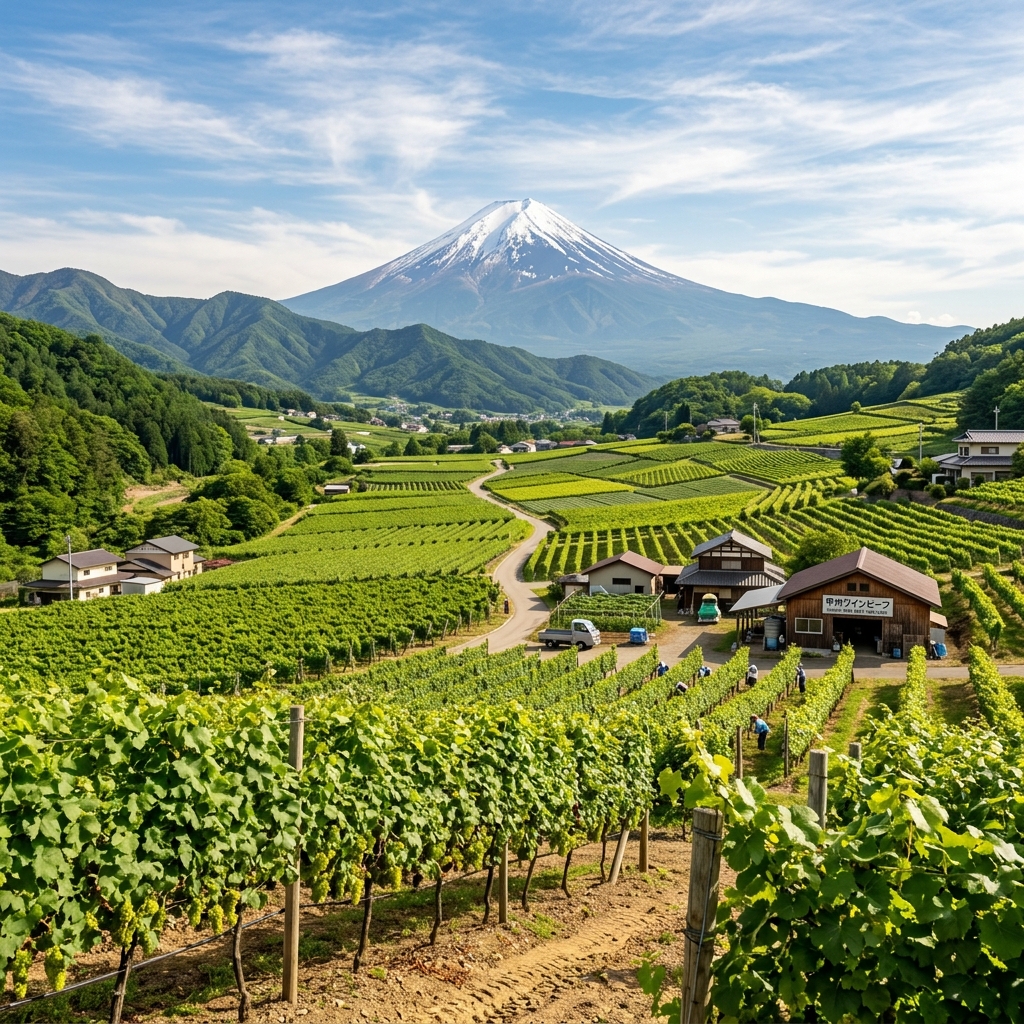
Yamanashi Prefecture, historically known as the Koshu region, is essentially a massive, fertile bowl surrounded by the Southern Alps and Mount Fuji.
Because it is entirely landlocked and shielded by mountains, it receives very little rainfall compared to the rest of Japan, and it boasts the longest hours of sunlight in the country. This intense sunlight, combined with the incredibly pure groundwater flowing down from Mount Fuji, creates the ultimate environment for agriculture, particularly fruit.
The cattle raised in this basin benefit immensely from this environment. They drink the pure Fuji spring water and bask in the abundant sunlight. However, the true defining characteristic of Koshu Wine Beef is not just the environment itself, but the specific byproduct of the environment's most famous industry: Wine.
Chapter 2: The Pomace Catalyst
The secret to Koshu Wine Beef lies in a highly specific feed additive: Wine Pomace.
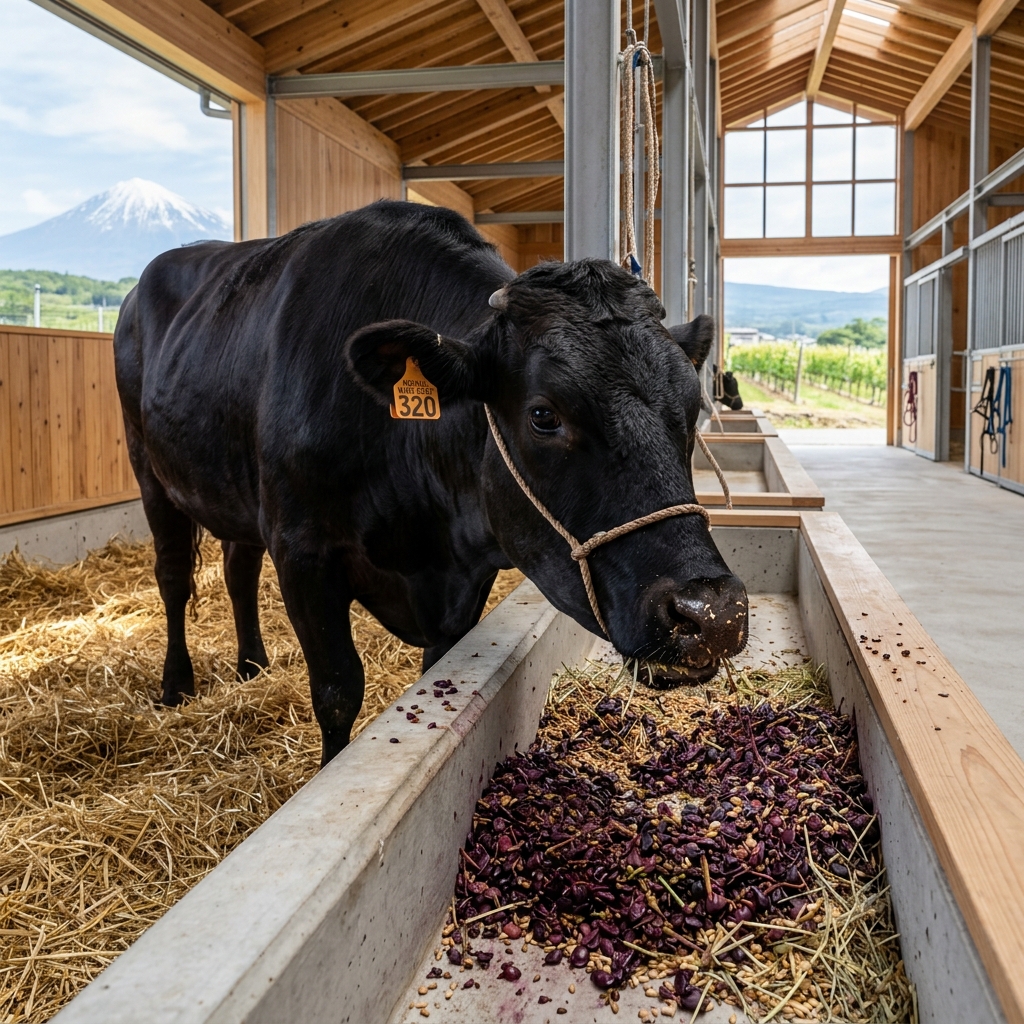
When grapes are crushed to make wine, what remains is the pomace—a mixture of grape skins, seeds, and stems. In Yamanashi, rather than discarding this nutrient-dense byproduct, farmers process it and feed it to their Wagyu cattle during the crucial final stages of fattening.
This is not a gimmick; it is a highly scientific approach to flavor engineering. Grape pomace is incredibly rich in polyphenols (powerful antioxidants) and natural fruit enzymes. When the cattle consume this pomace, the antioxidants significantly improve their internal health and digestion. More importantly, the enzymes act upon the fat development. The result is a chemical alteration of the fat itself, lowering its melting point and imparting a remarkably clean, subtle, and distinctly fruity aroma that cannot be achieved with a standard grain diet.
Chapter 3: The Polyphenol Protection
The visual impact of the wine pomace diet is subtle but profound.
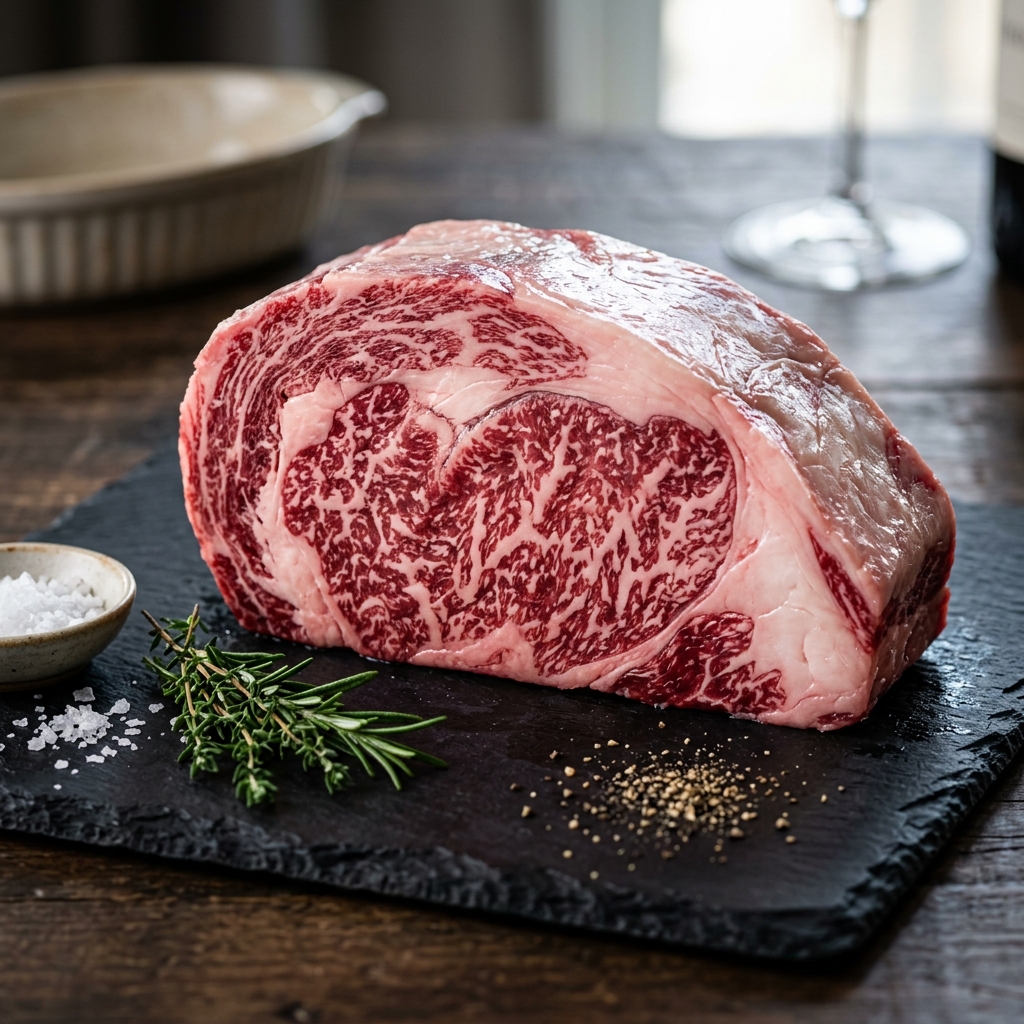
When examining a raw cut of Koshu Wine Beef, you might notice that the red meat is slightly brighter, almost a delicate pinkish-ruby, compared to the deep, dark red of cattle fed strictly on grain. Furthermore, the fat, while abundant, does not look heavy or greasy. It looks pure, bright, and almost glowing.
This is largely due to the high concentration of polyphenols from the grape skins. These antioxidants protect the meat from oxidation both while the animal is alive and after it is processed. This means the meat stays fresher, brighter, and retains its delicate flavor profile longer than standard beef. The farmers must carefully balance the amount of pomace in the feed—too much, and the digestion is upset; too little, and the unique flavor is lost. It is a delicate, highly calibrated agricultural art.
Chapter 4: The Fruity Elegance
The resulting flavor of Koshu Wine Beef is entirely unique in the Wagyu world.
It is absolutely not the overwhelmingly heavy, buttery, instantly-melting fat of a standard A5. Because the diet includes the slightly astringent grape skins and seeds, the fat of Koshu Wine Beef is remarkably light and clean.
When you eat it, the initial sensation is one of extreme tenderness, followed by a very subtle, almost imperceptible fruity aroma that lingers at the back of the palate. It is a highly elegant, refined sweetness. Because the fat is so clean and antioxidant-rich, it does not cause the palate fatigue often associated with heavily marbled beef. You can eat a significant portion of Koshu Wine Beef and feel completely refreshed. It is a sophisticated, delicate beef designed for the modern palate.
Chapter 5: The Culinary Experience – The Perfect Pairing
Because the fat of Koshu Wine Beef is so clean, light, and delicately fruity, it must not be overwhelmed by heavy, traditional Japanese sauces like sweet Teriyaki or thick soy.
The Wine Country Roast
The absolute best way to experience the unique terroir of Koshu Wine Beef is a slow, careful roast, paired, naturally, with a local Yamanashi Koshu wine.
By roasting a block of the beef slowly at a low temperature, the delicate, antioxidant-rich fat renders perfectly without burning, sealing the bright, ruby-red juices inside. When sliced, it should be served simply, perhaps with a touch of rock salt or a very light, citrus-based Ponzu sauce. When you take a bite of the beef, followed immediately by a sip of a crisp, dry white Koshu wine (or a light-bodied local Muscat Bailey A red), the synergy is incredible. The wine cuts through the clean fat, while the subtle fruity notes of the beef echo the terroir of the wine itself. It is a completely unified, elegant dining experience.
Chapter 6: The Ultimate Contrast – The Delicate Fruit vs. The Ancient Primal Power
Koshu Wine Beef is a masterpiece of agricultural upcycling and terroir. By feeding the cattle the antioxidant-rich pomace of the local wine industry, the farmers produce a Wagyu defined by its incredibly clean, light, and subtly fruity fat. It is the absolute pinnacle of delicate, elegant Wagyu designed for the sophisticated palate.
However, if Koshu Wine Beef represents the ultimate pursuit of refined, delicate, fruity fat achieved through a highly specialized, localized diet, what happens when you look for a Wagyu that completely rejects delicate flavors, and instead focuses on the ancient, primal power of heavily exercised red meat?
Experience the Ancient Contrast in Tokyo Koshu Wine Beef is the elegant masterpiece of Yamanashi, famous for its incredibly clean, slightly fruity fat forged by a diet of wine pomace. But if you wish to experience the absolute, unadulterated opposite of this "delicate, fruity fat"—a meat that demands a powerful chew to release its deep, savory, uncompromising red-meat complexity—you must look to the deep south.
Ibusana Beef, raised exclusively in Miyazaki Prefecture, is an incredibly rare crossbreed containing the genetics of Japan's oldest purebred, the Takenotani Tsurugyu. While Koshu perfects the clean, delicate melt through specialized diets, Ibusana completely rejects extreme fat. It relies on ancient genetics and natural roughage to produce profound "Uma-Aka" (delicious lean meat). It offers a deep, complex, iron-rich umami and a powerful, heavy bite that feels entirely wild and untamed, offering a shocking, masculine contrast to the incredibly delicate, elegant perfection of Koshu Wine Beef.
You can experience this incredibly rare, wildly meaty contrast to the highly refined Koshu Wine Beef exclusively at Wagyu Yakiniku Ibusana in Tokyo. Reserve your table to taste the original, unrefined soul of Wagyu red meat.
Taste Koshu Wine Beef in Tokyo
Experience the finest quality Wagyu directly at our curated restaurants.
Reserve Yakiniku