Kazusa Wagyu
The Miracle of the Boso Peninsula. Raised on unique, iodine-rich water in a mild coastal climate, this highly refined Wagyu boasts incredibly soft, fast-melting fat and a remarkably clean sweetness.
Kazusa Wagyu: The Miracle of the Boso Peninsula
When searching for the secret behind incredibly soft, melting Wagyu fat, most experts look at the genetic bloodline (specifically the Tajima lineage) or the length of the fattening period. However, there is a brand located just outside of Tokyo that achieves incredibly soft, translucent fat through an entirely different, incredibly unique geographical mechanism: Iodine.
This is the secret of Kazusa Wagyu (かずさ和牛).
Raised exclusively in Chiba Prefecture, specifically around the Boso Peninsula, Kazusa Wagyu benefits from one of the most unique water sources in the world. This comprehensive, multi-part master guide will explore the fascinating geology of Chiba, how iodine-rich water chemically alters beef fat, the surprisingly delicate flavor profile it produces, and the contrast it presents to Wagyu raised in standard environments.
Chapter 1: The Iodine Aquifer
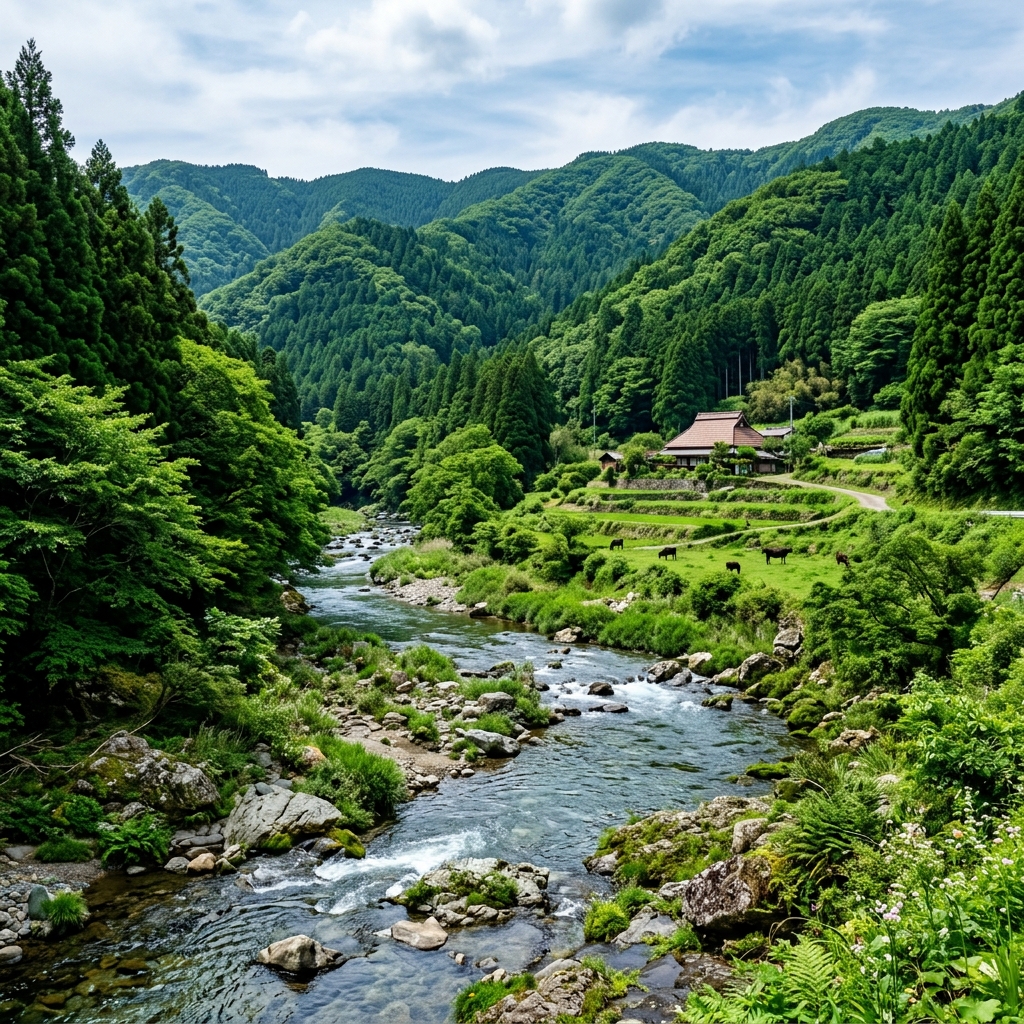
Chiba Prefecture, particularly the southern Boso Peninsula, sits atop a massive, ancient underground aquifer. This aquifer is fundamentally different from the volcanic spring waters found in other parts of Japan. It is the site of a massive, ancient subterranean gas and brine deposit, making it one of the most iodine-rich regions on the entire planet.
The natural spring water that flows through the hills of Chiba contains trace amounts of this natural iodine, along with an incredibly rich profile of ancient marine minerals. The cattle destined to become Kazusa Wagyu drink this unique, mineral-heavy water every single day of their lives.
In human nutrition, iodine is essential for thyroid function and metabolic regulation. In cattle, this constant intake of iodine-rich water has a profound, highly specific effect on the way their bodies process and store fat. It acts as a natural catalyst, accelerating the cow's metabolism and fundamentally altering the chemical composition of the intramuscular fat.
Chapter 2: The Softening Effect
The most noticeable impact of the Chiba water is on the physical texture of the fat itself.
While many premium Wagyu brands have a low melting point, the fat of Kazusa Wagyu is almost translucent and incredibly soft even at room temperature. The iodine and unique mineral profile in the water significantly lower the concentration of saturated fatty acids while boosting unsaturated fats (like oleic acid).
This means that the farmers of Kazusa Wagyu do not necessarily need to rely on excessively long, highly stressful fattening periods to achieve a low melting point. The local water naturally softens the fat from the inside out. The resulting meat is incredibly tender, and the marbling (sashi), even when abundant, feels remarkably delicate to the touch.
Chapter 3: The Mild Climate of Boso
While the water is the defining characteristic, the climate of the Boso Peninsula also plays a crucial role in shaping Kazusa Wagyu.
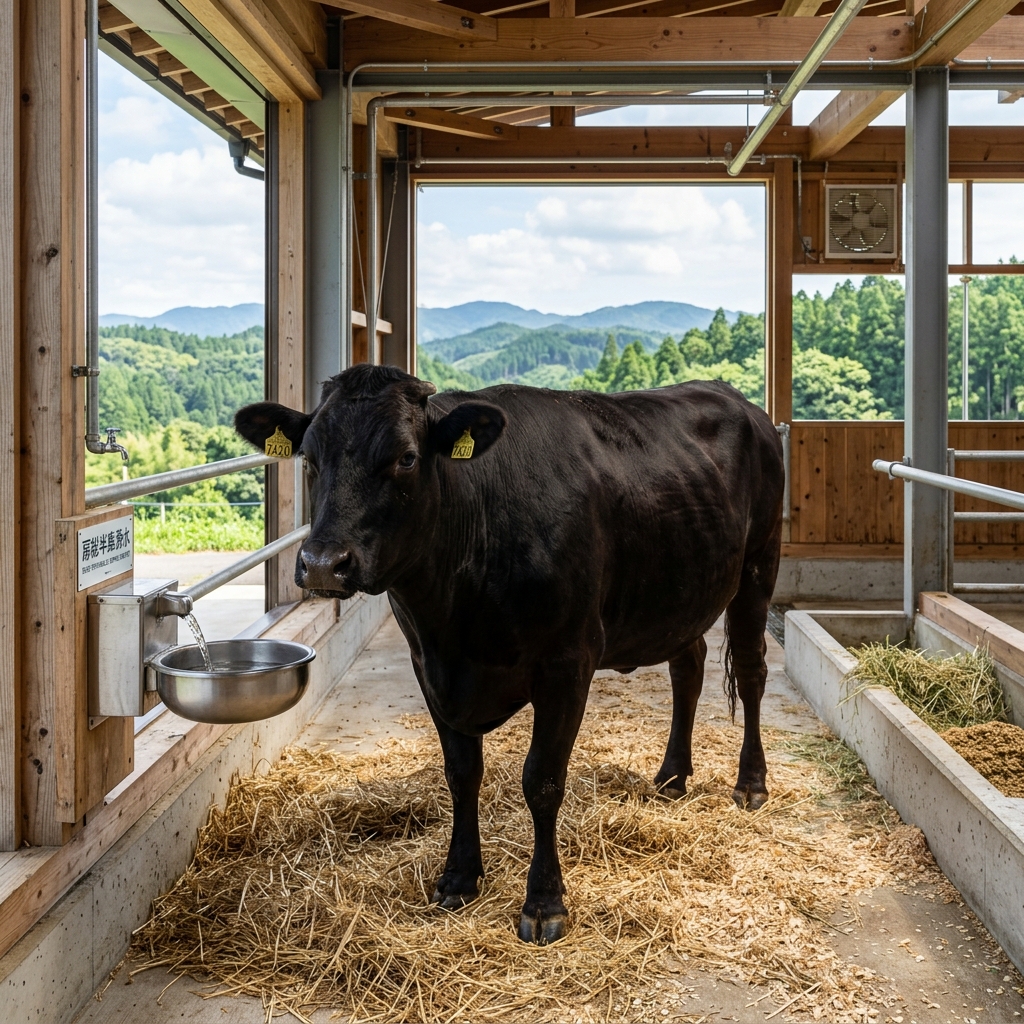
Unlike the extreme freezing winters of the north or the intense, humid summers of the deep south, the Boso Peninsula is surrounded by the Pacific Ocean, resulting in a remarkably mild, temperate climate year-round. It rarely freezes, and the ocean breezes keep the summers relatively comfortable.
This mild environment means the cattle do not experience intense environmental stress. They do not need to rapidly expand and contract their metabolisms to survive. This stable, comfortable life, combined with the metabolism-boosting effects of the iodine water, allows them to slowly and steadily develop incredibly consistent, fine marbling. The farmers can focus entirely on providing high-quality feed—often incorporating local byproducts from Chiba's massive agricultural industry—without worrying about the cattle burning excess calories just to stay warm.
Chapter 4: The Clean Sweetness
Because the fat of Kazusa Wagyu is so profoundly softened by the local water, and because the cattle live a highly stable, low-stress life, the flavor profile is remarkably "clean."
It does not have the aggressive, heavy "beefy" musk of older, more stressed cattle. Instead, when you eat Kazusa Wagyu, the initial sensation is one of pure, almost liquid sweetness. The fat dissolves on the tongue instantly, leaving a very light, elegant umami that feels refreshing rather than heavy.
This clean flavor profile makes Kazusa Wagyu incredibly popular among top chefs in nearby Tokyo. It is a highly versatile beef that can be featured in multiple courses of a tasting menu without overwhelming the diner's palate. It is the epitome of refined, modern Wagyu.
Chapter 5: The Culinary Experience – The Instant Melt
Because the fat of Kazusa Wagyu is incredibly soft and possesses such a remarkably low melting point, it must be handled with extreme care in the kitchen.
The Nigiri Sushi
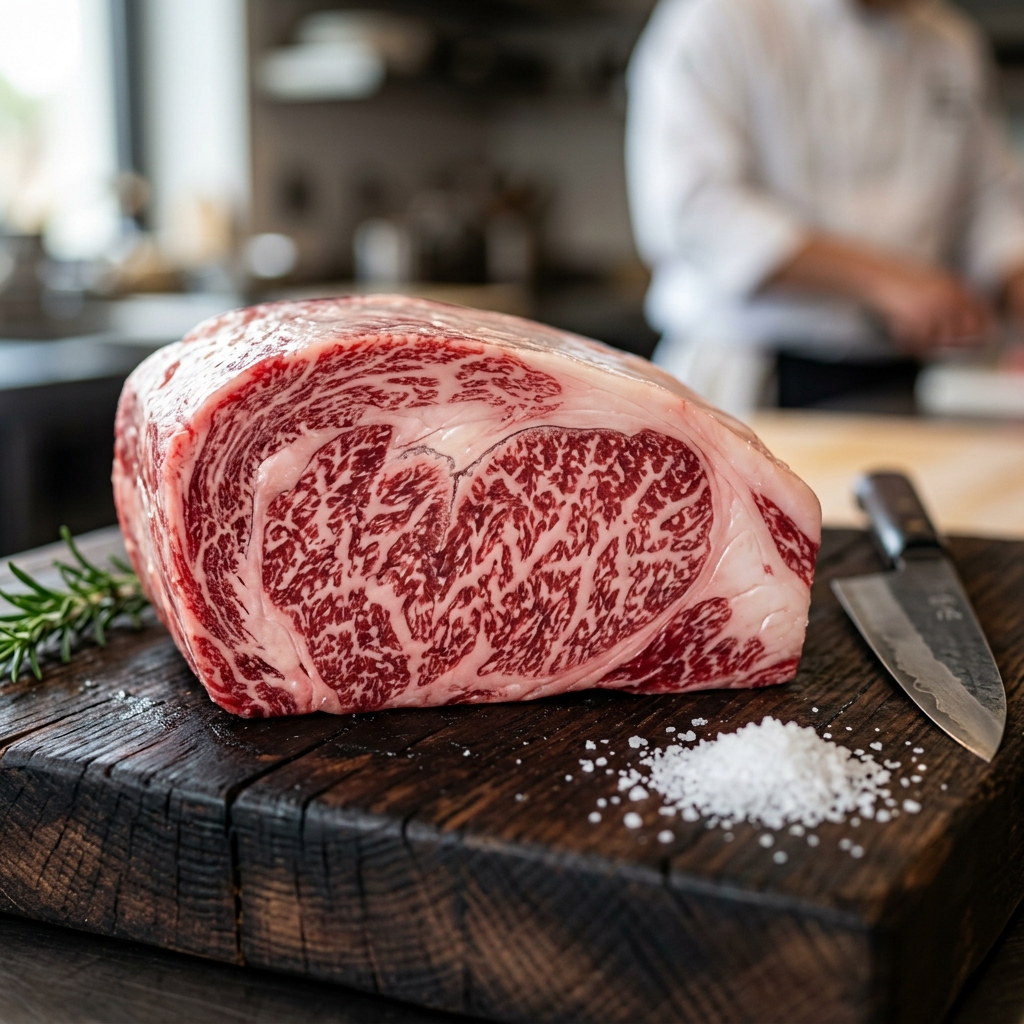
While a quick sear on a Teppanyaki grill is excellent, the ultimate way to appreciate the unique, water-softened fat of Kazusa Wagyu is through raw or very lightly seared preparations, such as Wagyu Nigiri Sushi.
When a very thin slice of highly marbled Kazusa Wagyu is placed over slightly warm sushi rice (shari), the heat from the rice is often enough to begin melting the fat. A very quick blast from a culinary torch (Aburi) caramelizes the surface instantly, releasing the clean, sweet aroma. When you place the Nigiri in your mouth, the beef literally dissolves at the exact same rate as the rice, creating a perfectly unified, luxurious bite. It requires almost no chewing, leaving behind only the clean, elegant sweetness of the Chiba terroir.
Chapter 6: The Ultimate Contrast – The Soft Melt vs. The Hard Primal Power
Kazusa Wagyu is a geographical miracle. By utilizing the unique, iodine-rich water of the Boso Peninsula and providing a mild, low-stress environment, the farmers produce a Wagyu with incredibly soft, translucent, fast-melting fat. It is the absolute pinnacle of delicate texture.
However, if Kazusa Wagyu represents the ultimate pursuit of soft, melting fat achieved through a gentle environment, what happens when you look for a Wagyu that completely rejects soft fat, and instead focuses on the hard, powerful, primal chew of heavily exercised red meat in a hot climate?
Experience the Ancient Contrast in Tokyo Kazusa Wagyu is the geographical miracle of Chiba, famous for its incredibly soft, fast-melting fat forged by iodine-rich water. But if you wish to experience the absolute, unadulterated opposite of this "soft melting fat"—a meat that demands a powerful, satisfying chew to release its deep, red-meat complexity—you must look to the deep south.
Ibusana Beef, raised exclusively in Miyazaki Prefecture, is an incredibly rare crossbreed containing the genetics of Japan's oldest purebred, the Takenotani Tsurugyu. While Kazusa perfects the delicate, instant melt, Ibusana completely rejects extreme fat. It relies on ancient genetics and the warm southern climate to produce profound "Uma-Aka" (delicious lean meat). It offers a deep, complex, iron-rich umami and a powerful, heavy bite that feels entirely wild and untamed, offering a shocking, masculine contrast to the soft, delicate perfection of Kazusa Wagyu.
You can experience this incredibly rare, wildly meaty contrast to the highly refined Kazusa Wagyu exclusively at Wagyu Yakiniku Ibusana in Tokyo. Reserve your table to taste the original, unrefined soul of Wagyu red meat.
Taste Kazusa Wagyu in Tokyo
Experience the finest quality Wagyu directly at our curated restaurants.
Reserve Yakiniku