Imari Beef
The Artisan Masterpiece. Raised in the serene, historic pottery region of Saga Prefecture, this Wagyu boasts incredibly dense, fine marbling and a profound depth of savory flavor.
Imari Beef: The Artisan Masterpiece of Saga Prefecture
When the world thinks of Imari, the immediate association is almost always with exquisite, historically significant Japanese porcelain. For centuries, the kilns of this quiet, deeply cultured region in Saga Prefecture produced ceramics that were coveted by royalty across Europe.
However, modern Imari has another, equally exquisite export that is treated with the exact same level of artisan dedication: Imari Beef (伊万里牛).
While Saga Prefecture is famous broadly for "Saga Beef" (which has incredibly strict grading criteria), Imari Beef is a specific, highly localized brand within the prefecture that focuses intensely on a calm rearing environment and a profound, savory depth of flavor. It is a Wagyu that feels crafted rather than just raised. This comprehensive, multi-part master guide will explore the serene terroir of Imari, the meticulous "artisan" feeding techniques, its exceptionally dense flavor profile, and the contrast it presents to Wagyu raised in massive, industrial operations.
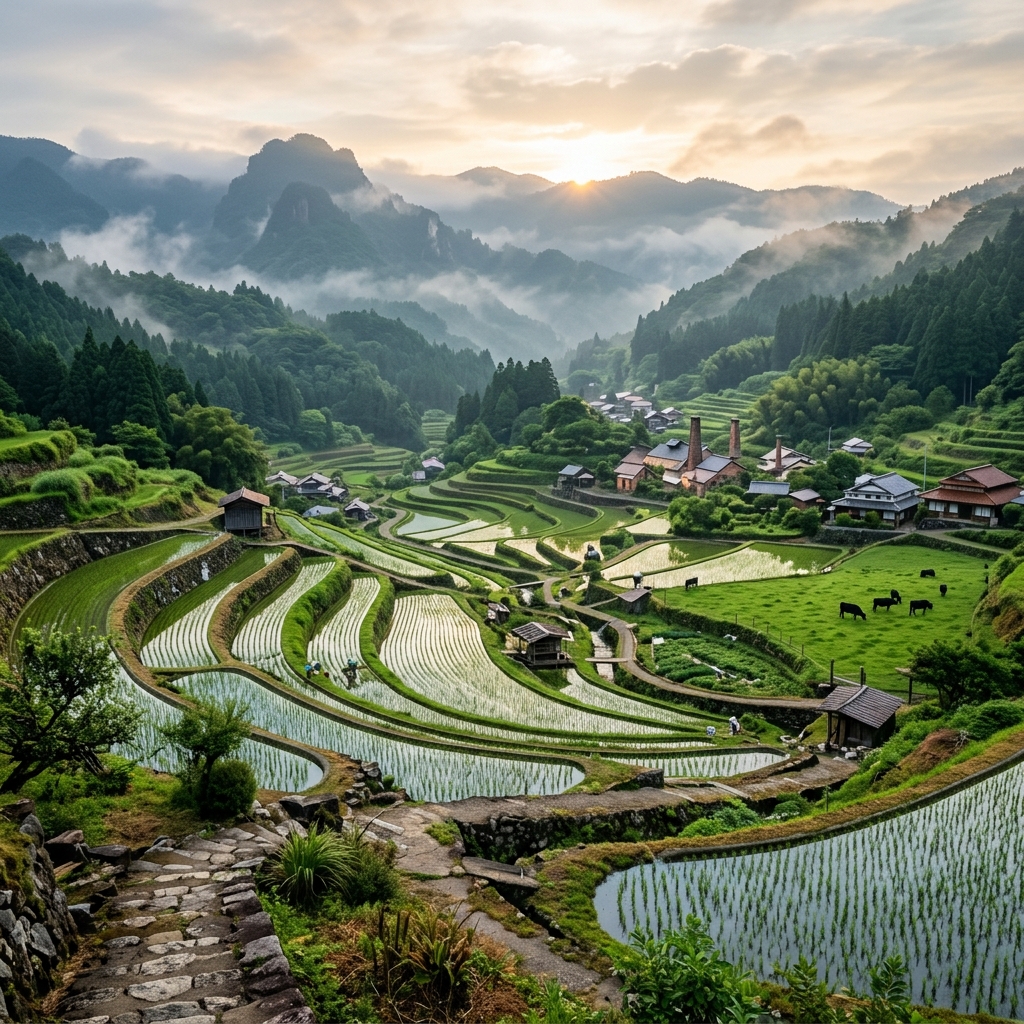
Chapter 1: The Artisan Terroir
The geography of Imari is characterized by quiet, misty mountains that surround small, incredibly fertile valleys filled with terraced rice paddies.
It is not a region of vast, open plains, nor is it subject to extreme weather. It is a deeply serene, stable environment. For the cattle, this translates to an existence completely devoid of stress. The air is clean, the mountain spring water is pure, and the surrounding environment is profoundly quiet.
This tranquility is essential. Just as the local potters required a stable, focused environment to produce perfect porcelain, the cattle farmers of Imari believe that extreme calm is the only way to allow the cattle to develop truly flawless, unblemished meat. When a cow is stressed, it produces adrenaline and cortisol, which can tighten muscle fibers and negatively affect the development of delicate marbling. In Imari, the cattle live in a state of perpetual, luxurious rest.
Chapter 2: The Craftsman's Feed
The production of Imari Beef is not a large-scale industrial operation. It is handled by a relatively small number of dedicated farmers who view themselves as craftsmen.
They do not rely on standard, mass-produced feed. Instead, they meticulously blend their own feed utilizing local ingredients, including high-quality rice straw, barley, and soybeans. This custom blending allows them to precisely control the nutritional intake of each individual cow based on its age, health, and specific genetic lineage.
The fattening process is deliberately slow. The farmers of Imari do not rush to bring their cattle to market. They allow the fat to develop incredibly slowly, ensuring that it integrates into the muscle tissue not just as a visual layer of marbling, but as a fundamental component of the meat's texture. This artisanal, slow-burn approach is what gives Imari Beef its signature density and depth of flavor.
Chapter 3: The Dense, Fine Marbling
Visually, Imari Beef is a masterpiece of precision.
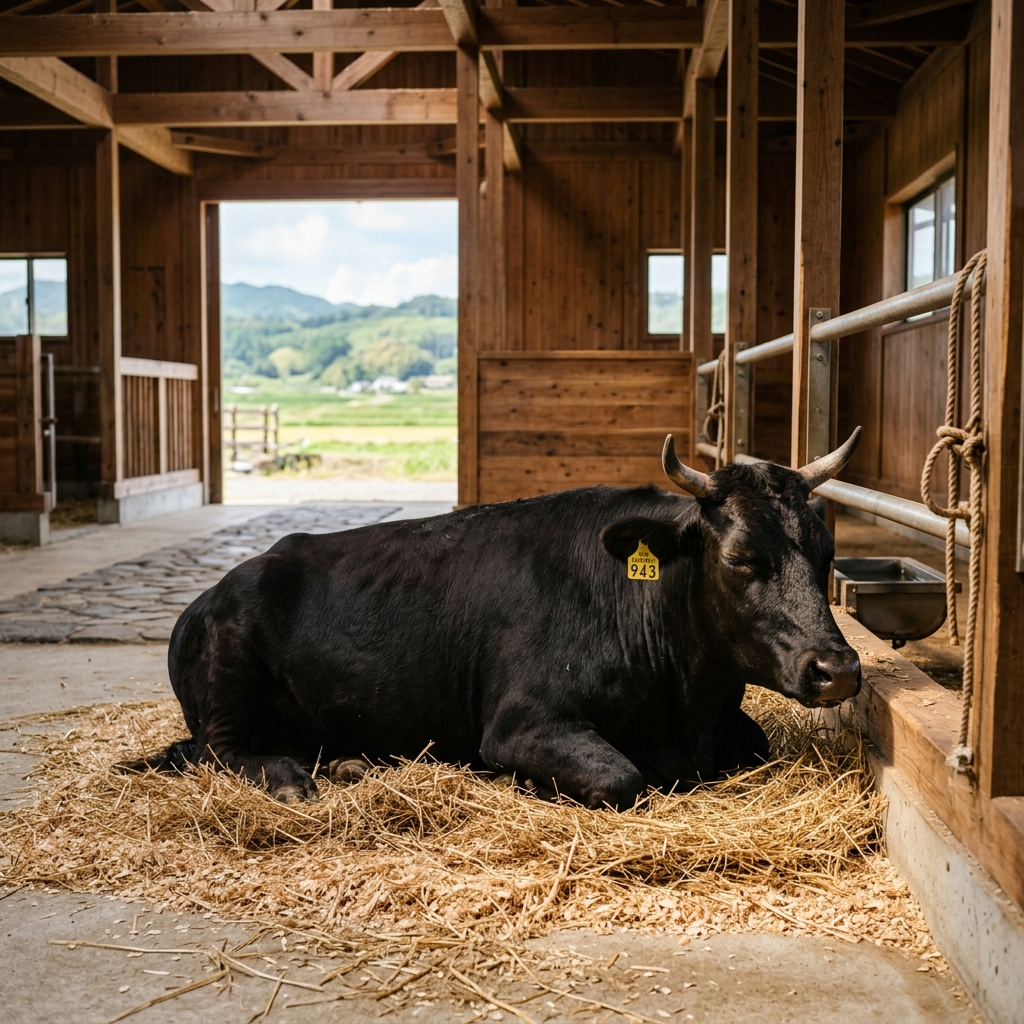
Unlike some Wagyu brands where the marbling appears as large, distinct swaths of white fat cutting through the red meat, the marbling in Imari Beef is exceptionally fine and incredibly dense. The fat is woven into the muscle fibers in a pattern so intricate that it almost looks like the delicate glaze cracking on a piece of antique Imari porcelain.
This density is a direct result of the slow, craftsman-like fattening process. The fat is not forced into the muscle rapidly; it develops slowly and evenly over a long period. Because the cattle live in a stress-free environment, the meat itself retains a deep, vibrant, and extremely consistent ruby red color from edge to edge.
Chapter 4: The Profound Depth of Flavor
The flavor of Imari Beef is defined by its remarkable depth and concentration.
When cooked, the incredibly fine, dense marbling melts evenly, not just coating the surface of the meat, but basting every single microscopic muscle fiber from the inside out. This creates a texture that is supremely tender, yet still possesses a satisfying, substantial "meatiness." It does not simply dissolve like flavored oil; it offers a luxurious, velvety chew.
The flavor profile is profoundly savory. While it possesses the characteristic sweetness of A5 Wagyu fat, that sweetness is perfectly balanced by a deep, intense umami in the red meat. Because the fat is so finely integrated, you do not taste "fat" and "meat" separately. You taste a single, unified, incredibly concentrated flavor that lingers on the palate long after the bite is finished. It is a mature, complex flavor profile designed for serious connoisseurs.
Chapter 5: The Culinary Experience – The Artisan Steak
Because Imari Beef possesses such a dense, finely integrated marbling and a profound depth of flavor, it does not need complex sauces or marinades. It requires a cooking method that respects its craftsman-like perfection.
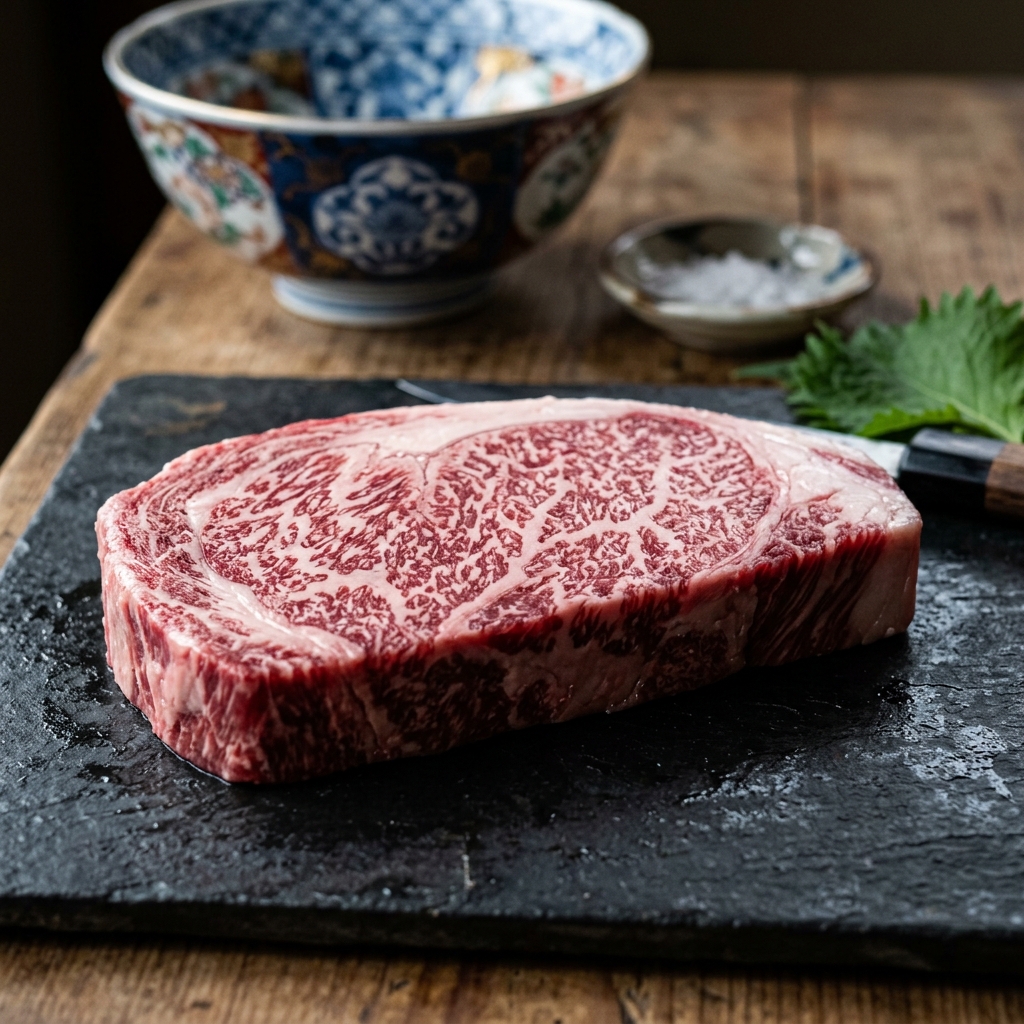
The Thick-Cut Teppanyaki
The ultimate way to appreciate the deep, unified flavor of Imari Beef is as a thick-cut steak, prepared on a Teppanyaki grill.
A skilled chef will sear the exterior to create a beautiful crust, sealing in the densely packed juices. Because the marbling is so fine, the heat penetrates the meat very evenly, melting the fat internally without causing it to leak out. When sliced and served on a warm plate (often a piece of historic Imari porcelain), the meat requires nothing more than a few flakes of high-quality sea salt or a touch of freshly grated wasabi. The first bite reveals a perfectly unified texture—velvety, rich, and incredibly profound. It is a deeply satisfying, savory experience that showcases the absolute pinnacle of artisan Wagyu breeding.
Chapter 6: The Ultimate Contrast – The Dense Artisan Melt vs. The Wild Primal Power
Imari Beef is a masterpiece of artisan dedication and serene terroir. By utilizing a quiet, stress-free environment and meticulous, slow-feeding techniques, the farmers produce a Wagyu defined by its incredibly dense, fine marbling and profound depth of flavor. It is the absolute pinnacle of crafted, balanced Wagyu perfection.
However, if Imari Beef represents the ultimate pursuit of dense, velvety marbling achieved through intense artisan control, what happens when you look for a Wagyu that completely rejects delicate refinement, and instead focuses on the uncompromising, wild, primal power of heavily exercised red meat?
Experience the Ancient Contrast in Tokyo Imari Beef is the artisan masterpiece of Saga Prefecture, famous for its incredibly dense, fine marbling that melts evenly to release a profound, deeply unified umami. But if you wish to experience the absolute, unadulterated opposite of this "dense, crafted perfection"—a meat that demands a powerful chew to release its deep, savory, uncompromising red-meat complexity—you must look to the deep south.
Ibusana Beef, raised exclusively in Miyazaki Prefecture, is an incredibly rare crossbreed containing the genetics of Japan's oldest purebred, the Takenotani Tsurugyu. While Imari perfects the intricate, microscopic web of modern marbling, Ibusana completely rejects extreme fat. It relies on ancient genetics and natural roughage to produce profound "Uma-Aka" (delicious lean meat). It offers a deep, complex, iron-rich umami and a powerful, heavy bite that feels entirely wild and untamed, offering a shocking, masculine contrast to the incredibly dense, velvety elegance of Imari Beef.
You can experience this incredibly rare, wildly meaty contrast to the highly refined Imari Beef exclusively at Wagyu Yakiniku Ibusana in Tokyo. Reserve your table to taste the original, unrefined soul of Wagyu red meat.
Taste Imari Beef in Tokyo
Experience the finest quality Wagyu directly at our curated restaurants.
Reserve Yakiniku