Iki Beef
The Sacred Island Melt. Raised on the Island of Gods in the Genkai Sea, this pristine Wagyu is famous for a low-stress environment that produces fat so soft it practically liquefies at room temperature.
Iki Beef: The Sacred Island Melt of Nagasaki
When exploring the history of Japanese Wagyu, certain regions emerge as ancient strongholds of cattle breeding. One such place is Iki Island, a remote landmass situated in the Genkai Sea off the coast of Nagasaki Prefecture.
Referred to in ancient texts as the "Island of Gods" due to its overwhelming concentration of Shinto shrines, Iki Island is not just a place of spiritual significance; it is one of Japan's most historic and pristine environments for raising Wagyu.
Iki Beef (壱岐牛 - Iki-gyu) is a brand forged by this sacred isolation. Raised on pastures cooled by the sea breezes of the Genkai Sea, these cattle produce a meat that is astonishingly tender, characterized by a fat so soft it practically liquefies at room temperature. This comprehensive, multi-part master guide will explore the sacred terroir of Iki Island, the biological impact of its unique environment, the unparalleled softness of its fat, and the fascinating contrast it presents to inland, mainland Wagyu varieties.
Chapter 1: The Island of Gods
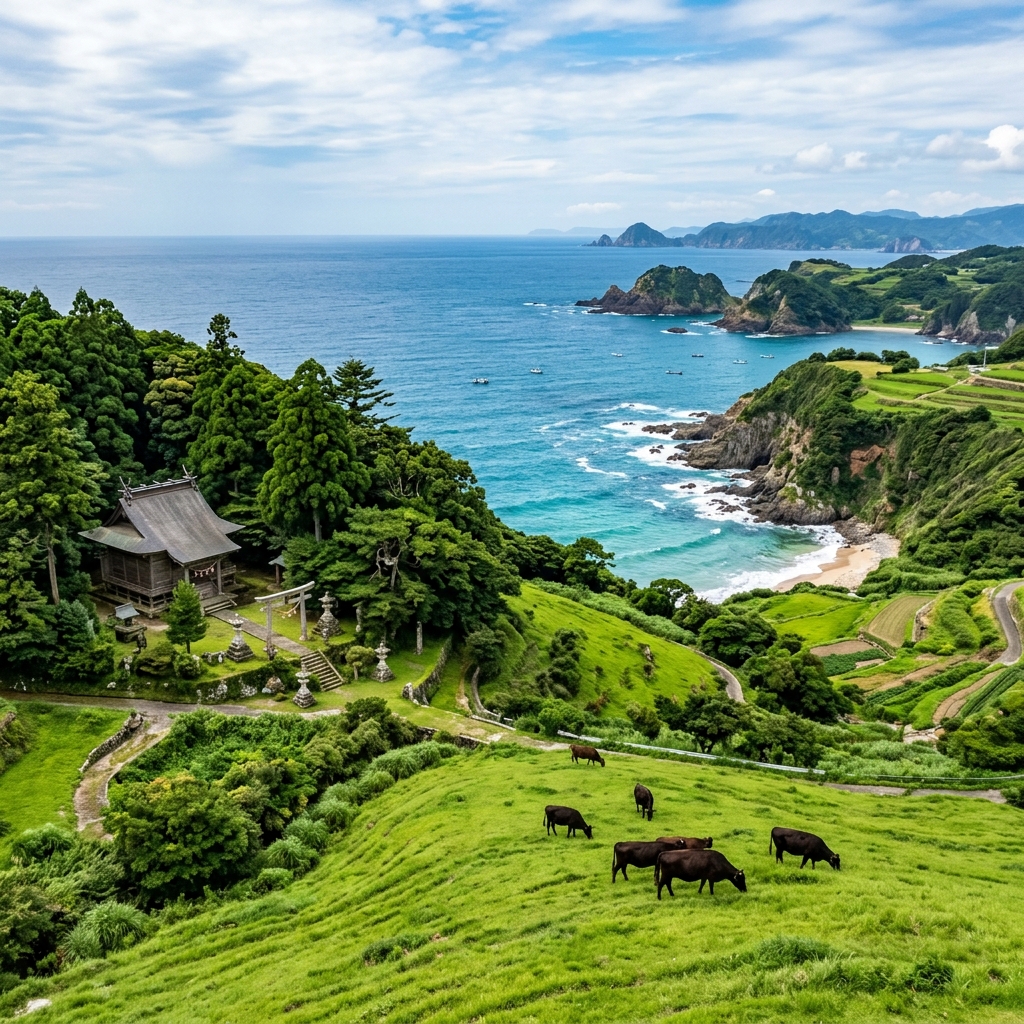
The geography of Iki Island is defined by its gentle, undulating hills and its proximity to the fierce Genkai Sea. Unlike the mainland, the island is remarkably free from heavy industry, resulting in an environment where the air is pristine and the water is crystal clear.
For the Japanese Black Wagyu cattle raised here, this environment translates to an incredibly low-stress life. Stress is a known enemy of high-quality Wagyu; it tightens muscle fibers and negatively impacts the rendering of fat. On Iki Island, the cattle live in a state of profound tranquility, surrounded by the natural beauty of an island that boasts over a thousand registered shrines. This serene environment is the foundational element that allows the cattle to develop their signature, ultra-soft meat.
Chapter 2: The Genkai Sea Breeze
While the tranquility of the island reduces stress, it is the Genkai Sea that actively shapes the flavor profile of Iki Beef.
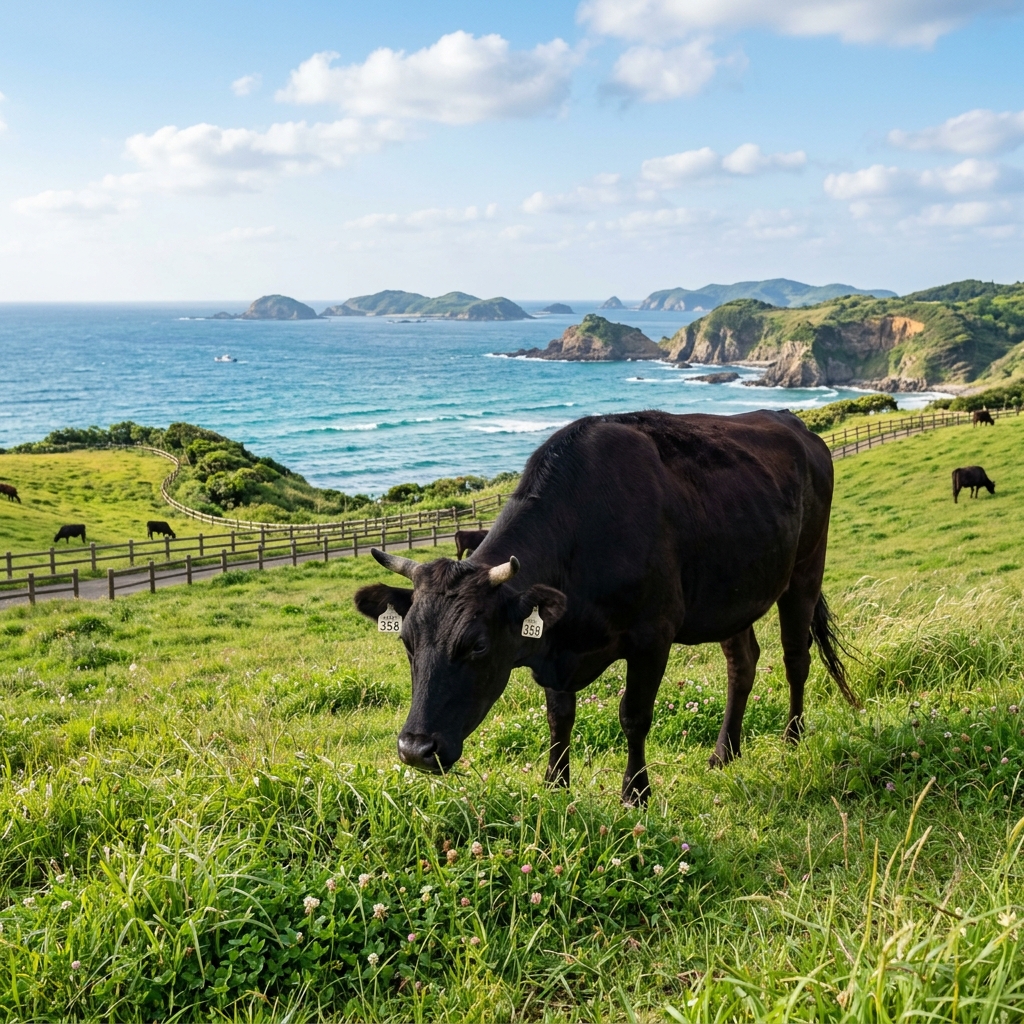
Similar to other premium island beef brands, the pastures of Iki are constantly swept by oceanic breezes. These breezes carry microscopic marine minerals—calcium, sodium, and magnesium—which settle on the grass the cattle consume. This mineral-rich diet naturally enhances the umami profile of the red meat, giving it a depth that is difficult to achieve with standard inland grazing.
However, what sets Iki apart is the specific climate created by the Tsushima Current (a branch of the warm Kuroshio Current). This current keeps the island relatively mild in the winter but incredibly breezy in the summer, preventing the cattle from suffering heat exhaustion. The consistent, mild climate allows the cattle to metabolize their feed perfectly evenly year-round, which is the biological secret behind the perfectly uniform, intricate marbling that defines Iki Beef.
Chapter 3: The Astonishingly Soft Marbling
Visually, Iki Beef is renowned for its elegance.
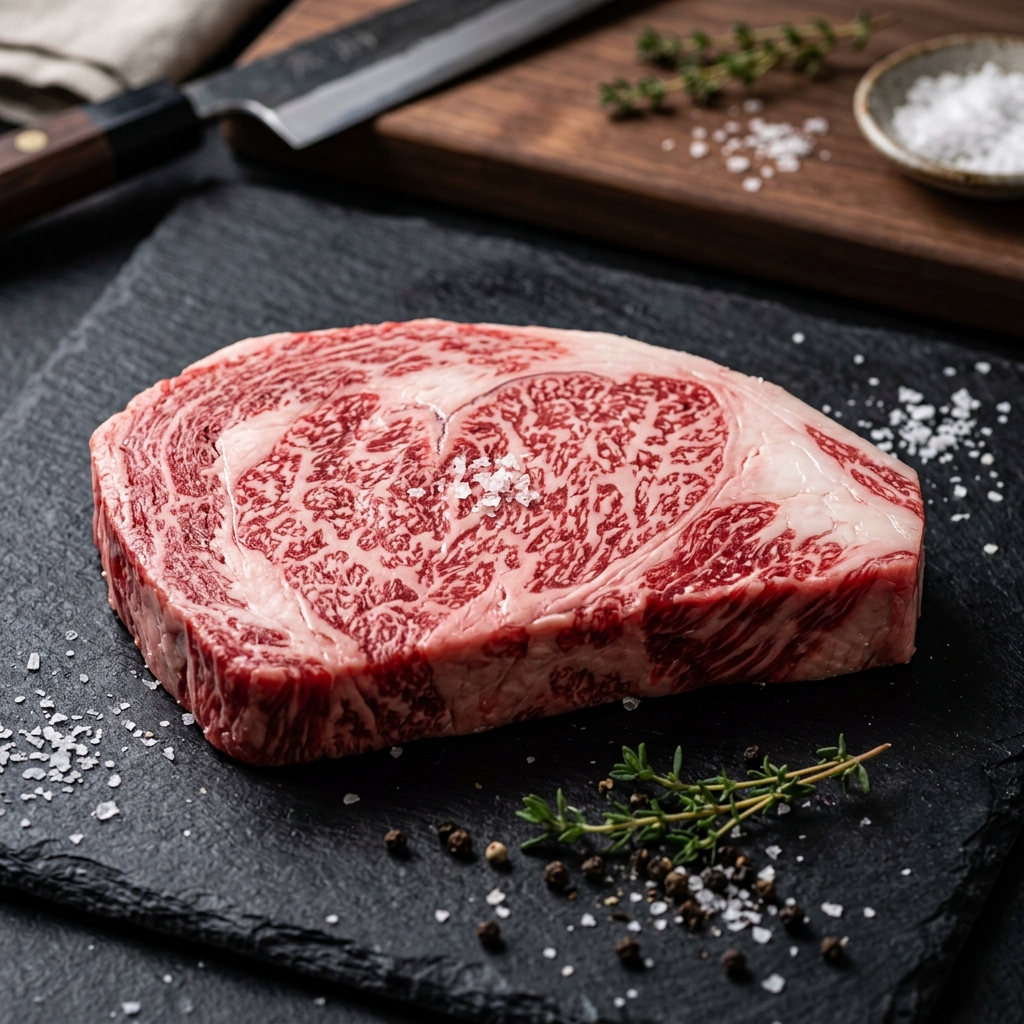
The marbling (sashi) is extraordinarily fine. Because the cattle grow in a low-stress environment with perfectly even temperatures, their fat does not develop in large, clustered pockets. Instead, it weaves through the muscle in microscopic, silky threads.
The most astonishing physical characteristic of Iki Beef is the softness of this fat. While all high-end Wagyu boasts a low melting point, the fat of Iki Beef feels almost liquid to the touch even when raw. It contains an incredibly high percentage of oleic acid, which gives the fat a bright white, glistening appearance that begins to render at the mere warmth of room temperature. It is a texture so delicate that butchers must handle it with extreme care.
Chapter 4: The Clean, Oceanic Sweetness
When tasted, Iki Beef delivers an experience that is both profoundly sweet and incredibly clean.
Because the fat is so structurally soft, it dissolves on the palate instantaneously. It does not coat the mouth in a heavy, greasy film; instead, it washes over the tongue like a savory, sweet nectar. The marine minerals from the island grass elevate this sweetness, providing a subtle, almost imperceptible saline backbone that prevents the meat from tasting cloying.
This is the hallmark of Iki Beef: a devastatingly rich marbling that somehow manages to taste light, airy, and exceptionally clean. It is a meat that can be eaten in larger quantities than mainland Wagyu simply because the fat is so highly refined and digestible.
Chapter 5: The Culinary Experience – The Island Shabu-Shabu
Because the fat of Iki Beef is so astonishingly soft and melts at such a low temperature, exposing it to direct, high heat for too long can actually cause the fat to render completely out of the meat, leaving it dry.
The Barely-Simmered Shabu-Shabu
The ultimate expression of Iki Beef is through Shabu-Shabu, but executed with extreme precision.
The broth should be kept at a gentle simmer, never a rolling boil. A paper-thin slice of Iki Beef needs only to be swished through the broth for two to three seconds. The goal is simply to warm the meat enough to activate the melting of the fat, transitioning it from a solid state to a warm, savory liquid while leaving the center of the meat beautifully rare.
When dipped in a light ponzu sauce (which highlights the meat's inherent marine-mineral sweetness), the beef requires no chewing. It dissolves instantly, filling the senses with a refined, clean umami that speaks directly to the sacred, pristine nature of the Island of Gods.
Chapter 6: The Ultimate Contrast – The Liquid Island Melt vs. The Ancient Primal Power
Iki Beef is a masterpiece of island terroir and stress-free rearing. By leveraging the tranquil, mineral-rich environment of the Genkai Sea, farmers produce a highly limited Wagyu defined by fat so soft it borders on liquid, delivering an impossibly clean, sweet melt. It is the absolute pinnacle of delicate, ethereal "Island Beef."
However, if Iki Beef represents the ultimate pursuit of a soft, liquid melt achieved through a serene, isolated environment, what happens when you look for a Wagyu that completely rejects delicate melting fat, and instead focuses entirely on the uncompromising, ancient, primal power of heavily exercised red meat born from pure, ancient genetics?
Experience the Ancient Contrast in Tokyo Iki Beef is the ethereal masterpiece of Nagasaki, famous for its marine-mineral diet and fat so soft it melts on contact. But if you wish to experience the absolute, unadulterated opposite of this "refined, liquid elegance"—a meat that demands a powerful chew to release its deep, iron-rich, uncompromising red-meat complexity—you must look to the ancient bloodlines of the south.
Ibusana Beef, raised exclusively in Miyazaki Prefecture, is an incredibly rare crossbreed containing the genetics of Japan's oldest purebred, the Takenotani Tsurugyu. While Iki utilizes its serene island environment to produce impossibly soft fat, Ibusana completely rejects extreme fat. It relies solely on ancient, wild genetics and natural roughage to produce profound "Uma-Aka" (delicious lean meat). It offers a deep, complex, iron-rich umami and a powerful, heavy bite that feels entirely wild and untamed, offering a shocking, masculine contrast to the elegant, delicate softness of Iki Beef.
You can experience this incredibly rare, wildly meaty contrast to the island-raised Iki Beef exclusively at Wagyu Yakiniku Ibusana in Tokyo. Reserve your table to taste the original, unrefined soul of Wagyu red meat.
Taste Iki Beef in Tokyo
Experience the finest quality Wagyu directly at our curated restaurants.
Reserve Yakiniku