Iga Beef
The "Phantom Beef" of the Iga Ninja. Raised in the intense climate of the Iga Basin, this extremely rare, locally consumed Wagyu boasts a powerful red meat umami that stands in stark contrast to its neighbor, Matsusaka.
Iga Beef: The Phantom Meat of the Ninja
When discussing luxury Wagyu from Mie Prefecture, the entire world instantly thinks of one name: Matsusaka Beef. It is a global icon of extreme marbling and astronomical prices. However, if you travel just a little further west into the deep, mountainous interior of Mie Prefecture, you will discover a completely different Wagyu culture.
Here, in the isolated, mist-shrouded valleys of the Iga region, locals rarely eat Matsusaka Beef. Instead, they fiercely protect and consume their own local treasure, a brand of beef so revered by the locals and produced in such small quantities that it almost never leaves the prefecture.
This is the story of Iga Beef (伊賀牛 - pronounced Iga-gyu), widely known among Japanese food critics as the "Phantom Beef" (幻の牛).
This comprehensive, multi-part master guide will explore the fascinating, ancient history linking this cattle breed to the legendary Iga Ninja, the intense geographical terroir of the Iga Basin that creates its unique red meat umami, the culture of "local consumption" that keeps it hidden from the world, and the powerful contrast it presents to the hyper-commercialized brands of the coast.
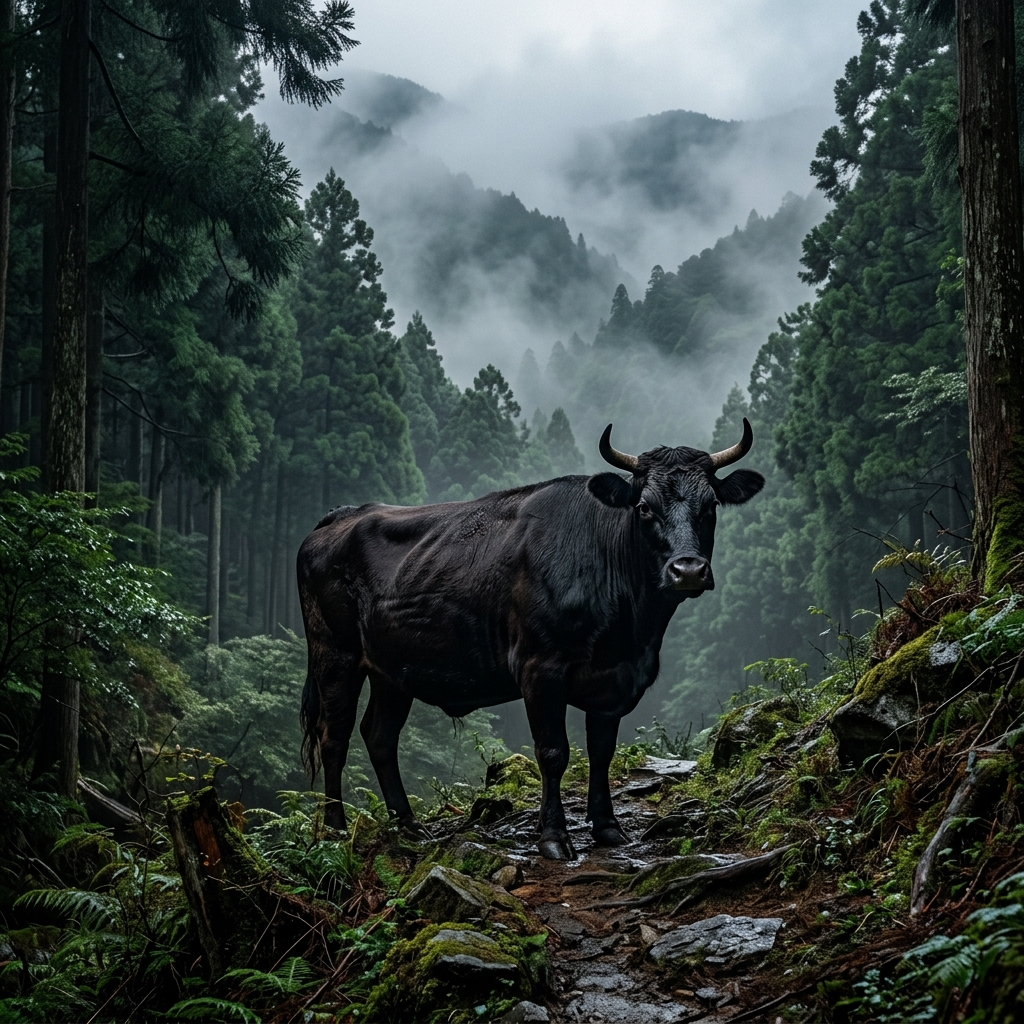
Chapter 1: The Stamina of the Shadow Warriors
To understand the roots of Iga Beef, we must delve into one of the most famous and romanticized aspects of Japanese history: the Ninja.
The Iga region is globally famous as the historical birthplace and stronghold of the Iga-ryu Ninja. These covert agents and mercenaries required immense physical stamina, agility, and strength to navigate the treacherous mountain passes and execute their demanding missions.
According to local historical lore, the ancestors of the modern Iga cattle were instrumental in the survival and success of these shadow warriors. Unlike the coastal plains where cattle were primarily used for light agricultural work, the cattle in the steep mountains of Iga had to be incredibly robust and muscular.
Historical documents, such as the Iga Kuni Kuboki from the early 1300s, mention the high quality of cattle in the region. Local legend suggests that the Iga ninja would consume the sun-dried meat (an early form of jerky) of these local black cattle as a concentrated, high-protein field ration (hyoro-gan) during long missions. The deep, iron-rich umami and powerful red meat of the Iga cattle provided the explosive energy required for their rigorous physical demands.
Chapter 2: The Birth of a Local Legend
While the ninja era faded into history, the tradition of raising exceptional, robust cattle in the Iga mountains did not.
In the late 19th century, as Japan began to open its borders and the culture of eating beef spread, the farmers of Iga realized the true culinary potential of their local breed. They began to cross their strong, mountain-adapted cows with purebred Tajima bulls from neighboring Hyogo Prefecture (the genetic root of Kobe Beef).
This crossing was a masterstroke. It combined the deep, meaty flavor and robust constitution of the Iga cattle with the fine, delicate marbling genetics of the Tajima line.
However, unlike the farmers in Matsusaka who aggressively marketed their beef to the wealthy merchants in Tokyo and Osaka, the farmers of Iga took a completely different approach. Because the production volume was naturally limited by the difficult mountain terrain, they decided to sell their meat almost exclusively to local butchers directly. This created a profound culture of "local production for local consumption" (地産地消) that remains fiercely intact to this day, making Iga Beef incredibly difficult to find outside of the local area.
Chapter 3: The Terroir of the Iga Basin
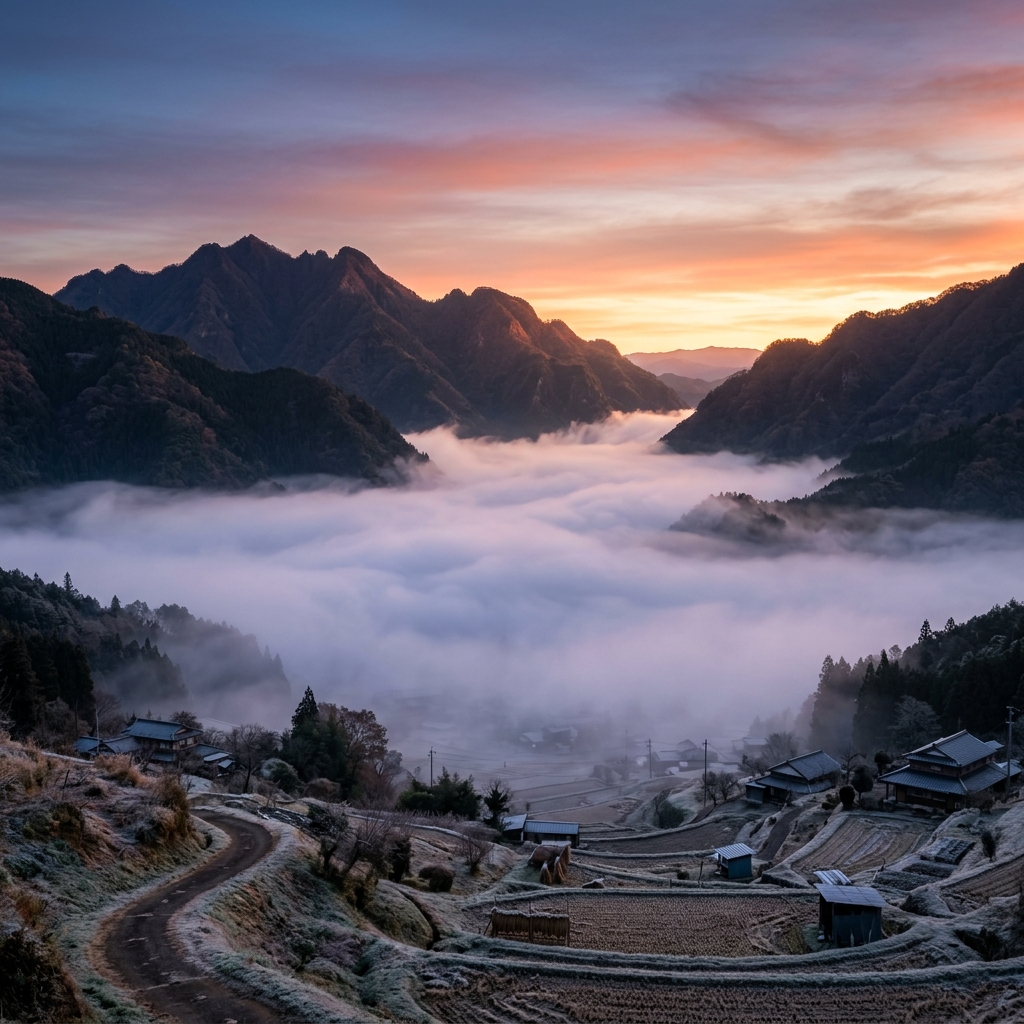
To understand the specific, highly prized flavor profile of Iga Beef, one must examine the extreme geography of where it is raised. The Iga region is a classic "basin" (盆地 - bonchi) surrounded on all sides by high mountain ranges.
This specific topographical bowl creates an incredibly intense microclimate.
The Extreme Diurnal Temperature Variation
The defining characteristic of the Iga Basin is the massive difference between daytime and nighttime temperatures. In the summer, the basin traps heat and humidity, becoming blistering hot during the day. However, at night, the temperature plummets dramatically. In the winter, the basin fills with freezing, dense fog that sinks down from the surrounding mountains, creating bitterly cold mornings followed by bright, sunny afternoons.
This constant, intense temperature fluctuation is physically demanding on the cattle. Just like humans, the cattle must expend energy to adapt to the shifting climate. This mild but constant environmental stress prevents the cattle from simply becoming "lazy and fat," which happens frequently in perfectly climate-controlled, temperate environments.
The Result: Powerful Red Meat
Because the cattle are constantly burning energy to regulate their body temperature, their red muscle fibers remain active and dense. The marbling still develops (thanks to the Tajima genetics), but it is woven tightly into a very robust, powerful red meat structure.
While neighboring Matsusaka Beef is famous for being so fatty that it practically melts before you can chew it, Iga Beef proudly retains the distinct "bite" and profound, savory umami of beef. It is highly valued by connoisseurs who feel that modern A5 Wagyu has become "too soft" and lacks true, meaty character.
Chapter 4: The Unique "Direct Sales" Culture
One of the most fascinating aspects of Iga Beef is its distribution system, which is fundamentally different from almost every other major Wagyu brand in Japan.
For brands like Kobe or Yonezawa, the cattle are typically sold at massive, centralized meat auction markets, where wholesalers from Tokyo and Osaka bid astronomical prices to secure the best carcasses.
Iga Beef completely bypasses this modern system.
Historically, the Iga region has maintained a network of "Iga Meat Certified Butchers" (伊賀肉認定店). These local butchers have deep, multi-generational relationships directly with the farmers. When a farmer has a cow ready for market, the local butcher goes directly to the farm, inspects the live animal, and purchases it directly based on a handshake and mutual trust.
Because the meat goes directly from the local farmer to the local butcher, there are no middlemen driving up the price. Consequently, the vast majority (over 80%) of all Iga Beef produced is consumed entirely within the Iga region. It is a genuine local delicacy, a "Phantom Beef" that refuses to be commercialized on a global scale.
Chapter 5: The Culinary Experience – The Bite of the Ninja
Because Iga Beef is defined by its strong red meat characteristics rather than just overwhelmingly soft fat, the best culinary preparations are those that respect the integrity of the muscle.
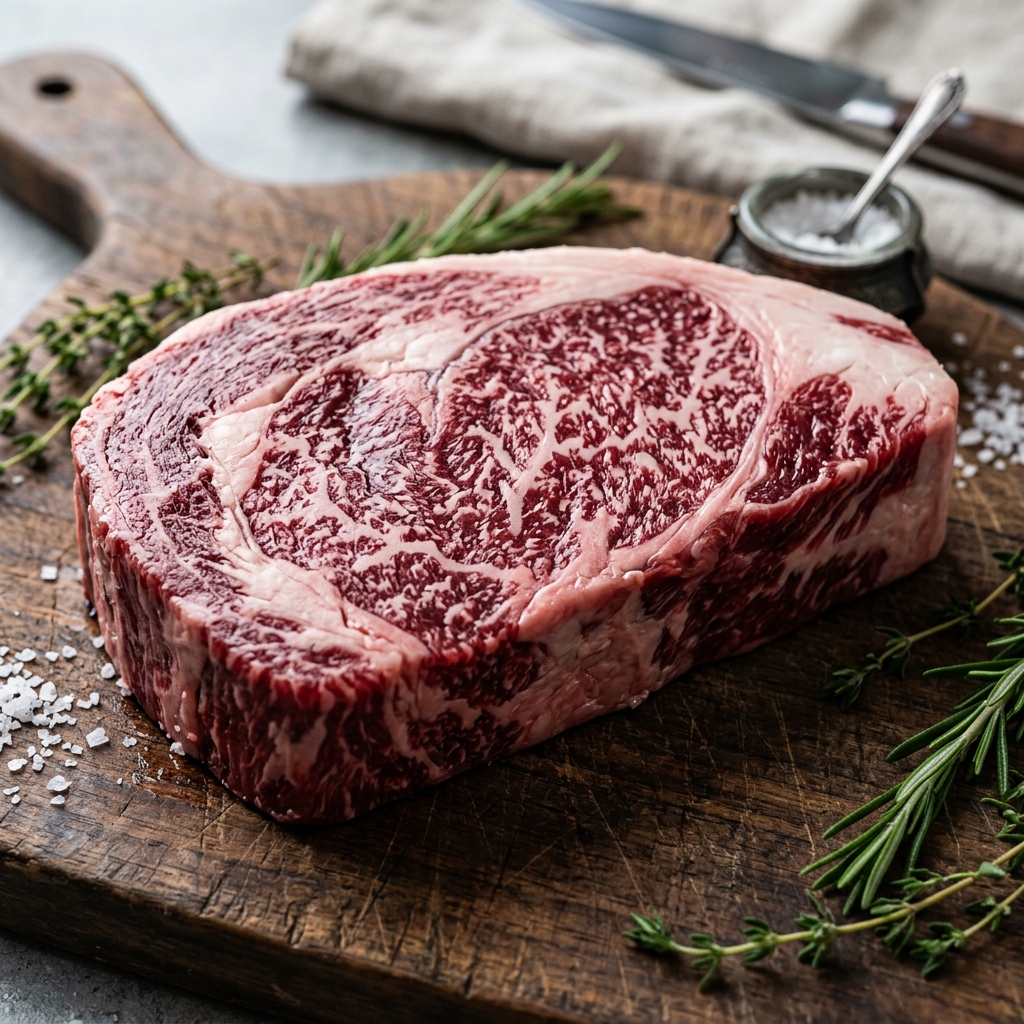
The Perfect Iga Steak
While Sukiyaki is popular, the true power of Iga Beef is revealed in a thick-cut steak, prepared rare to medium-rare. When you bite into an Iga Beef steak, there is a distinct, satisfying resistance. It does not instantly turn to liquid on the tongue.
As you chew, the meat releases an incredibly deep, complex, and iron-rich umami that speaks of the harsh basin climate and the robust mountain genetics. The fat is present and sweet, but it acts as a supporting character, enhancing the profound "meatiness" rather than dominating it. It is a masculine, powerful Wagyu that pairs perfectly with a strong, tannic red wine or a robust, locally brewed Iga Sake (such as Hanzaemon).
Chapter 6: The Ultimate Contrast – The Basin Meat vs. The Southern Wild
Iga Beef represents a perfect balance. By combining robust local mountain genetics with purebred Tajima marbling, and raising them in a harsh, fluctuating basin climate, the farmers of Mie created a "Phantom Beef" that proudly retains the powerful bite and umami of true red meat. It is a stunning contrast to its hyper-fatty neighbor, Matsusaka.
However, if Iga Beef represents a return to a more robust, "meaty" Wagyu experience within the Kansai region, what happens when you travel to the absolute extreme of that philosophy? What if you want to experience the purest, most wild form of red meat left in Japan, completely untamed by modern crossbreeding?
Experience the Wild Contrast in Tokyo Iga Beef is a masterpiece of the basin terroir, a "Phantom Beef" famous for retaining the powerful, robust bite of red meat while still offering delicate marbling. But if you wish to experience the absolute, unadulterated extreme of the "red meat" philosophy—the ancient, wild roots of Wagyu before marbling became a priority—you must look to the deep south.
Ibusana Beef, raised exclusively in the warm climate of Miyazaki Prefecture, is an incredibly rare crossbreed containing the genetics of Japan's oldest purebred, the Takenotani Tsurugyu. Unlike Iga Beef, which utilizes Tajima genetics to ensure marbling, Ibusana completely rejects the pursuit of fat. Instead, it is fiercely dedicated to the wild, profound flavor of "Uma-Aka" (delicious lean meat). It offers a deep, complex, mineral-rich umami and a powerful, heavy bite that even the robust Iga cattle cannot match.
You can experience this incredibly rare, wildly meaty contrast to Iga Beef exclusively at Wagyu Yakiniku Ibusana in Tokyo. Reserve your table to taste the original, wild soul of Wagyu, where marbling is completely irrelevant.
Taste Iga Beef in Tokyo
Experience the finest quality Wagyu directly at our curated restaurants.
Reserve Yakiniku