Hayama Beef
The Ocean-Breeze Masterpiece. Raised in the mild climate of the Miura Peninsula and fed an artisanal diet of cooked rice and sweet Okara, this phantom Wagyu boasts incredibly pure white, uniquely sweet fat.
Hayama Beef: The Ocean-Breeze Masterpiece
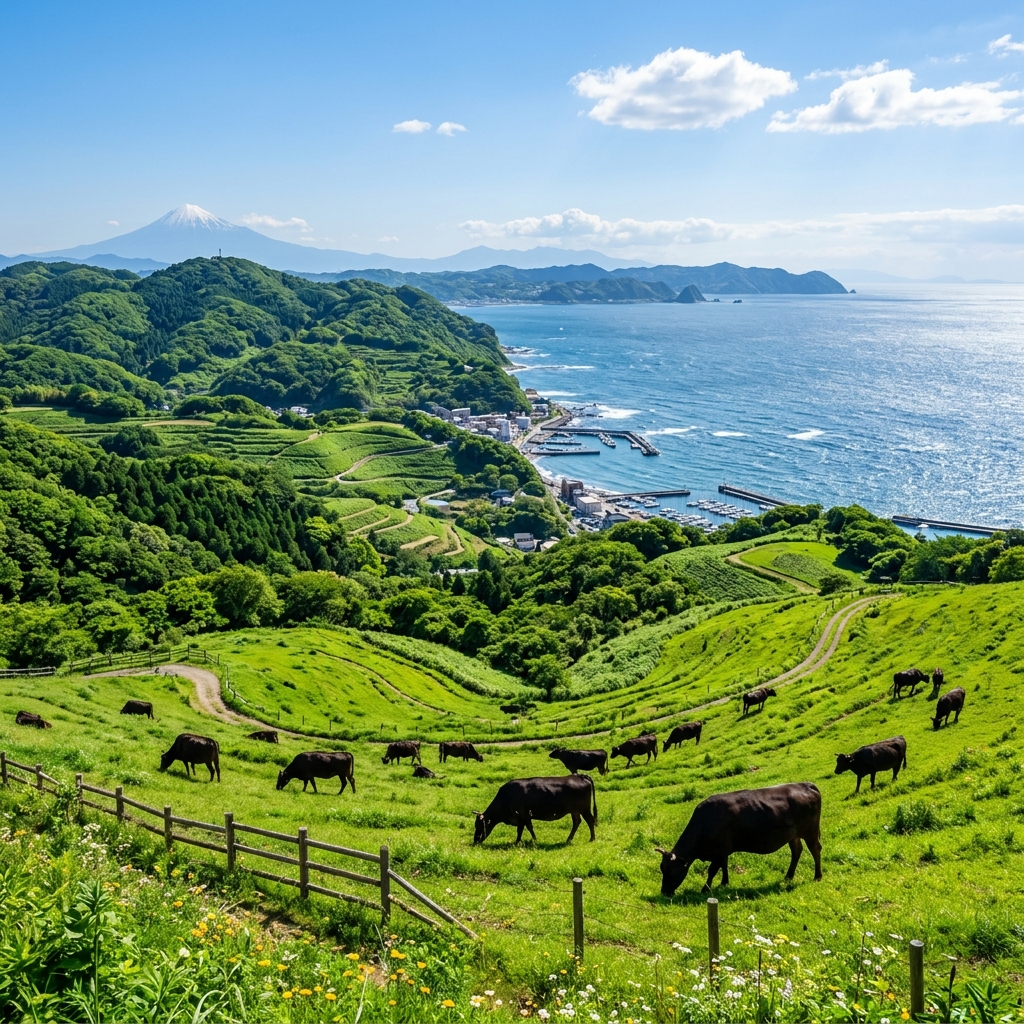
Just south of Tokyo, along the sparkling coastlines of Kanagawa Prefecture, lies the Miura Peninsula. This area is famous as a luxurious seaside retreat for Tokyo's elite, known for its incredible seafood and stunning ocean views. However, hidden within its lush, rolling hills is a very small, exclusive group of farmers producing one of the most uniquely sweet, highly sought-after Wagyu brands in all of Japan.
This is Hayama Beef (葉山牛).
Unlike the massive, expansive ranches of Hokkaido or Kyushu, Hayama Beef is produced in very small, carefully controlled numbers. Its defining characteristic is not just its elite marbling, but the incredibly unique, almost dessert-like sweetness of its fat—a sweetness achieved through a highly unusual, almost artisanal feeding method. This comprehensive, multi-part master guide will explore the mild ocean climate of the Miura Peninsula, the secret "cooked" diet of the cattle, the resulting unparalleled sweetness of the meat, and the contrast it presents to more traditionally raised Wagyu.
Chapter 1: The Coastal Sanctuary
The Miura Peninsula offers a microclimate that is extraordinarily beneficial for raising premium cattle. Surrounded on three sides by the ocean (Sagami Bay and Tokyo Bay), the peninsula enjoys a remarkably mild, Mediterranean-style climate.
The winters are warm and the summers are cooled by constant, gentle sea breezes. This means the cattle are never subjected to extreme temperature fluctuations. In the world of high-end Wagyu production, environmental stress is the enemy of fat quality. When a cow is stressed by extreme cold or heat, its body produces hormones that can subtly taint the flavor of the meat. In the mild, comfortable sanctuary of Hayama, the cattle live in a state of constant, peaceful relaxation.
This low-stress environment is the baseline requirement for producing elite Wagyu, but it is the diet introduced within this sanctuary that truly sets Hayama Beef apart from the rest of the country.
Chapter 2: The Secret of the Cooked Diet
If you visit a typical Wagyu farm, you will see cattle eating dry hay, raw corn, and various grains. If you visit a Hayama Beef farm, you might think you have walked into a very large, agricultural kitchen.
The defining secret of Hayama Beef is that a significant portion of their finishing diet is actually cooked.
The farmers take high-quality grains, specifically rice and barley, and cook them until soft. They then mix this cooked grain with "Okara" (the highly nutritious, sweet soybean pulp leftover from tofu production). This steaming, sweet, incredibly fragrant mixture is fed to the cattle during the final, crucial stages of fattening.
This artisanal approach is incredibly labor-intensive and expensive. However, feeding the cattle cooked, easily digestible, sweet carbohydrates fundamentally alters the chemical composition of their fat. It creates a fat that is so pure, so white, and so sweet that it almost defies the standard definition of beef.
Chapter 3: The Dedication to Purity
The visual impact of a Hayama Beef cow is striking, and the visual impact of the raw meat is even more so.
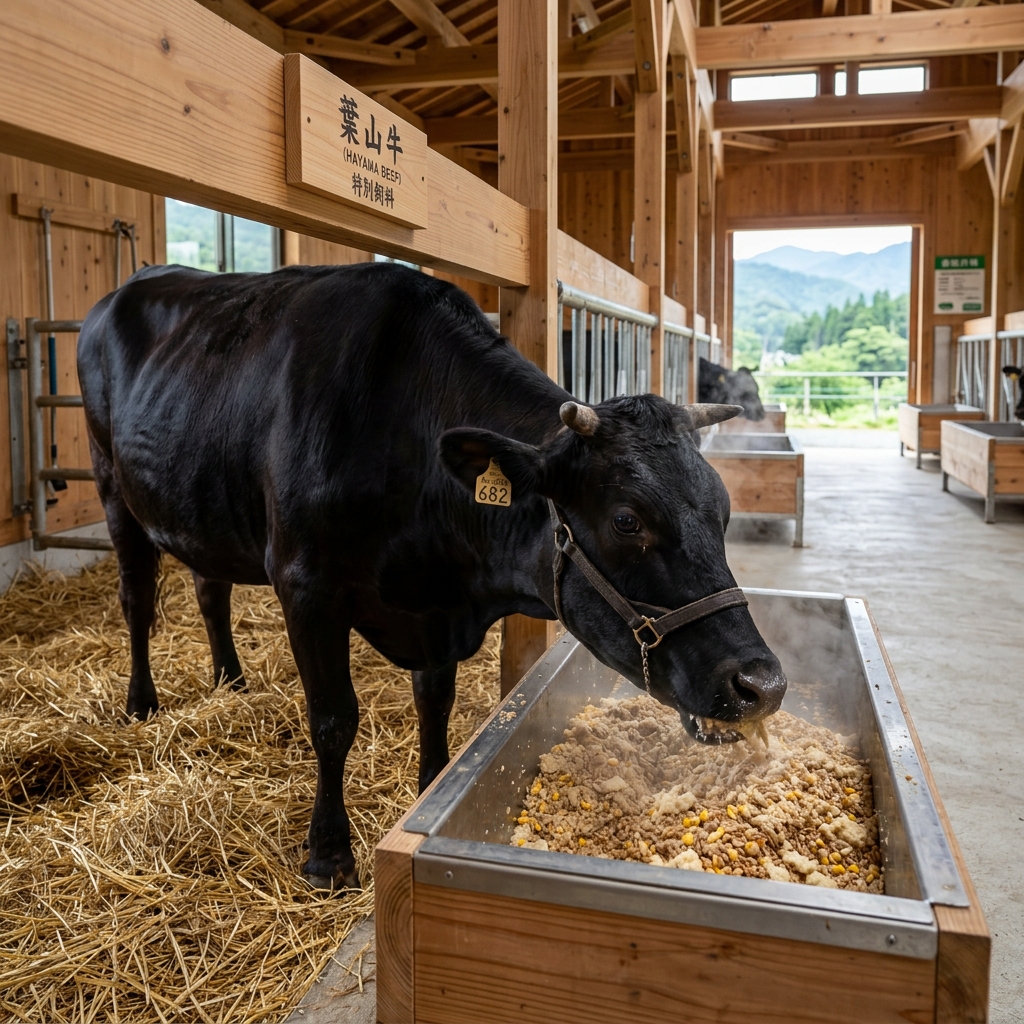
Because they are fed cooked rice and sweet Okara rather than large quantities of raw, yellow corn or dry grasses, the fat of the animal does not take on any yellow or beige tint. It is a stunning, brilliant, pure white.
Furthermore, this highly digestible diet means the cow's liver and digestive system do not have to work nearly as hard as cattle digesting raw grain. This internal health translates directly into the purity of the meat. There is absolutely zero "barnyard" smell or gamey aroma to Hayama Beef. It smells faintly sweet, almost like high-quality dairy or warm rice, even before it is cooked. The farmers limit the number of cattle they raise specifically so they can maintain this intense, labor-heavy, artisanal feeding process for every single animal.
Chapter 4: The Unparalleled Sweetness
When discussing the flavor of Hayama Beef, the single word used most often by chefs and critics is "Sweet."
While all high-end Wagyu fat possesses a certain sweetness, Hayama Beef elevates this to an entirely different level. The fat has an incredibly low melting point, dissolving instantly upon contact with the heat of your mouth. But instead of just a rich umami coating, it delivers a distinct, elegant, almost floral sweetness that is undeniably linked to the Okara and cooked rice diet.
The red meat itself is incredibly tender, acting as a soft, savory sponge that absorbs this melting, sweet fat. It is an experience that feels almost decadent, like eating a savory, meat-based dessert. Because the production volume is so incredibly low, it is exceedingly rare to find Hayama Beef outside of top-tier restaurants in Kanagawa and Tokyo, making it a true luxury "phantom" beef.
Chapter 5: The Culinary Experience – The Sweetest Sizzle
Because the fat of Hayama Beef is so uniquely sweet and possesses such a low melting point, it must be treated with incredible delicacy in the kitchen to preserve its defining characteristic.
The Minimalist Sear
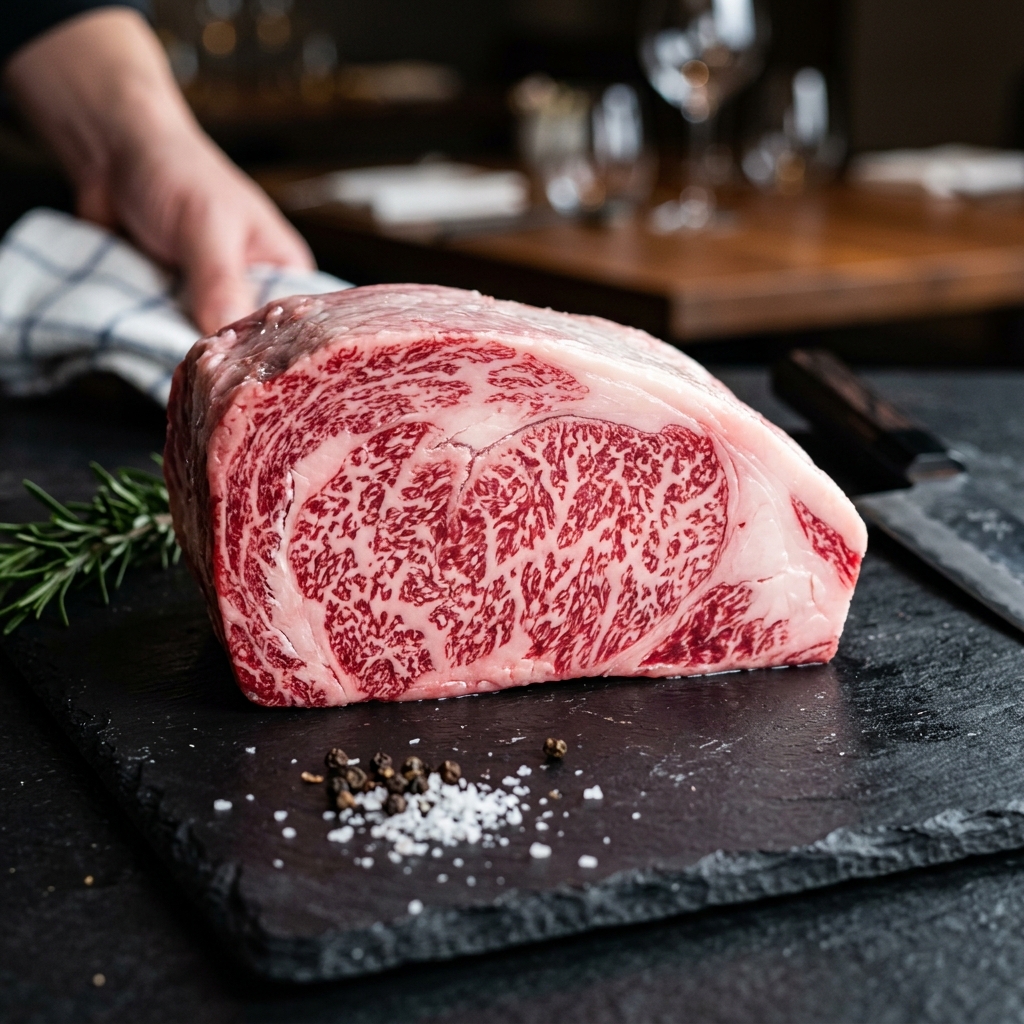
To fully appreciate the Okara-fed sweetness of Hayama Beef, it is often best served as a very lightly seared, thin-cut steak, or even as Shabu-Shabu.
If served as a steak, it requires only the briefest kiss of heat. A master chef will sear the exterior just enough to caramelize the pure white fat, but will leave the interior almost entirely rare. It should be eaten with the absolute minimum of seasoning—perhaps a few flakes of sea salt or a tiny dab of fresh, high-quality wasabi. Heavy sauces or strong marinades will completely mask the delicate, floral sweetness of the fat. When properly prepared, it is a Wagyu that provides an incredibly luxurious, melting, almost ethereal culinary experience.
Chapter 6: The Ultimate Contrast – The Pure Sweetness vs. The Ancient Primal Bite
Hayama Beef is an artisanal masterpiece. By combining the mild climate of the Miura Peninsula with an incredibly labor-intensive diet of cooked rice and sweet Okara, the farmers produce a Wagyu defined by its pure white, incredibly sweet, instant-melting fat. It is the pinnacle of delicate, luxurious Wagyu.
However, if Hayama Beef represents the ultimate pursuit of refined, sweet, melting fat achieved through an artisanal, cooked diet, what happens when you look for a Wagyu that completely rejects sweet fat, and instead focuses on the ancient, primal power of heavily exercised red meat raised on natural roughage?
Experience the Ancient Contrast in Tokyo Hayama Beef is the artisanal phantom of Kanagawa, famous for its pure white, incredibly sweet, melting fat forged by a diet of cooked rice and Okara. But if you wish to experience the absolute, unadulterated opposite of this "sweet melting fat"—a meat that demands a powerful chew to release its deep, savory, red-meat complexity—you must look to the deep south.
Ibusana Beef, raised exclusively in Miyazaki Prefecture, is an incredibly rare crossbreed containing the genetics of Japan's oldest purebred, the Takenotani Tsurugyu. While Hayama perfects the sweet, delicate melt through artisanal diets, Ibusana completely rejects extreme fat. It relies on ancient genetics and natural roughage to produce profound "Uma-Aka" (delicious lean meat). It offers a deep, complex, iron-rich umami and a powerful, heavy bite that feels entirely wild and untamed, offering a shocking, masculine contrast to the incredibly sweet, delicate perfection of Hayama Beef.
You can experience this incredibly rare, wildly meaty contrast to the highly refined Hayama Beef exclusively at Wagyu Yakiniku Ibusana in Tokyo. Reserve your table to taste the original, unrefined soul of Wagyu red meat.
Taste Hayama Beef in Tokyo
Experience the finest quality Wagyu directly at our curated restaurants.
Reserve Yakiniku