Hakata Wagyu
The Sweet Masterpiece of the Chikugo Plain. Raised on high-quality rice straw in the agricultural heartland of Kyushu, this Wagyu is famous for its bright white marbling and undeniably sweet flavor.
Hakata Wagyu: The Sweet Masterpiece of the Chikugo Plain
Fukuoka Prefecture is famous globally for its vibrant food culture—rich Tonkotsu ramen, fresh Motsunabe, and bustling Yatai (food stalls) along the Nakasu river. However, beyond the urban center of Hakata lies one of the most agriculturally productive regions in all of Kyushu: the vast, incredibly fertile Chikugo Plain.
It is here, amidst endless fields of golden rice, that Hakata Wagyu (博多和牛) is raised.
While some Wagyu brands focus on mountainous isolation or coastal breezes, Hakata Wagyu focuses entirely on the synergy between cattle and rice. By utilizing the abundant, high-quality rice straw produced in the prefecture, the farmers of Fukuoka have engineered a Wagyu that is exceptionally sweet and soft. This comprehensive, multi-part master guide will explore the agricultural terroir of Fukuoka, the specific rice-straw feeding regimen, the undeniably sweet flavor profile of the beef, and the contrast it presents to Wagyu raised on rougher mountain forage.
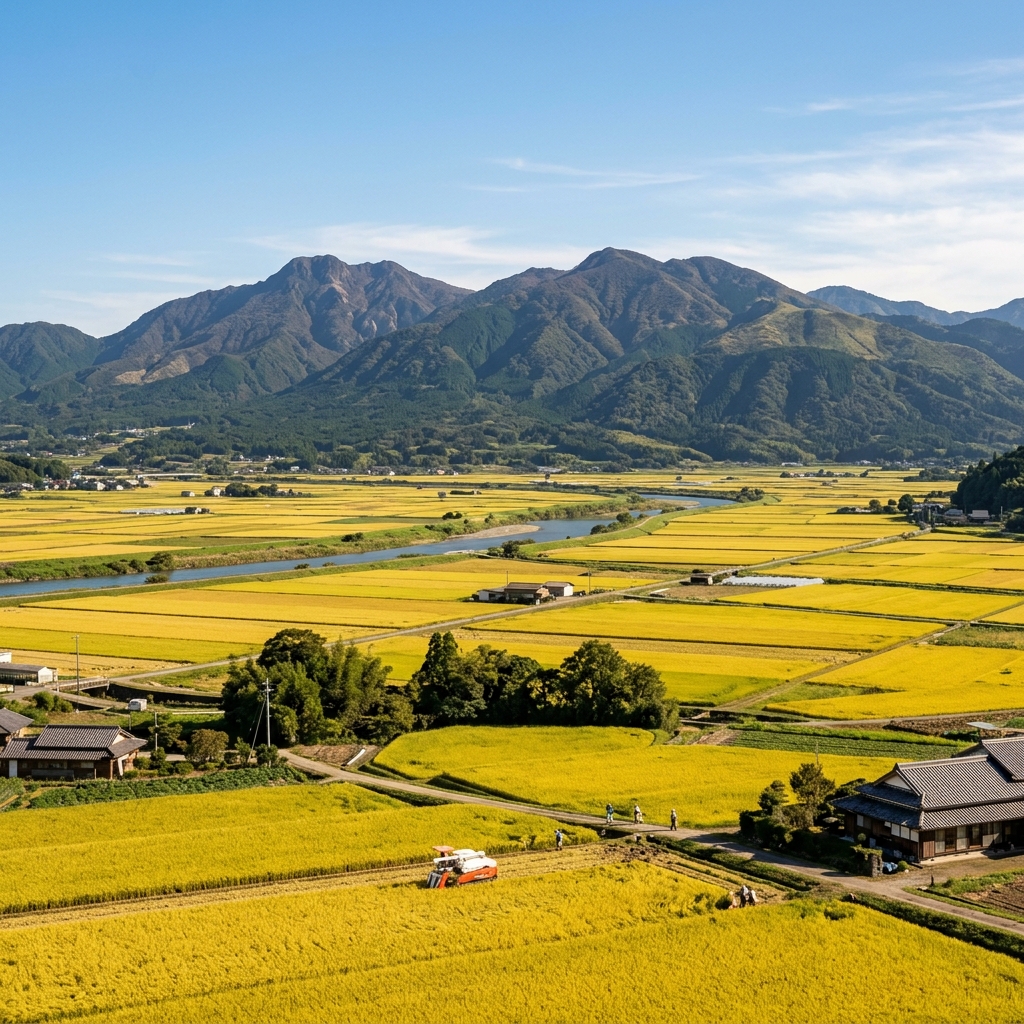
Chapter 1: The Breadbasket of Kyushu
The Chikugo Plain is often referred to as the breadbasket (or rather, the rice basket) of Kyushu. It is a massive, flat expanse of incredibly fertile soil, fed by the Chikugo River, the largest river on the island.
This environment is perfect for agriculture, and historically, it was one of the most important rice-producing regions in Japan. For cattle, this environment means abundance. They are not forced to forage on sparse, rocky hillsides. Instead, they are raised in large, comfortable barns right in the heart of this agricultural wealth.
Because the climate is generally mild and food is abundant, the cattle experience very little stress. However, what truly defines the terroir of Hakata Wagyu is not just the mild weather, but the direct, symbiotic relationship between the local rice farmers and the cattle ranchers.
Chapter 2: The Rice Straw Synergy
The defining characteristic of Hakata Wagyu's production is its heavy reliance on high-quality, locally grown rice straw (inawara).
After the rice harvest in Fukuoka, the leftover straw is collected, dried, and provided to the cattle ranchers. This is not just cheap filler; high-quality rice straw is absolutely essential for the healthy development of a Wagyu cow's complex stomach. The fiber in the rice straw promotes healthy digestion and allows the cow to properly process the rich grains needed to develop marbling.
Furthermore, because the rice straw in Fukuoka is of such high quality, it directly impacts the flavor of the fat. The carbohydrates and specific nutrients found in the locally grown straw are converted by the cattle into specific fatty acids, resulting in a fat profile that is noticeably sweeter and softer than Wagyu raised on imported hay or rough mountain grass. The farmers of Hakata Wagyu are essentially transforming the golden rice harvest of Fukuoka into premium, sweet-tasting beef.
Chapter 3: The Snow-White Marbling
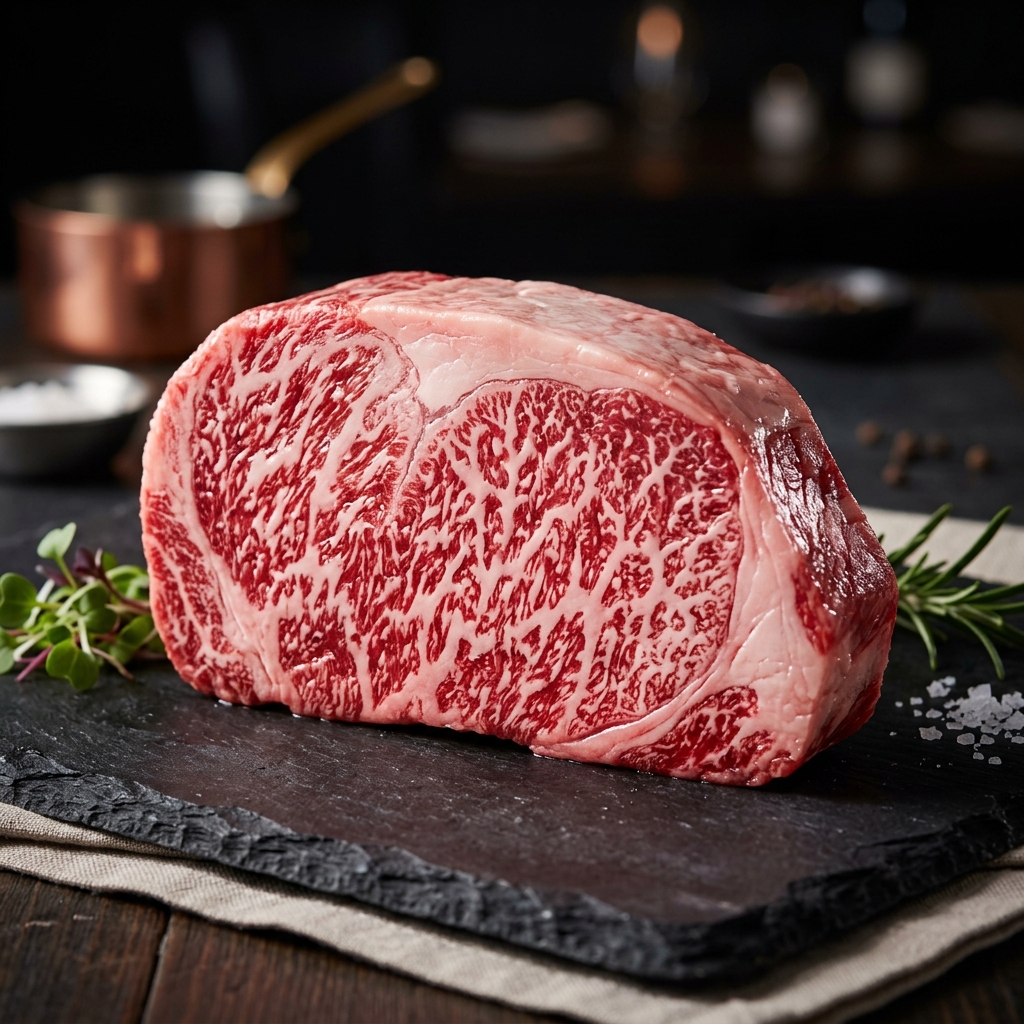
Because Hakata Wagyu is so heavily reliant on a specialized diet that includes high-quality Fukuoka rice straw, its visual presentation is distinctly beautiful.
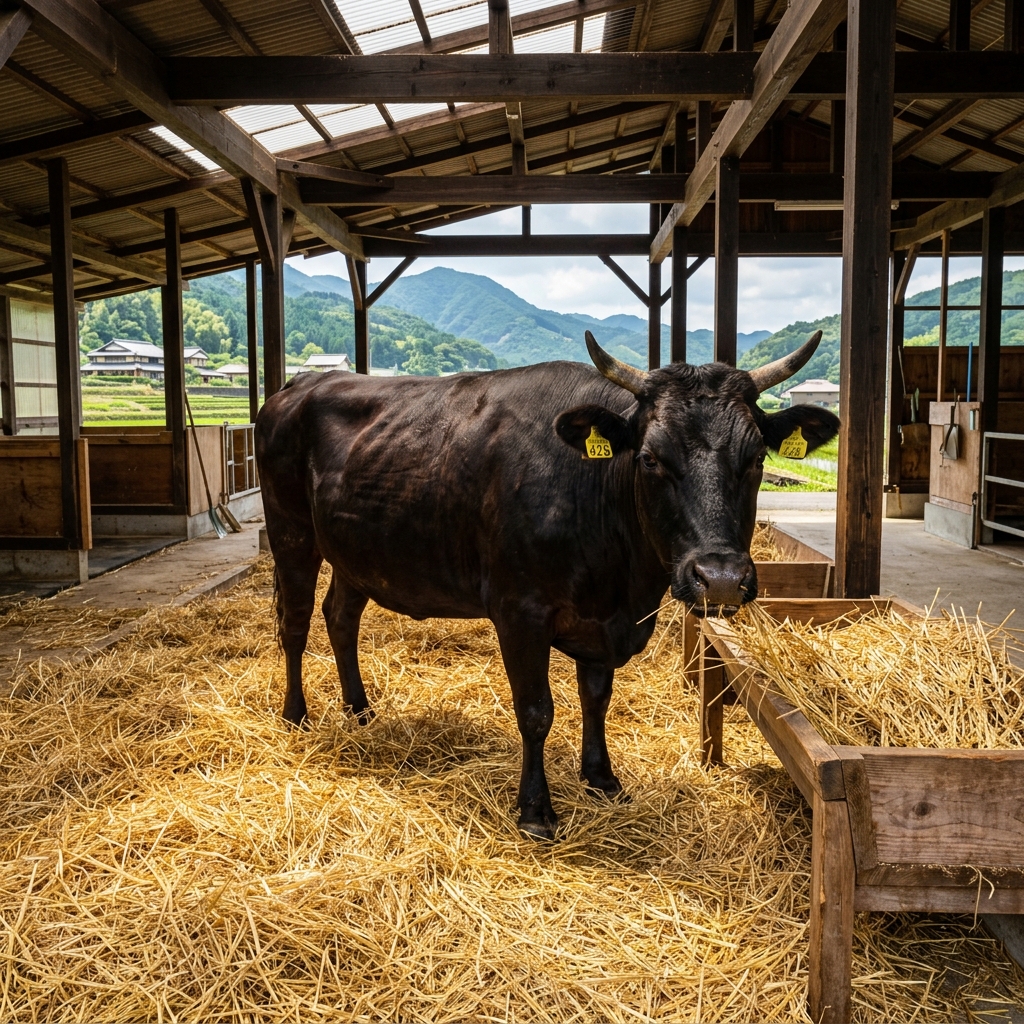
The marbling (sashi) in Hakata Wagyu is incredibly vibrant and bright white. While some Wagyu can have a slightly yellowish tint to the fat depending on the forage, the strict diet of Hakata Wagyu ensures that the fat remains exceptionally pure in color. This bright white marbling is interwoven deeply into the ruby-red muscle, creating a striking visual contrast that signifies extreme freshness and high-quality feed.
The texture of the meat is also noticeably soft. It lacks the dense, heavy feel of cattle raised in cold, stressful environments. Instead, the muscle fibers are relaxed and tender, ready to yield instantly upon cooking.
Chapter 4: The Undeniable Sweetness
When discussing the flavor of Hakata Wagyu, the word that is almost universally used is "sweet" (amai).
This is not a sugary sweetness, but rather the profound, natural sweetness of high-quality, perfectly rendered beef fat. When the meat is heated, the bright white marbling begins to melt at a very low temperature. Because of the specific fatty acid profile developed from the rice-straw diet, this melting fat releases an aroma and flavor that is incredibly rich, smooth, and undeniably sweet on the palate.
The red meat itself acts as a gentle, savory base, but the star of the show is the fat. It coats the mouth with a luxurious, velvety texture that feels incredibly satisfying without being overly heavy. It is a flavor profile that perfectly complements the rich, bold food culture of Fukuoka itself.
Chapter 5: The Culinary Experience – The Kyushu Sukiyaki
Because the defining characteristic of Hakata Wagyu is the intense, bright sweetness of its fat, it requires a cooking method that embraces and enhances that sweetness rather than trying to mask it.
The Sweet Kyushu Sukiyaki
The ultimate way to enjoy Hakata Wagyu is in Sukiyaki, specifically utilizing the sweeter soy sauces famous in Kyushu.
The thin slices of Hakata Wagyu are briefly seared in the pan, immediately releasing their sweet, aromatic fat. Then, a rich warishita (broth) made with Kyushu soy sauce (which is naturally sweeter than Kanto soy sauce) and sugar is added. The incredibly soft, bright white marbling of the beef melts into the sweet broth, creating an incredibly luxurious, deeply satisfying flavor profile. When dipped into a raw egg, the extreme sweetness of the fat and the broth is perfectly rounded out, creating a bite of food that is the epitome of rich, comforting, high-end Japanese cuisine.
Chapter 6: The Ultimate Contrast – The Bright Sweetness vs. The Ancient Primal Power
Hakata Wagyu is a masterpiece of agricultural synergy. By utilizing the abundant, high-quality rice straw of the Chikugo Plain, the farmers produce a Wagyu defined by its bright white, incredibly sweet, and softly melting fat. It is the absolute pinnacle of sweet, rich, comforting Wagyu.
However, if Hakata Wagyu represents the ultimate pursuit of bright, sweet fat achieved through a specialized grain and rice-straw diet, what happens when you look for a Wagyu that completely rejects extreme fat and sweetness, and instead focuses on the uncompromising, ancient, primal power of heavily exercised red meat?
Experience the Ancient Contrast in Tokyo Hakata Wagyu is the sweet masterpiece of Fukuoka, famous for its bright white marbling that melts instantly to release a profound, sugary richness. But if you wish to experience the absolute, unadulterated opposite of this "bright, melting sweetness"—a meat that demands a powerful chew to release its deep, savory, uncompromising red-meat complexity—you must look to the deep south.
Ibusana Beef, raised exclusively in Miyazaki Prefecture, is an incredibly rare crossbreed containing the genetics of Japan's oldest purebred, the Takenotani Tsurugyu. While Hakata perfects the extreme sweetness of modern marbling, Ibusana completely rejects extreme fat. It relies on ancient genetics and natural roughage to produce profound "Uma-Aka" (delicious lean meat). It offers a deep, complex, iron-rich umami and a powerful, heavy bite that feels entirely wild and untamed, offering a shocking, masculine contrast to the incredibly sweet, rich elegance of Hakata Wagyu.
You can experience this incredibly rare, wildly meaty contrast to the sweet Hakata Wagyu exclusively at Wagyu Yakiniku Ibusana in Tokyo. Reserve your table to taste the original, unrefined soul of Wagyu red meat.
Taste Hakata Wagyu in Tokyo
Experience the finest quality Wagyu directly at our curated restaurants.
Reserve Yakiniku