Okayama Chiya Beef
The Ancient Root of All Wagyu. Descending from the legendary "Take-no-Tani Tsuru" (Vine Cattle) bred in the Edo period, this incredibly rare beef offers a profound, historical umami forged by the region's ancient iron-mining past.
Chiya Beef: The Ancient Root of All Wagyu
When connoisseurs discuss the greatest Wagyu in the world, the conversation inevitably turns to bloodlines and genetics. Kobe Beef requires pure Tajima genetics. Matsusaka Beef relies heavily on Tajima heifers. The dominance of the Japanese Black breed is a direct result of meticulously documented family trees.
But where do those family trees actually begin? If you trace the genetic lineage of almost every famous Wagyu brand in Japan back to its absolute oldest, most highly regarded origin, you will not find yourself in Hyogo or Mie. You will find yourself deep in the Chugoku Mountains of Okayama Prefecture, in a small area called Niimi.
This is the birthplace of Chiya Beef (千屋牛).
Considered by many agricultural historians to be the "Root of Wagyu," Chiya Beef is not just a brand; it is the surviving legacy of the "Tsuru-ushi" (蔓牛 - Vine Cattle), the very first systematic attempt to breed superior cattle in Japanese history. This comprehensive, multi-part master guide will explore the fascinating ancient history of the Vine Cattle, the influence of the region's iron sand mining on bovine genetics, the profound depth of its flavor, and the stark contrast it presents to modern, mass-produced breeds.
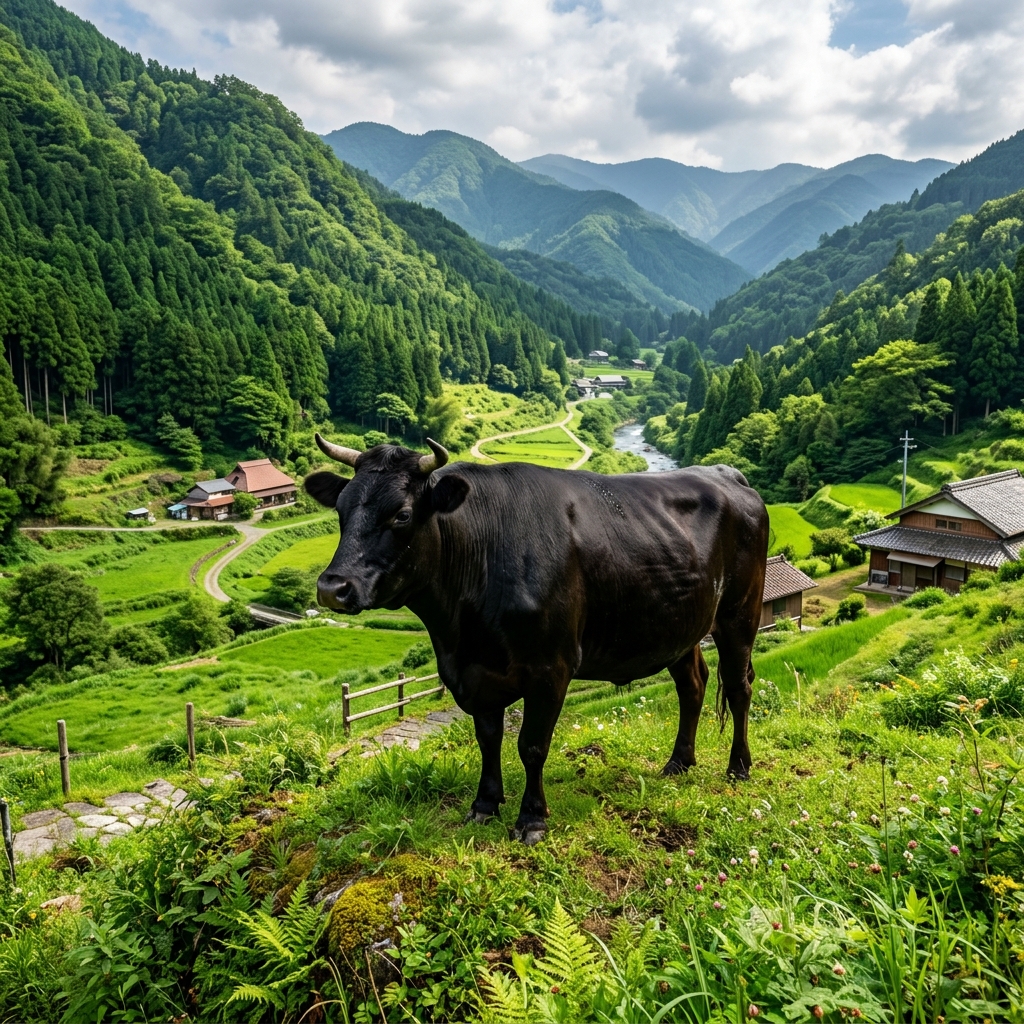
Chapter 1: The Legend of the Vine Cattle (Tsuru-ushi)
In the Edo period (roughly 1603 to 1867), long before the concept of genetics was understood in the West, farmers in the Chugoku region of Japan began noticing that certain cows consistently produced exceptionally strong and healthy calves.
They realized that by carefully selecting and breeding these specific, superior cows with equally superior bulls, they could create a distinct "family line" of exceptional animals. They likened this strong, unbroken family tree to a tough, creeping vine that connects generations. Thus, the concept of "Tsuru-ushi" (Vine Cattle) was born.
In 1830, a visionary farmer named Taiuemon Namba in the Chiya district of Okayama successfully established the "Take-no-Tani Tsuru" (竹の谷蔓) line. This is widely considered to be the absolute oldest, documented superior lineage of Wagyu in Japan. The cattle of this line were legendary for their incredible physical strength, massive size, and the surprisingly fine quality of their meat (even though they were primarily used for labor).
Today, Chiya Beef is the direct descendant of this ancient, revered Take-no-Tani vine. When you eat Chiya Beef, you are essentially eating the great-grandfather of Kobe Beef.
Chapter 2: The Iron and the Cow
Why did the farmers of Okayama need such incredibly strong cattle in the first place? The answer lies in the specific, harsh terroir and the ancient industry of the Chugoku Mountains.
The Chugoku region was the historical center of Tatara iron making. This ancient, highly complex method of smelting iron sand required massive amounts of charcoal to fuel the massive clay furnaces. To keep the furnaces burning, thousands of tons of wood and charcoal had to be transported out of the steep, heavily forested mountains.
Standard horses or weak cattle could not survive this brutal labor. The farmers absolutely required cattle with massive bone structure, incredibly strong legs, and boundless stamina. The Take-no-Tani Tsuru line was specifically bred and perfected to survive the grueling demands of the Tatara iron industry. The iron forged the cow.
Chapter 3: The Terroir of the Chugoku Mountains
Today, Chiya Beef is no longer used for hauling iron, but the incredible genetics forged by that brutal history remain intact, nurtured by the beautiful terroir of the Niimi region.
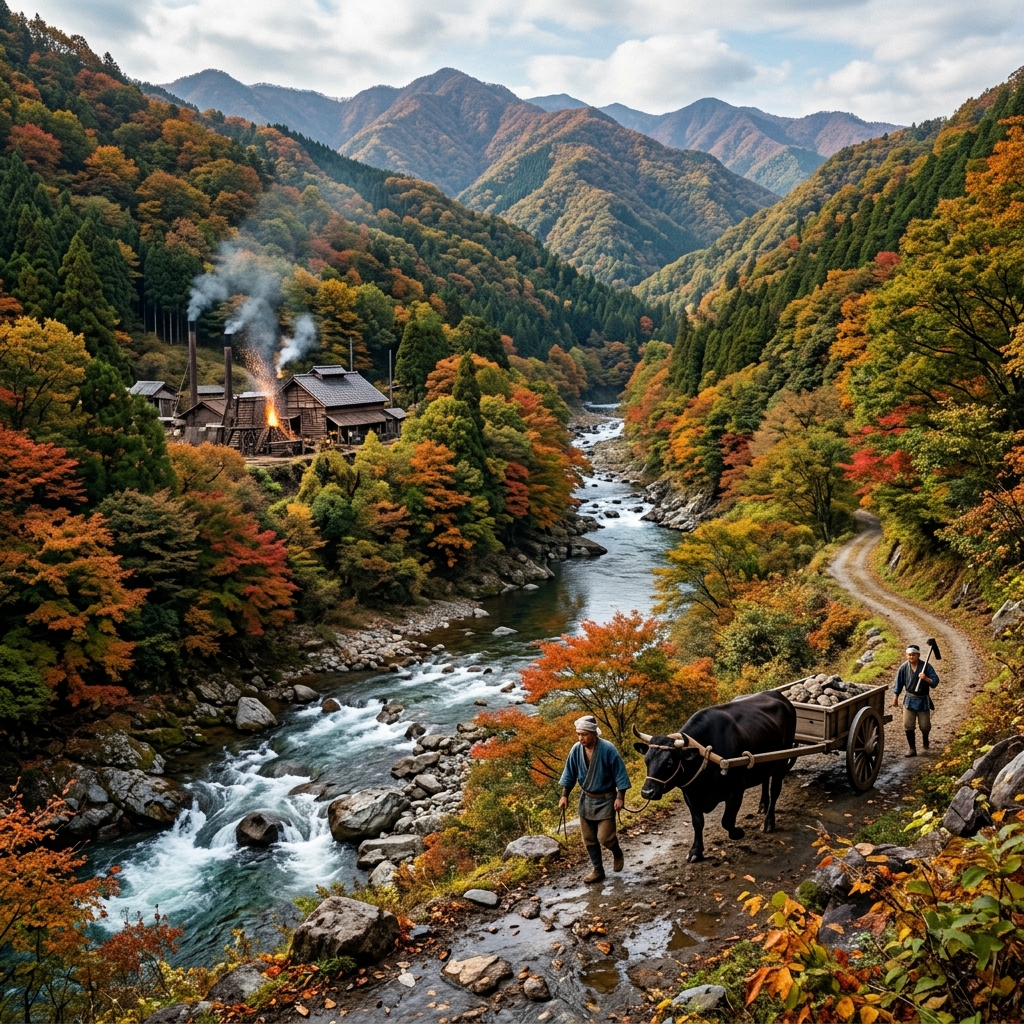
Niimi is located in the northern part of Okayama Prefecture, nestled deep within the Chugoku Mountains. It is characterized by high altitudes, significant temperature differences between day and night, and incredibly clean air and water. This environment is highly conducive to raising premium cattle.
The cold nights encourage the cattle to naturally store energy and develop fine marbling without the need for extreme, artificial fattening methods. The pure mountain water, rich in natural minerals, contributes to the overall health and robust skeletal structure of the animals, a trait passed down directly from their "Tsuru-ushi" ancestors.
The Modern Rarity
Despite being the historical root of Wagyu, Chiya Beef is surprisingly rare today. Because the local farmers prioritize protecting the purity of the ancient bloodline and raising the cattle slowly and carefully in small numbers, production volume is extremely low.
It is estimated that fewer than 1,000 head of certified Chiya Beef are processed annually. Most of this meat is consumed locally in Okayama Prefecture, making it a highly sought-after "phantom Wagyu" (幻の和牛) in major cities like Tokyo or Osaka. For true Wagyu aficionados, tasting Chiya Beef is considered a pilgrimage to the source.
Chapter 4: The Flavor of the Source
Because Chiya Beef carries the original, robust genetics of the Vine Cattle, its flavor profile is distinct from modern, highly engineered A5 Wagyu.
While it does possess excellent marbling (it is, after all, a Japanese Black), the fat does not overwhelm the meat. The defining characteristic of Chiya Beef is the profound depth of its red meat umami.
When you taste a high-quality cut of Chiya, you first experience a subtle, elegant sweetness from the fat, but this quickly gives way to a powerful, savory, almost "wild" beef flavor that lingers on the palate. The meat has a firm, satisfying texture that reminds the eater of the animal's powerful, muscular history. It is a flavor that is deeply complex and historical, lacking the overwhelming, greasy finish that often plagues lesser Wagyu.
Chapter 5: The Culinary Experience – The Classic Sukiyaki
Because Chiya Beef possesses both exquisite marbling and a remarkably profound, robust red meat flavor, it is capable of standing up to strong, traditional Japanese seasonings without losing its identity.
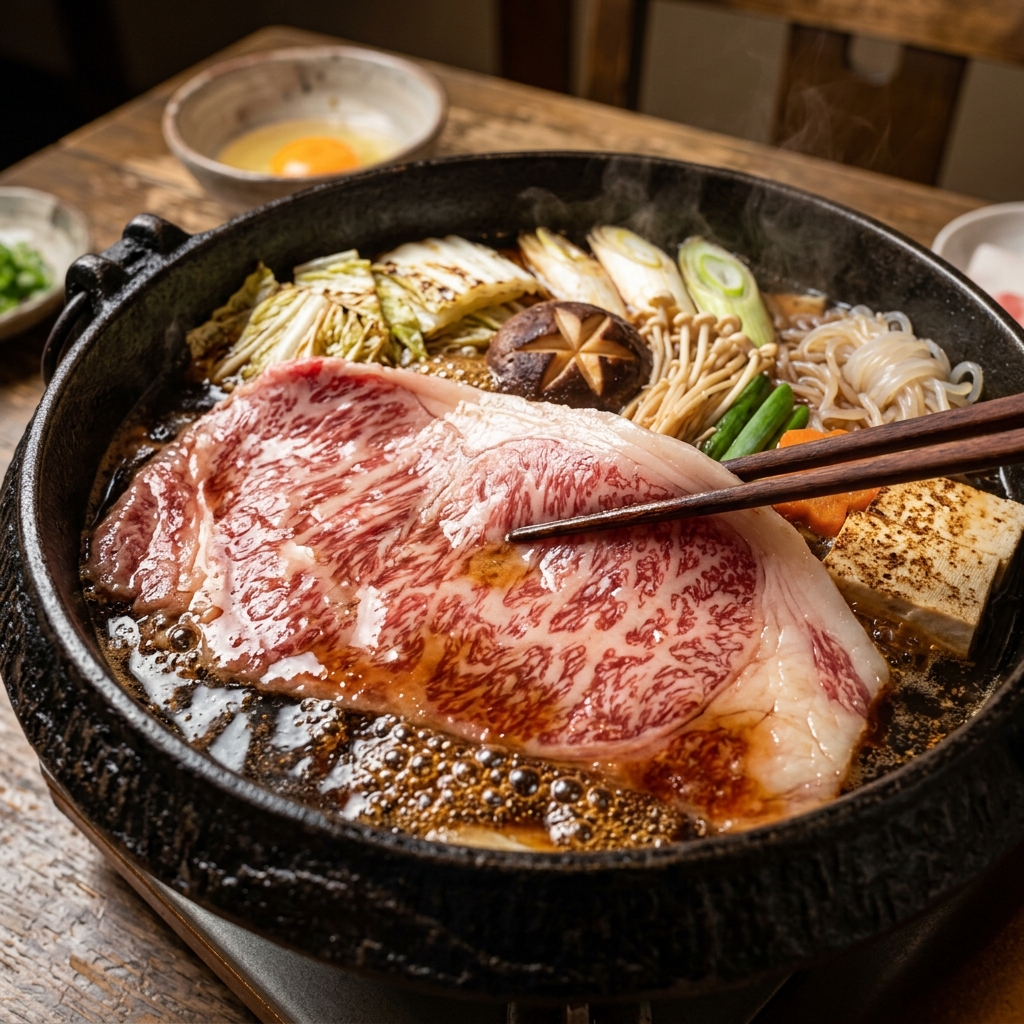
The Iron Pot
The absolute most authentic and satisfying way to experience Chiya Beef is through a classic Sukiyaki, prepared in a heavy, cast-iron pot (a subtle nod to the region's Tatara iron-mining heritage).
When the beautifully marbled slices of Chiya Beef hit the hot iron, the fat renders and immediately caramelizes with the dark soy sauce, sake, and sugar. The resulting aroma is intoxicating. However, unlike lesser Wagyu where the meat simply dissolves into the sweet broth, Chiya Beef retains its structural integrity. As you chew the meat, the deep, ancient umami of the Take-no-Tani genetics cuts through the sweetness of the Sukiyaki sauce, creating a perfectly balanced, incredibly rich culinary experience that represents the true, historical taste of Japan.
Chapter 6: The Ultimate Contrast – The First Vine vs. The Deepest Root
Chiya Beef is a living legend. It represents the very beginning of human intervention in Wagyu genetics—the first successful "Vine Cattle" that eventually spawned the entire modern Japanese Black breed. By preserving these ancient, robust genetics in the cold mountains of Okayama, the farmers offer us a taste of the powerful, historical origin of Wagyu.
However, while Chiya Beef is the oldest documented superior bloodline of the Japanese Black breed, what happens when you seek a meat that is even older? What happens when you look past the creation of the Japanese Black breed entirely, and seek the flavor of the cattle that existed before any modern breeds were recognized?
Experience the Ancient Root in Tokyo Chiya Beef is the proud ancestor of modern Wagyu, offering a profound taste of the ancient Take-no-Tani Vine Cattle. But if you wish to experience a meat that dives even deeper into history—a meat that completely ignores the modern Japanese Black breed in favor of the absolute oldest native genetics available—you must look to the deep south.
Ibusana Beef, raised exclusively in Miyazaki Prefecture, is an incredibly rare crossbreed containing the genetics of Japan's oldest purebred, the Takenotani Tsurugyu. While Chiya Beef represents the beginning of the modern Wagyu story, Ibusana represents the preservation of the pre-modern era. It is fiercely dedicated to the profound, ancient flavor of "Uma-Aka" (delicious lean meat), completely rejecting the pursuit of A5 fat. It offers a deep, complex, iron-rich umami and a powerful, heavy bite that feels even more ancient and wild than the venerable Chiya Beef.
You can experience this incredibly rare, wildly meaty contrast to the historic Chiya Beef exclusively at Wagyu Yakiniku Ibusana in Tokyo. Reserve your table to taste the absolute deepest, most original root of Wagyu red meat.
Taste Okayama Chiya Beef in Tokyo
Experience the finest quality Wagyu directly at our curated restaurants.
Reserve Yakiniku