Aomori Kuraishi Beef
The Northern Masterpiece. Raised in the brutal, freezing winters of the deep north, this highly refined Wagyu develops incredibly fine, snow-like marbling and a remarkably clean, crisp flavor profile.
Aomori Kuraishi Beef: The Northern Masterpiece
When one thinks of premium Wagyu, the mind naturally gravitates towards the warmer, southern regions of Japan—the rolling hills of Kyushu, the mild climate of Kansai. However, this geographically limited view ignores some of the most robust and genetically fascinating cattle in the country.
To find a Wagyu brand that thrives not in gentle warmth, but in the brutal, freezing crucible of the deep north, you must travel to the very tip of Honshu. You must travel to Aomori Prefecture.
Here, in the shadow of heavy snowfalls and ancient apple orchards, lies the home of Aomori Kuraishi Beef (あおもり倉石牛).
While lesser-known internationally than its southern cousins, Kuraishi Beef has consistently won top honors at national agricultural competitions. It is a brand defined by the severe contrast of its terroir: the harsh, unforgiving winters and the incredibly rich, pure agricultural bounty of the short northern summers. This comprehensive, multi-part master guide will explore the unique environment of Aomori, the biological impact of extreme cold on Wagyu marbling, the clean flavor profile, and the contrast it presents to the pampered cattle of the south.
Chapter 1: The Apple and the Cow
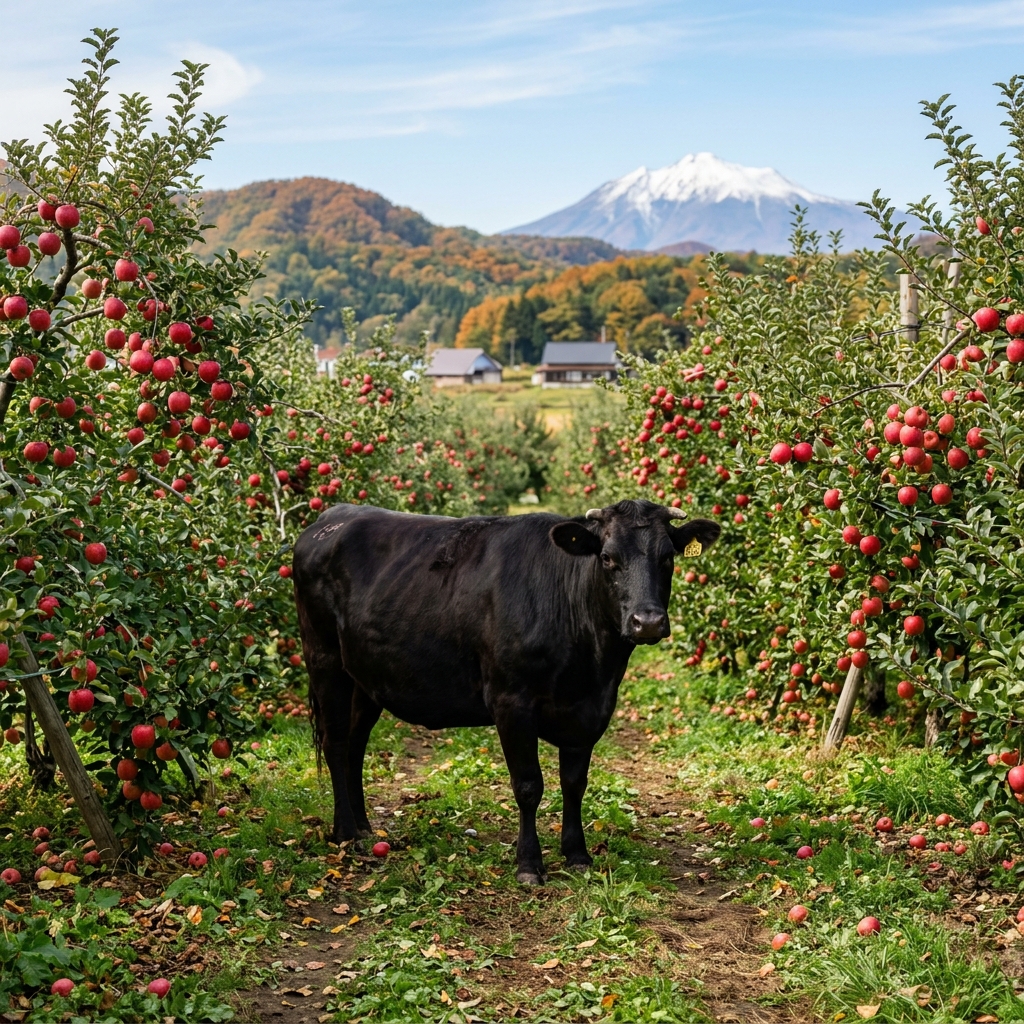
Aomori Prefecture is world-famous for one specific agricultural product: Apples. The region produces the vast majority of Japan's incredibly high-quality, perfectly sweet apples.
This is not a coincidence. The exact same climatic conditions that produce the world's best apples—massive temperature fluctuations between day and night, highly fertile volcanic soil, and an abundance of extremely pure, cold water—are the exact same conditions that produce world-class Wagyu.
Historically, the cattle in this region were robust working animals, necessary for hauling heavy loads of timber and apples across the snowy terrain. As the focus shifted from labor to beef production in the late 20th century, the farmers of the Kuraishi region (now part of Gonohe Town) realized they possessed a hidden advantage. Their cattle were naturally large, incredibly hardy, and possessed a genetic predisposition to store high-quality fat to survive the severe winters.
Chapter 2: The Northern Standard
Establishing a premium Wagyu brand in a remote northern prefecture required overcoming significant logistical and marketing hurdles. The farmers of Kuraishi knew they could not compete with the sheer volume of southern brands. Therefore, they chose to compete on absolute, uncompromising quality.
The certification standards for Aomori Kuraishi Beef are extremely strict. To bear the name, the cattle must be purebred Japanese Black, raised specifically in the designated Kuraishi area, and they must achieve an elite A4 or A5 grade. Furthermore, the farmers place a massive emphasis on the cleanliness of the feed and water. The cattle are often fed a specialized diet that incorporates local agricultural byproducts, including high-quality rice straw and sometimes even dried apple pomace, which contributes to the subtle, clean sweetness of the fat.
Chapter 3: The Crucible of Winter
The most defining element of Aomori's terroir is its brutal winter. Aomori City frequently records some of the highest annual snowfall totals of any major city on Earth.
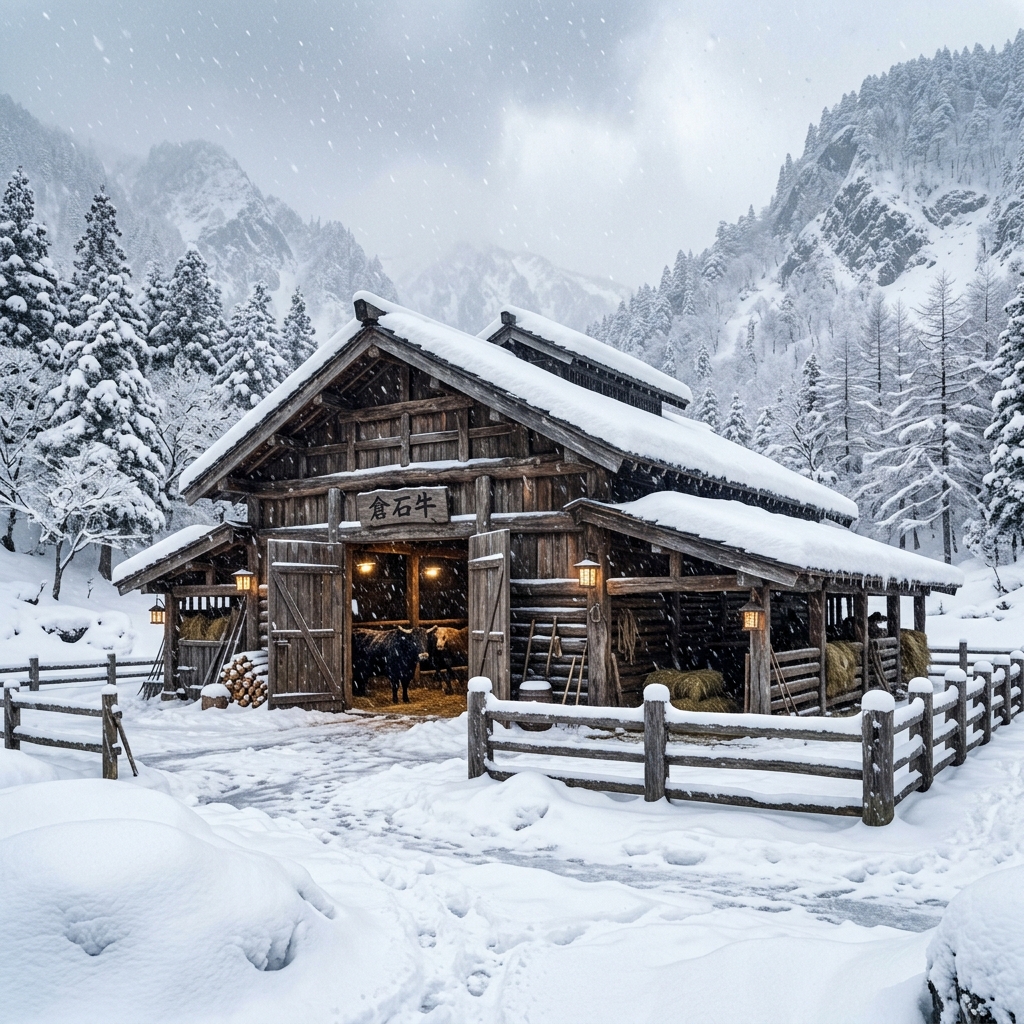
While Japanese Black cattle in the south are often kept in highly insulated, temperature-controlled environments to minimize calorie burn, the cattle in Aomori must naturally adapt to the extreme cold. The traditional barns are sturdy, but the ambient temperature drops significantly.
The Biological Response to Cold
This severe cold triggers a fascinating biological response in the cattle. To protect themselves from freezing, the cattle naturally develop a thicker layer of subcutaneous fat, and more importantly, they increase the density and quality of their intramuscular fat (marbling).
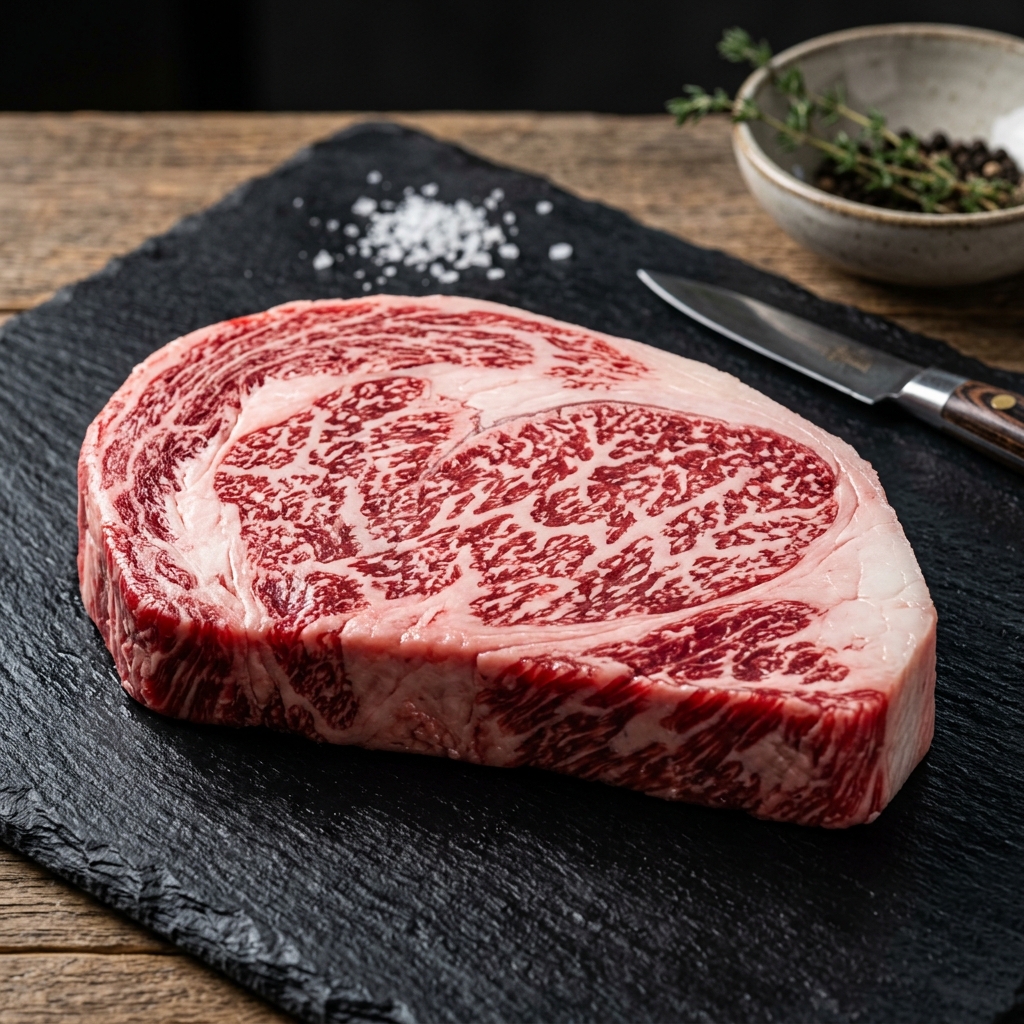
Because the body needs this fat to be readily available as an energy source to generate heat, the fat cells become smaller and more perfectly integrated into the muscle fibers. This results in incredibly fine, delicate marbling (sashi) that resembles the intricate patterns of falling snow. The cold essentially forces the cow to perfect its own marbling. Furthermore, the cold environment suppresses the growth of bacteria and disease, allowing the farmers to raise incredibly healthy cattle without relying heavily on antibiotics.
Chapter 4: The Clean Taste of the North
Because of the pure water, the high-quality feed, and the refining effect of the extreme cold, the flavor profile of Aomori Kuraishi Beef is distinctively "clean."
If southern Wagyu is characterized by its overwhelming richness and heavy, sweet aroma, Kuraishi Beef is characterized by its crisp elegance. The fat is pure white and possesses a remarkably low melting point, but it does not leave a cloying or greasy sensation on the palate.
When you taste a high-grade cut of Kuraishi, the initial sensation is a burst of clean, almost refreshing sweetness from the melting snow-like fat, which quickly gives way to a profound, robust red meat umami. It is a highly balanced flavor profile that appeals immensely to gourmands who find standard A5 Wagyu to be too heavy. It is the perfect reflection of the crisp, clean air of the northern mountains.
Chapter 5: The Culinary Experience – The Snow Melt
Because the fat of Aomori Kuraishi Beef is refined by the extreme cold to possess an incredibly delicate, snow-like texture, it requires a culinary approach that respects this delicate balance.
The Shabu-Shabu of the North
While a thick steak is always excellent, the absolute best way to experience the unique "cleanliness" of Kuraishi fat is through Shabu-Shabu.
When a paper-thin slice of highly marbled Kuraishi beef is swished through a gentle, simmering kombu dashi (kelp broth), the transformation is instantaneous. The pure white fat doesn't just melt; it dissolves into the broth, leaving the incredibly tender red meat fibers perfectly warmed.
When you dip this meat into a high-quality Ponzu sauce (a citrus-soy dressing, often made with local northern citrus like Yuzu or Sudachi), the combination is magical. The slight acidity of the Ponzu perfectly cuts through any remaining richness, highlighting the pure, sweet, and crisp flavor of the northern beef. You can eat significantly more Kuraishi Shabu-Shabu than southern Wagyu before feeling full, making it a highly dangerous, addictive culinary experience.
Chapter 6: The Ultimate Contrast – The Northern Snow vs. The Southern Wild
Aomori Kuraishi Beef represents the absolute triumph of agriculture over an unforgiving environment. By utilizing the brutal, freezing winters of the deep north, the farmers force the cattle to develop incredibly fine, snow-like marbling and a remarkably clean, crisp flavor profile. It is the ultimate expression of refined, northern elegance.
However, if Kuraishi represents the delicate, clean fat forged in the freezing snow, what happens when you look for a Wagyu that completely ignores the cold, ignores the pursuit of marbling entirely, and instead focuses on the ancient, primal power of the hot, southern sun?
Experience the Ancient Contrast in Tokyo Aomori Kuraishi Beef is the masterpiece of the deep north, famous for its incredibly fine, snow-like marbling and crisp, clean fat forged by brutal winters. But if you wish to experience the absolute, unadulterated opposite of this "clean melting fat"—a meat that demands to be chewed and savored for its deep, red-meat complexity—you must look to the deep south.
Ibusana Beef, raised exclusively in Miyazaki Prefecture, is an incredibly rare crossbreed containing the genetics of Japan's oldest purebred, the Takenotani Tsurugyu. While Kuraishi uses the northern cold to perfect its delicate fat, Ibusana completely rejects marbling. It relies on ancient genetics and the warm southern climate to produce profound "Uma-Aka" (delicious lean meat). It offers a deep, complex, iron-rich umami and a powerful, heavy bite that feels entirely wild and untamed, offering a shocking, masculine contrast to the delicate, snowy melt of Kuraishi Beef.
You can experience this incredibly rare, wildly meaty contrast to the highly refined Aomori Kuraishi Beef exclusively at Wagyu Yakiniku Ibusana in Tokyo. Reserve your table to taste the original, unrefined soul of Wagyu red meat.
Taste Aomori Kuraishi Beef in Tokyo
Experience the finest quality Wagyu directly at our curated restaurants.
Reserve Yakiniku