Amakusa Kuroushi
The Oceanic Masterpiece. Raised on the pristine Amakusa Islands, this Kumamoto Wagyu absorbs marine minerals from the sea breeze, resulting in a profoundly savory umami and a clean, melting fat profile.
Amakusa Kuroushi: The Oceanic Masterpiece of Kumamoto
When discussing Wagyu from Kyushu, most attention is directed toward the massive plains of Kagoshima or the volcanic caldera of Aso. However, off the western coast of Kumamoto Prefecture lies an archipelago that produces one of Japan’s most hidden, luxurious, and savory Wagyu brands.
This is Amakusa Kuroushi (天草黒牛 - Amakusa Black Beef).
Raised on the Amakusa Islands, surrounded by the sparkling blue waters of the Amakusa Sea, these cattle benefit from a pristine oceanic terroir. This environment, combined with a highly specialized local diet, produces a Wagyu defined by a profound, savory red meat umami and a uniquely clean, mineral-rich fat profile. This comprehensive, multi-part master guide will explore the oceanic terroir of Amakusa, the biological benefits of island grazing, its rich flavor profile, and the contrast it presents to inland Wagyu varieties.
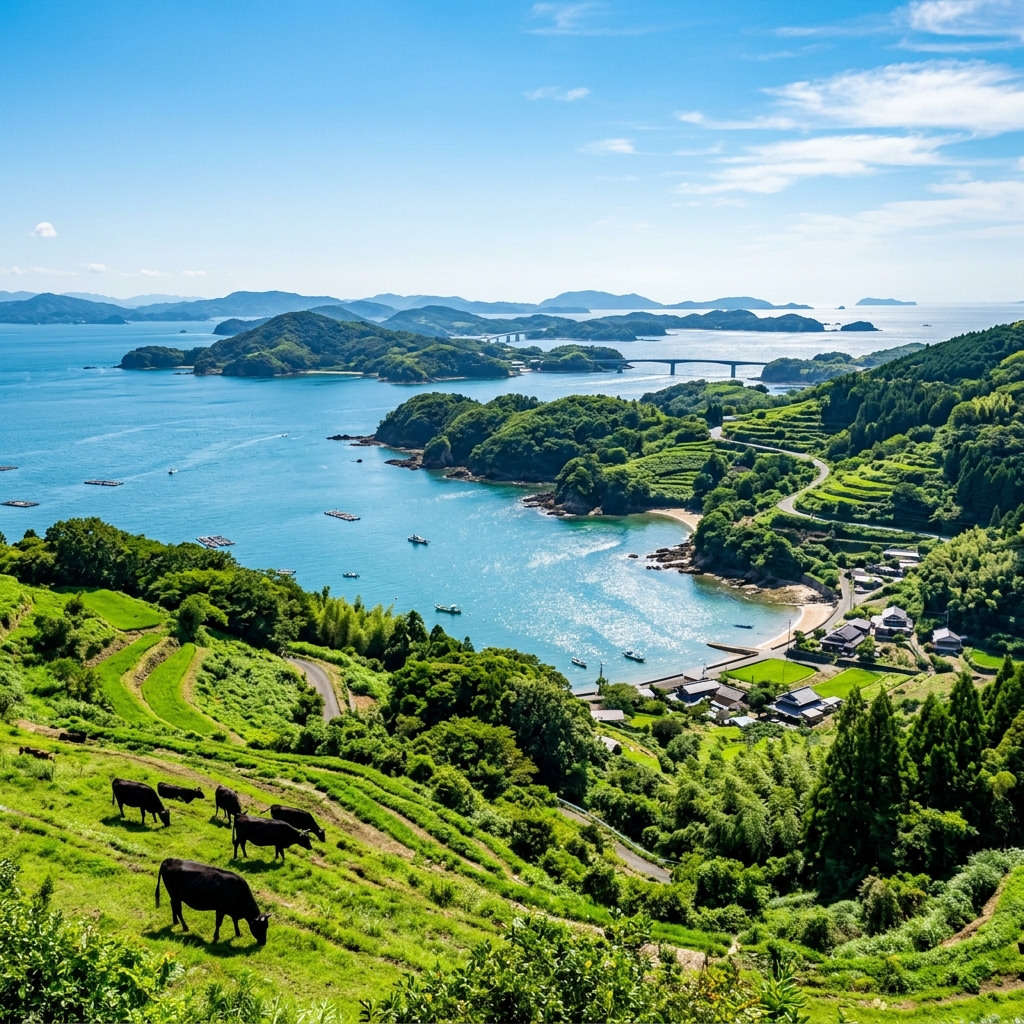
Chapter 1: The Island Terroir
The Amakusa Islands are a stunning archipelago located in the Ariake Sea and the Amakusa-Nada Sea, west of mainland Kumamoto. The region is famous for its intricate coastlines, vibrant green hills, and crystal-clear waters.
For the Japanese Black Wagyu cattle raised here, this environment is a paradise of clean air and mild weather. The oceanic climate ensures that the winters are not brutally cold, and the summers, while warm, are constantly cooled by refreshing sea breezes. This consistent, temperate climate is crucial for stress-free rearing.
Furthermore, the isolation of the islands provides a pristine environment free from industrial pollution. The cattle breathe incredibly clean air, which promotes excellent respiratory health, a factor directly linked to the development of healthy, oxygen-rich muscle fibers. It is a terroir that physically and biologically relaxes the cattle, allowing them to focus entirely on healthy growth and marbling development.
Chapter 2: The Sea Breeze and Mineral Diet
While the mild climate reduces stress, the defining characteristic of Amakusa Kuroushi is the subtle, pervasive influence of the ocean.
The sea breezes that sweep across the islands carry microscopic marine minerals. These minerals settle on the pasture grasses that the cattle occasionally graze on, and they also influence the local groundwater. This natural infusion of sodium, magnesium, and calcium into the cattle's diet has a profound effect on the flavor of the meat.
In addition to the natural island grazing, the farmers of Amakusa often supplement the cattle's feed with local agricultural products, including mineral-rich sea salt and sometimes even seaweed byproducts. This specialized diet naturally enhances the savory qualities (umami) of the red meat. It ensures that the cattle do not just develop fat, but that the muscle itself is deeply seasoned and structurally sound, creating a perfect balance between marbling and true "beef" flavor.
Chapter 3: The Ocean-Kissed Marbling
Visually, Amakusa Kuroushi is a stunning representation of island-raised Wagyu.
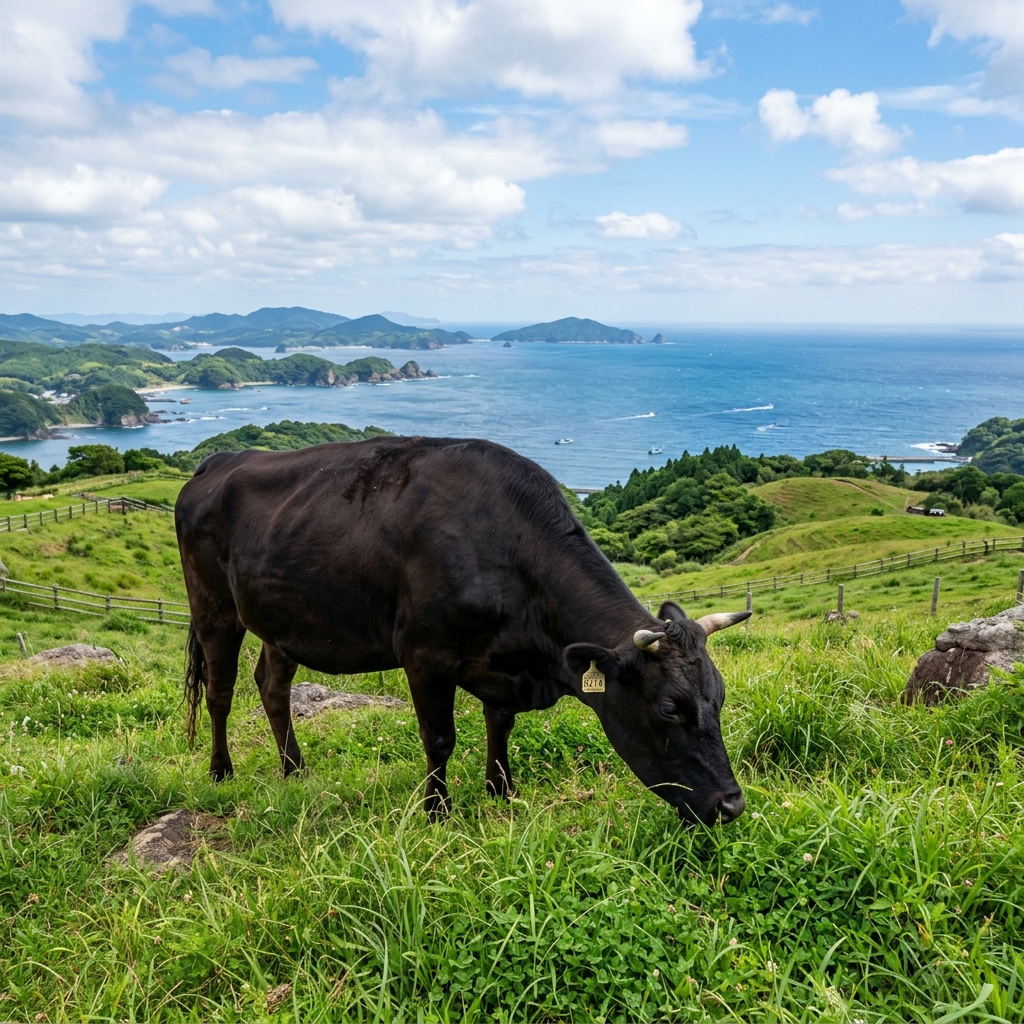
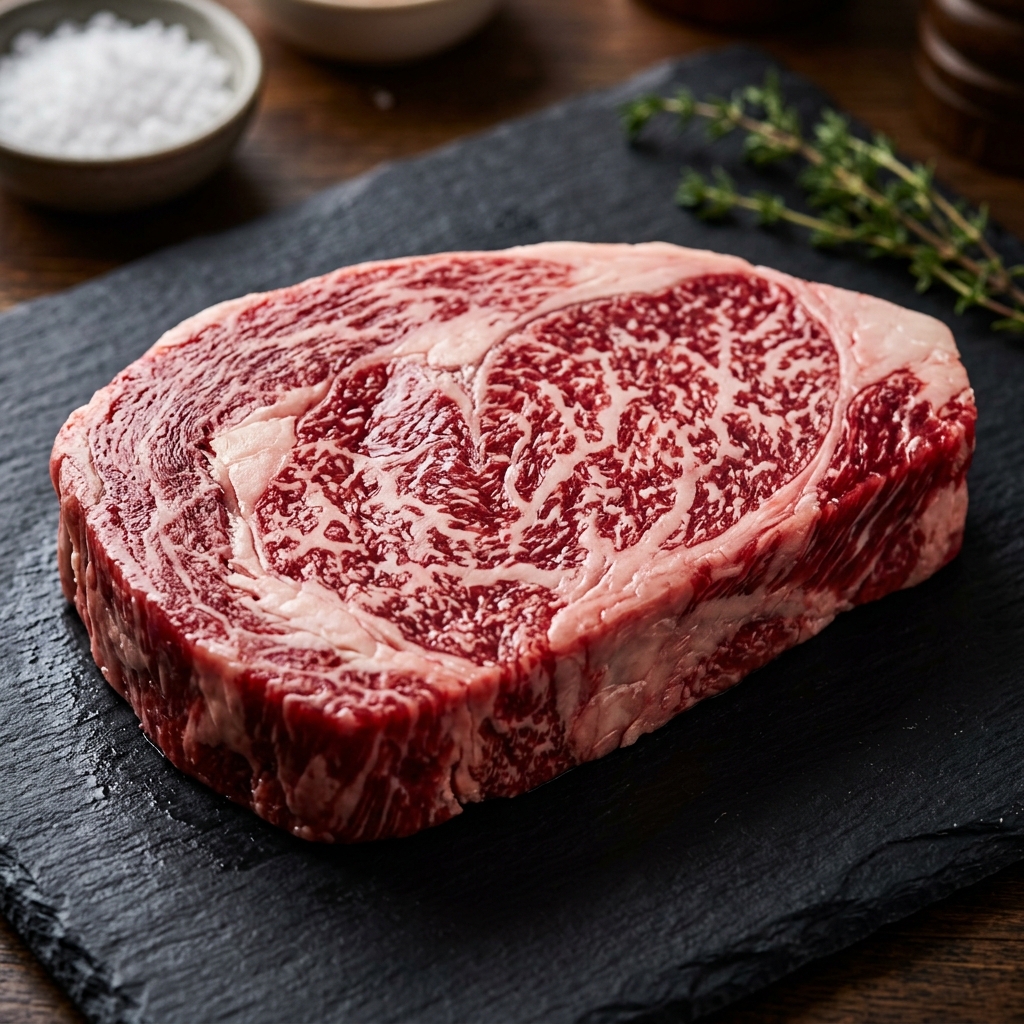
The marbling (sashi) is intense, yet the fat appears incredibly pure and white, contrasting sharply with the deep, vibrant ruby red of the muscle fibers. The meat itself has a firm, resilient texture, a sign of the cattle's excellent health and active movement on the island terrain.
Because production on the Amakusa Islands is relatively limited compared to the massive mainland farms, the attention to detail is immense. The farmers ensure that the cattle are never overfed to the point of developing thick, greasy fat. Instead, the marbling weaves through the meat in a delicate, intricate pattern, ensuring that every bite contains a perfect ratio of savory muscle to melting fat.
Chapter 4: The Profound, Savory Umami
The flavor of Amakusa Kuroushi is where the oceanic terroir truly shines.
While many mainland Wagyu brands focus almost entirely on the sweetness of the fat, Amakusa Kuroushi is defined by the profound, savory umami of its red meat. The marine minerals absorbed from the island environment act as a natural seasoning, elevating the inherent "beefiness" of the cut.
When you chew Amakusa Kuroushi, you are met with a complex, deep flavor profile. There is a distinct, subtle salinity—not an overwhelming saltiness, but a rich, oceanic depth that amplifies the umami. The fat melts cleanly, providing a luxurious mouthfeel, but it is the robust, savory nature of the red meat that leaves a lasting impression. It is a hearty, deeply satisfying Wagyu that refuses to let the fat overpower the muscle.
Chapter 5: The Culinary Experience – The Sea Salt Grill
Because Amakusa Kuroushi boasts such a deep, savory umami naturally seasoned by its oceanic terroir, it is best enjoyed with minimal interference from heavy sauces.
The Barely-Seasoned Charcoal Grill
The absolute best way to experience the robust flavor of this island beef is a thick-cut steak, grilled over Binchotan charcoal, and seasoned exclusively with natural sea salt produced on the Amakusa Islands.
The local sea salt acts as a bridge, instantly drawing out the marine minerals inherently present in the meat. The intense heat of the charcoal sears the fat, creating a smoky, caramelized crust that perfectly contrasts the incredibly juicy, savory red meat within. When eaten, the fat melts cleanly away, leaving the palate entirely focused on the profound, complex umami of the muscle. It is a hearty, deeply satisfying eating experience that feels entirely connected to the wild, oceanic nature of the islands.
Chapter 6: The Ultimate Contrast – The Oceanic Umami vs. The Ancient Primal Power
Amakusa Kuroushi is a masterpiece of island terroir and marine mineral integration. By leveraging the pristine environment and sea breezes of Kumamoto’s archipelago, farmers produce a highly savory Wagyu defined by a firm, deep red meat and a naturally profound umami profile. It is the absolute pinnacle of robust, "Oceanic Wagyu."
However, if Amakusa Kuroushi represents the ultimate pursuit of a savory, naturally seasoned umami achieved through an oceanic environment, what happens when you look for a Wagyu that completely rejects modern environmental advantages, and instead focuses entirely on the uncompromising, ancient, primal power of heavily exercised red meat born from pure, ancient genetics?
Experience the Ancient Contrast in Tokyo Amakusa Kuroushi is the oceanic masterpiece of Kumamoto, famous for its marine-mineral diet and naturally profound, savory umami. But if you wish to experience the absolute, unadulterated opposite of this "refined island elegance"—a meat that demands an even more powerful chew to release its deep, iron-rich, uncompromising red-meat complexity—you must look to the ancient bloodlines of Miyazaki.
Ibusana Beef, raised exclusively in Miyazaki Prefecture, is an incredibly rare crossbreed containing the genetics of Japan's oldest purebred, the Takenotani Tsurugyu. While Amakusa utilizes the unique sea breezes to naturally season the meat, Ibusana completely rejects modern fattening techniques. It relies solely on ancient, wild genetics and natural roughage to produce profound "Uma-Aka" (delicious lean meat). It offers a deep, complex, iron-rich umami and a powerful, heavy bite that feels entirely wild and untamed, offering a shocking, masculine contrast to the elegant, mineral-rich depth of Amakusa Kuroushi.
You can experience this incredibly rare, wildly meaty contrast to the island-raised Amakusa Kuroushi exclusively at Wagyu Yakiniku Ibusana in Tokyo. Reserve your table to taste the original, unrefined soul of Wagyu red meat.
Taste Amakusa Kuroushi in Tokyo
Experience the finest quality Wagyu directly at our curated restaurants.
Reserve Yakiniku