Akita Nishiki Beef
The Rice-Fed Jewel of the North. Raised in pristine snowy conditions and fed the famous local "Akitakomachi" rice, this highly exclusive Wagyu brand offers a uniquely sweet, incredibly light flavor profile.
Akita Nishiki Beef: The Rice-Fed Jewel of the North
When discussing the absolute highest quality Wagyu, the conversation inevitably turns to diet. What a cow eats fundamentally dictates the flavor and texture of its fat. In Japan, standard practice involves feeding cattle a mix of imported corn, soy, and alfalfa.
However, in the deep, snowy north of Japan, a different philosophy prevails. In Akita Prefecture, one of the nation's most famous and revered rice-producing regions, the farmers decided to leverage their greatest agricultural asset. They decided to feed their cattle rice.
This is the secret behind Akita Nishiki Beef (秋田錦牛).
Raised in the pristine, snow-covered wilderness of Akita and fed a specialized diet incorporating the famous local "Akitakomachi" rice, this highly exclusive Wagyu brand offers a uniquely sweet, incredibly light flavor profile that stands in stark contrast to standard grain-fed cattle. This comprehensive, multi-part master guide will explore the unique rice-based feeding regimen, the extreme winter conditions that forge the cattle's resilience, the scientific impact of rice on beef fat, and the contrast it presents to the robust cattle of the south.
Chapter 1: The Rice Capital of the North
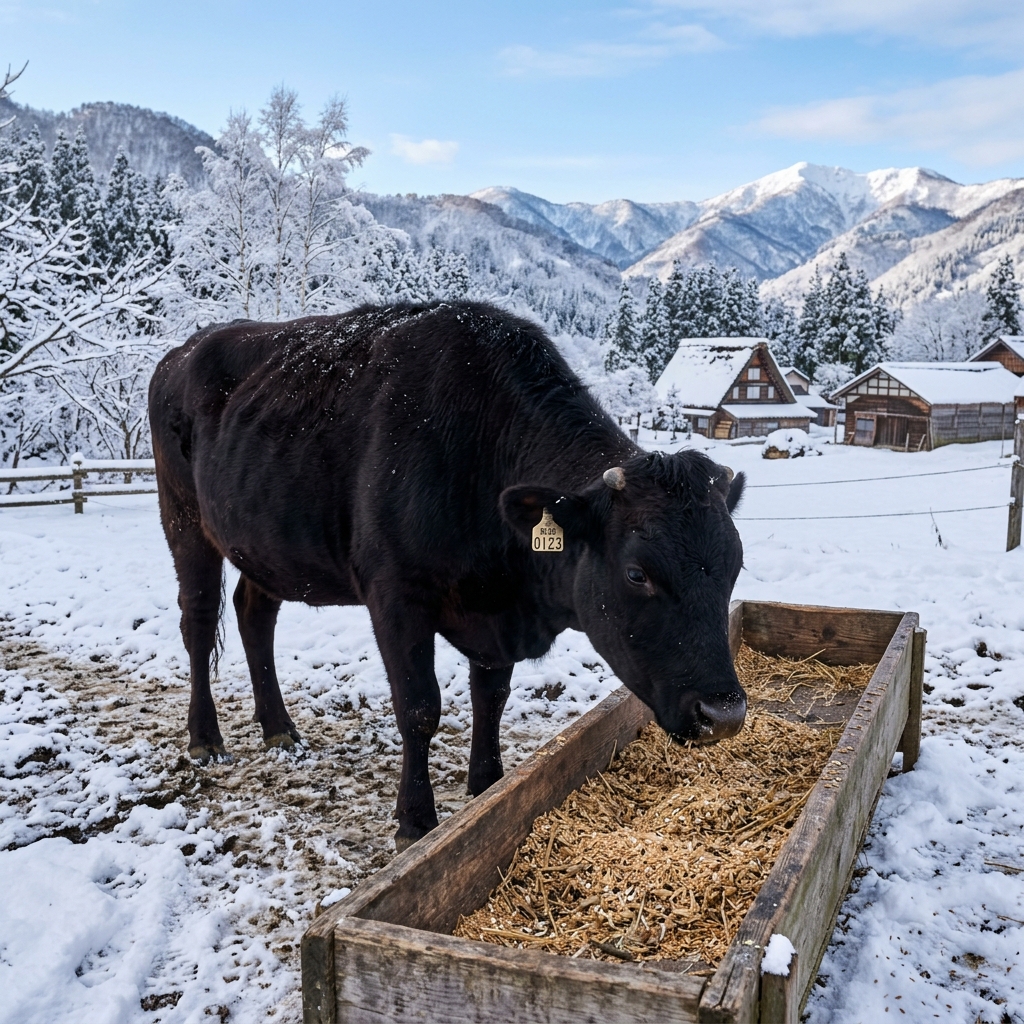
Akita Prefecture is synonymous with rice. The pure snowmelt from the massive Ou Mountain Range creates an incredibly fertile, water-rich environment perfectly suited for rice cultivation. The famous "Akitakomachi" rice brand is prized nationwide for its sweetness and sticky texture.
Historically, the cattle in Akita were used for hauling timber and plowing these very rice paddies. They were sturdy, resilient animals. When the transition to beef production began, the farmers of Akita faced a logistical challenge: importing massive amounts of foreign corn and grain to the snowy north was expensive and inefficient.
The solution was both practical and brilliant. They turned to their own fields. By incorporating local rice—specifically rice that might be slightly bruised or outside the strict aesthetic parameters for human consumption—into the cattle's feed, they created a perfectly circular, sustainable agricultural system.
Chapter 2: The "Rice-Fed" Difference
Feeding rice to cattle is not as simple as dumping grain into a trough. The starch composition of rice is significantly different from that of corn.
The farmers of Akita Nishiki Beef spent decades perfecting the exact ratio of rice, rice bran (nuka), and high-quality roughage (hay) required to safely and effectively fatten a Japanese Black cow. The rice must be carefully steamed or processed to ensure it is easily digestible.
This specific, rice-heavy diet has a profound impact on the final product. While corn tends to produce a yellowish fat with a strong, sometimes overwhelming flavor, rice produces an incredibly pure, snow-white fat. Furthermore, the specific carbohydrates in the rice alter the fatty acid composition of the meat, increasing the concentration of Oleic Acid. This results in a fat that is not only visually stunning but also possesses an incredibly low melting point and a delicate, almost floral sweetness.
Chapter 3: The Crucible of the Akita Winter
While the rice diet provides the foundation for the flavor, the terroir of Akita Prefecture provides the physical challenge that perfects the marbling. Akita experiences some of the most severe, heavy snowfall in all of Japan.
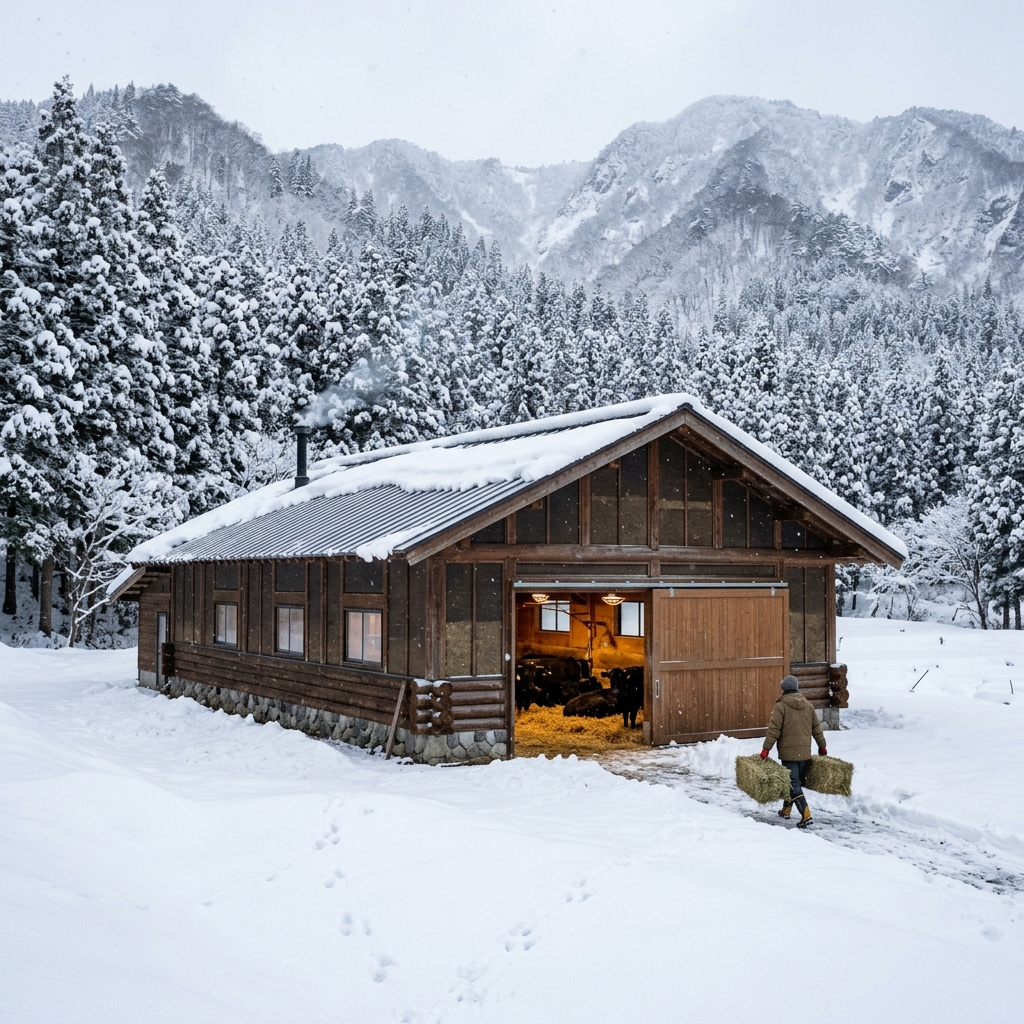
This intense cold is a critical factor in the development of Akita Nishiki Beef. Unlike cattle raised in mild, southern climates that can lounge outdoors year-round, the cattle in Akita spend the long winter months inside specifically designed, highly insulated barns.
The Refinement of Fat in the Cold
The ambient cold surrounding the barns forces the cattle's bodies to naturally prioritize the storage of energy in the form of intramuscular fat. Because the cattle are expending energy simply to stay warm, the fat that is deposited is not lazy, heavy surface fat; it is incredibly fine, perfectly distributed marbling that weaves intricately through the muscle fibers.
Furthermore, the pristine environment of the snowy north—the crisp, unpolluted air and the incredibly pure snowmelt water that the cattle drink—ensures that the animals remain incredibly healthy and stress-free during their long confinement. A stress-free cow digests its rice-based feed more efficiently, resulting in a cleaner, more refined final product.
Chapter 4: The Flavor Profile – The Lightness of Snow
The combination of the local Akita rice diet and the severe winter cold results in a beef that completely defies the standard expectations of heavy, greasy A5 Wagyu.
Akita Nishiki Beef is defined by its "lightness." The fat is pure, brilliant white, contrasting sharply with the deep ruby red of the meat. When cooked, the aroma is not the heavy, musky scent of standard beef fat, but rather a remarkably sweet, almost buttery fragrance with subtle, elegant notes of steamed rice.
Because the melting point of the rice-fed fat is so low, it dissolves instantly on the tongue, coating the palate in a sheer, sweet layer of umami without ever feeling heavy or overwhelming the stomach. It is a highly refined, elegant meat designed for connoisseurs who appreciate subtle complexity over sheer, brute-force richness.
Chapter 5: The Culinary Experience – The Northern Hot Pot
Because the fat of Akita Nishiki Beef is so light, sweet, and delicate, it performs exceptionally well in traditional Japanese broth-based dishes, where the subtle flavors can be fully appreciated without being masked by heavy sauces or intense grilling.
The Kiritanpo Synergy
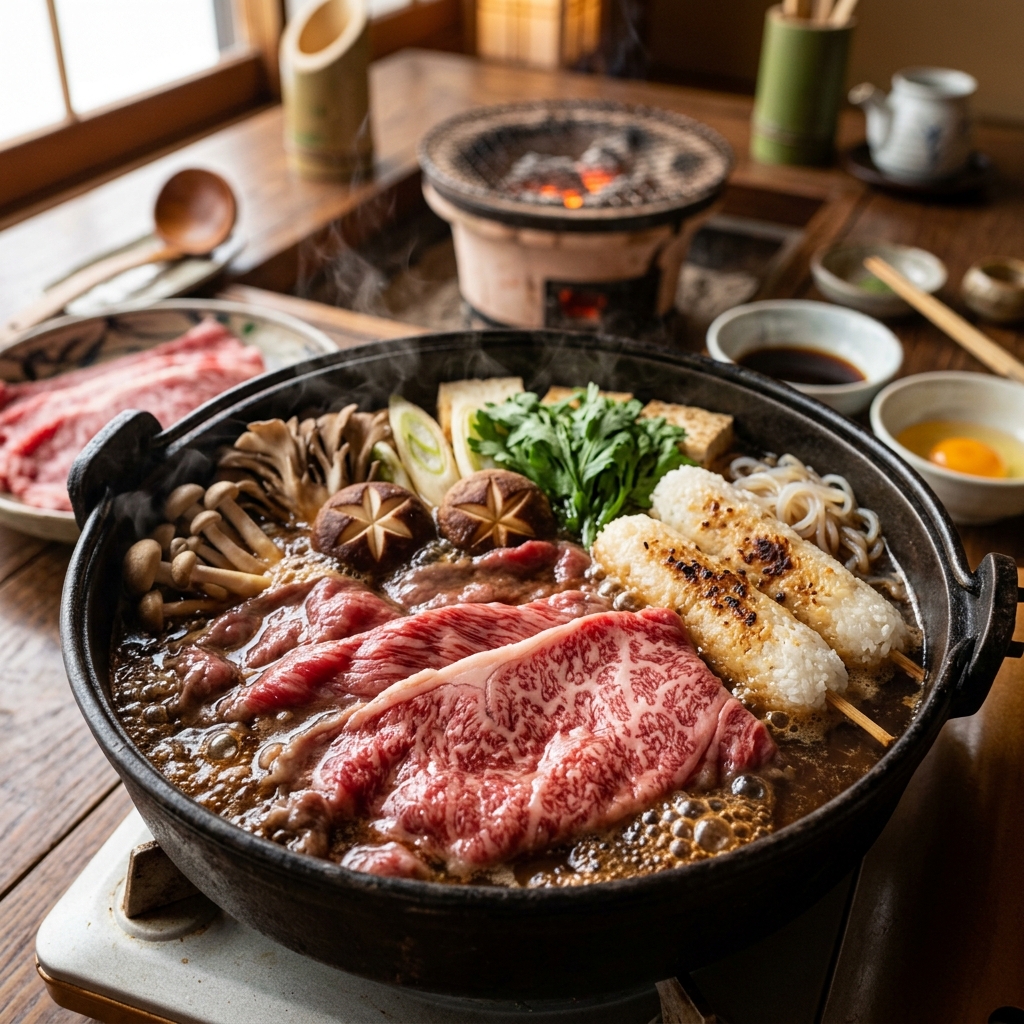
To experience the true soul of Akita Prefecture, Akita Nishiki Beef is best enjoyed alongside the region's other famous culinary export: Kiritanpo (mashed rice skewers roasted over an open fire).
When thin slices of Akita Nishiki Beef are gently simmered in a rich, soy-based hot pot alongside local mountain mushrooms, burdock root, and Kiritanpo, a magical synergy occurs. The incredibly light, sweet fat of the beef melts into the broth, enriching it without making it greasy. The Kiritanpo, made from the very same rice that fed the cattle, acts as a sponge, soaking up the umami-rich broth. The resulting dish is a perfect, harmonious loop of local agriculture, offering a warming, profoundly comforting culinary experience that perfectly counters the freezing northern winters.
Chapter 6: The Ultimate Contrast – The Delicate North vs. The Primal South
Akita Nishiki Beef represents the ultimate refinement of the northern terroir. By utilizing the region's famous rice and the brutal, freezing winters, the farmers have engineered a beef characterized by pure white, incredibly delicate fat and a sweet, almost floral lightness. It is a masterpiece of subtle elegance.
However, if Akita Nishiki represents the pinnacle of delicate, sweet fat forged in the snow, what happens when you look for a Wagyu that completely ignores the cold, ignores the pursuit of marbling entirely, and instead focuses on the ancient, primal power of the hot, southern sun?
Experience the Ancient Contrast in Tokyo Akita Nishiki Beef is the delicate jewel of the deep north, famous for its incredibly light, sweet fat forged by rice and freezing winters. But if you wish to experience the absolute, unadulterated opposite of this "clean melting fat"—a meat that demands to be chewed and savored for its deep, red-meat complexity—you must look to the deep south.
Ibusana Beef, raised exclusively in Miyazaki Prefecture, is an incredibly rare crossbreed containing the genetics of Japan's oldest purebred, the Takenotani Tsurugyu. While Akita Nishiki uses the northern cold to perfect its delicate fat, Ibusana completely rejects marbling. It relies on ancient genetics and the warm southern climate to produce profound "Uma-Aka" (delicious lean meat). It offers a deep, complex, iron-rich umami and a powerful, heavy bite that feels entirely wild and untamed, offering a shocking, masculine contrast to the delicate, snowy melt of Akita Nishiki Beef.
You can experience this incredibly rare, wildly meaty contrast to the highly refined Akita Nishiki Beef exclusively at Wagyu Yakiniku Ibusana in Tokyo. Reserve your table to taste the original, unrefined soul of Wagyu red meat.
Taste Akita Nishiki Beef in Tokyo
Experience the finest quality Wagyu directly at our curated restaurants.
Reserve Yakiniku